
Remember me




/https://tf-cmsv2-smithsonianmag-media.s3.amazonaws.com/accounts/headshot/IMG_9594-edit.png)
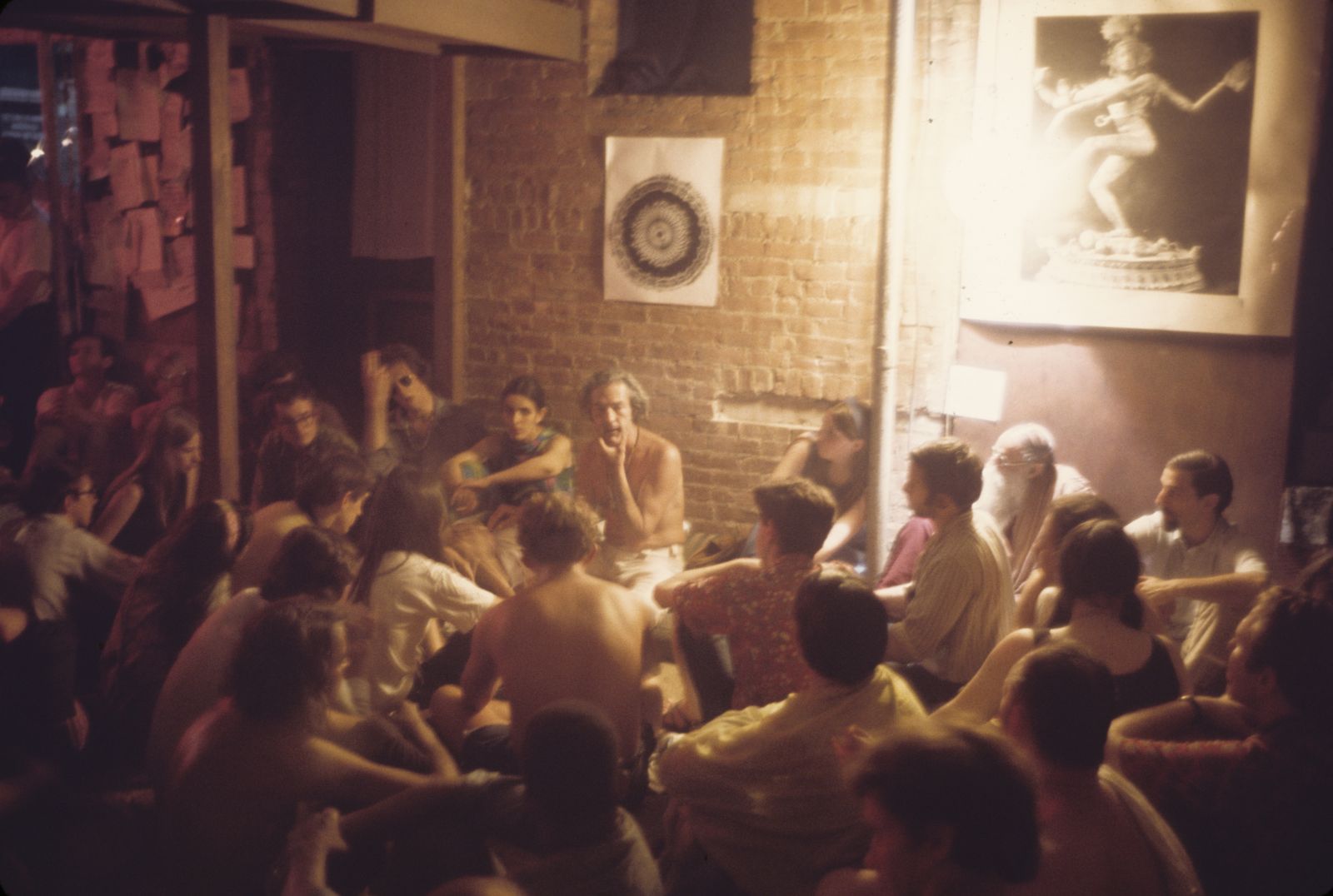
:focal(2661x1800:2662x1801)/https://tf-cmsv2-smithsonianmag-media.s3.amazonaws.com/filer_public/93/ed/93ed034a-62bf-42fb-a040-6b654ba67210/lsd_chapel.jpg) The League for Spiritual Discovery, an LSD-based meditation center in New York City, in 1967
Ben Martin / Getty Images
The League for Spiritual Discovery, an LSD-based meditation center in New York City, in 1967
Ben Martin / Getty Images
Bicycle Day, celebrated annually on April 19, commemorates the world’s first recorded LSD trip, in 1943. That’s when Swiss chemist Albert Hofmann ingested lysergic acid diethylamide before bicycling home from his lab in Basel, Switzerland. Today, people commemorate the fateful date by replicating the trip—that is, bike ride—in Basel, and around the world.
Hofmann made the discovery while working for the pharmaceutical company Sandoz Laboratories. He was researching lysergic acid, which is derived from the fungus ergot, while attempting to synthesize a compound that could treat respiratory and circulatory conditions.
“His work on ergot produced several important drugs, including a compound still in use to prevent hemorrhaging after childbirth,” wrote Craig S. Smith for the New York Times in 2006. “But it was the 25th compound that he synthesized, lysergic acid diethylamide, that was to have the greatest impact.”
/https://tf-cmsv2-smithsonianmag-media.s3.amazonaws.com/filer_public/b4/1c/b41cd30b-e16d-4869-a90c-3706354d42c6/first_illustration_of_rye_infected_by_ergot_wellcome_l0002215.jpg) An illustration of the fungus ergot, which grows on rye and is the basis for LSD
Wellcome Collection via Wikimedia Commons under CC BY 4.0
An illustration of the fungus ergot, which grows on rye and is the basis for LSD
Wellcome Collection via Wikimedia Commons under CC BY 4.0
Sandoz Laboratories shelved LSD-25, but Hofmann remained curious about the substance. In April 1943, he resynthesized it and inadvertently absorbed trace amounts into the skin of his hands. He recorded in his journal that “he had a remarkable experience, one he could only connect to the substance,” per Rolling Stone’s Trina Calderon in 2018.
On April 19, Hofmann took his experiments with LSD-25 further. He intentionally ingested 0.25 milligrams.
“LSD spoke to me,” Hofmann told the Times. “He came to me and said, ‘You must find me.’ He told me, ‘Don’t give me to the pharmacologist; he won’t find anything.’”
The drug made Hofmann feel strange at first. In his notebook, he recorded “dizziness, feeling of anxiety, visual distortions, symptoms of paralysis, desire to laugh.” Feeling the urge to go home, which was a few miles away, he hopped on his bicycle, taking the very first LSD trip through the streets of Basel. At home, Hofmann fell into a six-hour trip filled with intense visuals and emotions.
/https://tf-cmsv2-smithsonianmag-media.s3.amazonaws.com/filer_public/c5/28/c528c84a-e39a-4342-adf7-ac5d009406b3/hofmann.jpg) Swiss chemist Albert Hofmann
VIRGINIA / ullstein bild / Getty Images
Swiss chemist Albert Hofmann
VIRGINIA / ullstein bild / Getty Images
Hofmann had felt a similar sensation of wonder decades earlier, toward the end of World War I. As a boy strolling through the hills above his family’s home in Baden, Switzerland, he came across a forest filled with spring leaves and birdsong.
“It shone with the most beautiful radiance, speaking to the heart, as though it wanted to encompass me in its majesty,” Hofmann wrote in his 1979 book LSD: My Problem Child. “I was filled with an indescribable sensation of joy, oneness and blissful security.”
Later, after Hofmann had discovered the psychedelic effects of LSD, he reflected on this nature walk, when he had become conscious of an “unfathomable reality that was hidden from everyday sight.” He believed that LSD provided access to a similar reality, and he wanted to share his discovery with the world.
Hofmann kept experimenting with LSD to refine his research. He reintroduced the compound to Sandoz Laboratories, which by 1950 was marketing the drug to psychiatric hospitals for research purposes under the brand name Delysid.
By the 1960s, psychedelics like LSD had become a central component of countercultural movements. Some estimates suggested that more than a million Americans had tried LSD without medical supervision by 1970. But the growing recreational use of psychedelic drugs triggered a backlash. In 1968, Switzerland passed laws to limit the use of LSD, and by 1970, the United States had criminalized it. Today, taking the drug recreationally is illegal in many countries.
Did you know? From bicycles to busesCIA experiments with LSD in the 1950s and ’60s were code-named “MK-Ultra.” One research participant was Ken Kesey, who wrote One Flew Over the Cuckoo’s Nest. Kesey and his friends drove a psychedelically painted bus across the U.S. in the ’60s packed with troves of LSD for recreational use. This road trip helped spur the counterculture movement.
But Hofmann, who died in 2008 at age 102, never lost his belief in LSD’s potential. In a 2004 interview at Art Basel, he emphasized his faith in altered consciousness in an increasingly mechanized world. “LSD and related plants make us see the difference between the man-made world—the technical world—and the natural world, the living world that arrives every spring, the one that we have right in front of our eyes that we don’t see anymore,” he said, per a translation published by the art festival.
Mainstream science may one day embrace the Swiss chemist’s ideas. There’s been a resurgence of interest in hallucinogenic drugs in clinical research, especially in psychiatric studies. This month, the journal Nature Medicine published an expansive study of the effects of psychedelic drugs on the human brain.
“Many drug therapies for depression, for example, have changed little over the past decades,” says Danilo Bzdok, a biomedical engineer at McGill University in Canada and senior author of the study, in a statement. “Psychedelics may represent the most promising shift in mental health treatment since the 1980s.”
Get the latest stories in your inbox every weekday.
Comments (0)