
Remember me






/https://tf-cmsv2-smithsonianmag-media.s3.amazonaws.com/accounts/headshot/SarahKuta.png)
:focal(1620x1080:1621x1081)/https://tf-cmsv2-smithsonianmag-media.s3.amazonaws.com/filer_public/78/7e/787e3bc4-594a-407f-9310-9ab8e4bd8af3/2601_sinbad_on_whenua_hou_2.jpg) As of April 10, 105 kakapo eggs had hatched, and 95 chicks were still alive.
New Zealand Department of Conservation
As of April 10, 105 kakapo eggs had hatched, and 95 chicks were still alive.
New Zealand Department of Conservation
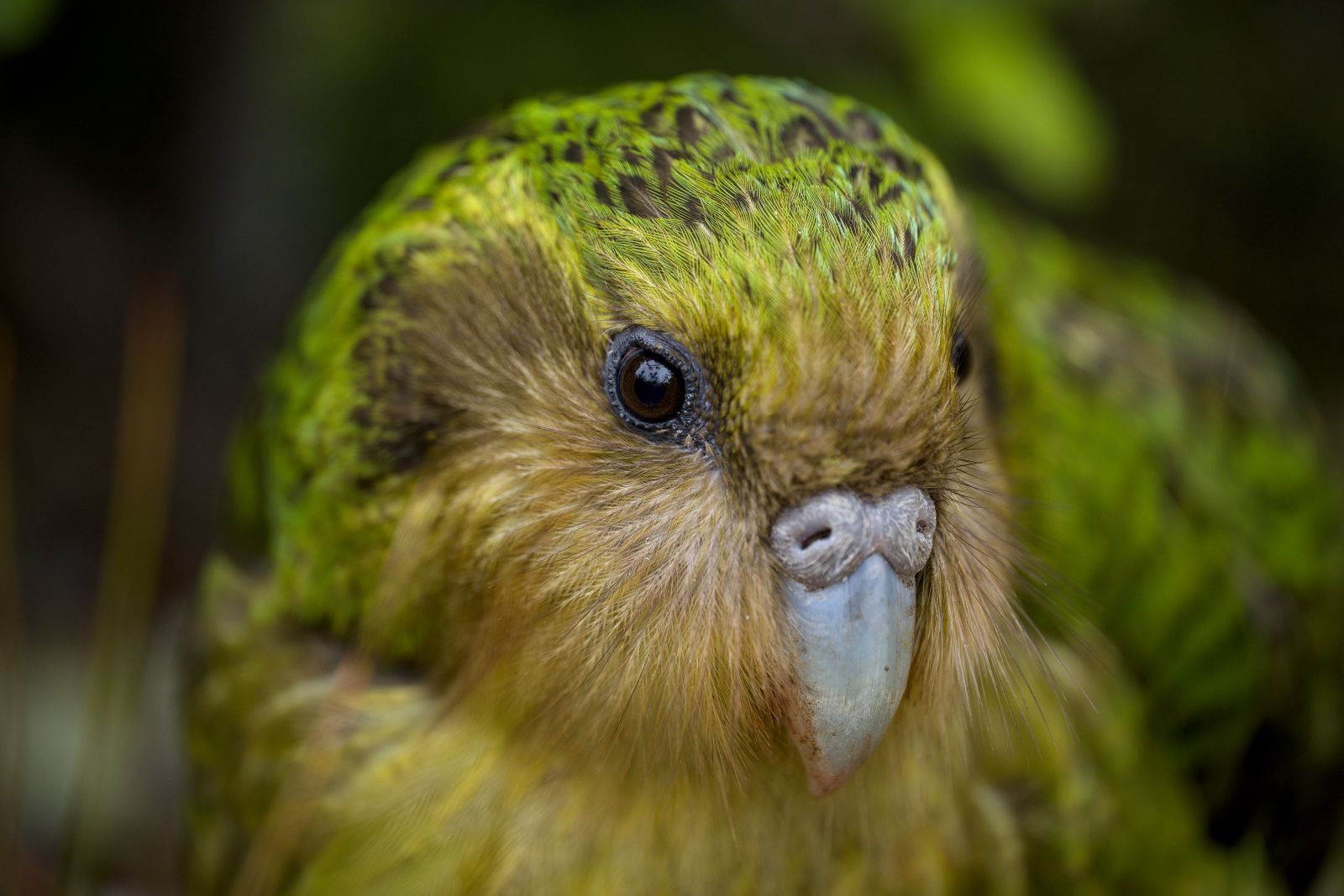
Biologists in New Zealand are celebrating a record breeding season for the kakapo, a critically endangered bird on the brink of extinction.
As of April 10, 105 kakapo eggs had hatched, and 95 chicks were still alive. This year marks the largest breeding season on record for the hefty parrots, which are found only in New Zealand, according to the country’s Department of Conservation.
/https://tf-cmsv2-smithsonianmag-media.s3.amazonaws.com/filer_public/aa/03/aa033850-93b0-4ded-9757-e0f45607f990/waikawa_a3_credit_maddy_whittaker_doc.jpg) In 1995, only 51 kakapo remained in the wild.
Maddy Whittaker / New Zealand Department of Conservation
In 1995, only 51 kakapo remained in the wild.
Maddy Whittaker / New Zealand Department of Conservation
The kakapo is the world’s heaviest parrot, with males weighing up to nine pounds. Like other creatures that live on isolated islands, they have evolved some unique adaptations over the last 30 million years, since their ancestors split off from other birds to form a distinct lineage. Historically, New Zealand didn’t have any kakapo predators, so the birds gradually gained weight and mostly lost the ability to fly.
Now, they mainly use their wings for balance, though some lighter females are still able to glide across short gaps. They have powerful claws and large, strong legs, which they use to climb trees and hike around with a “waddling gait,” per the New Zealand Department of Conservation.
“Technically, it’s a bird,” says Andrew Digby, a biologist for the New Zealand Department of Conservation, to the Washington Post’s Leo Sands. “But really, they’re more like the bird version of a badger.”
/https://tf-cmsv2-smithsonianmag-media.s3.amazonaws.com/filer_public/f1/71/f17187b0-a5b4-4cfa-8cca-2bf5fe38c3ec/tiwhiri_siblings_in_tiwhiris_nest_on_pukenui_credit_sarah_manktelow_doc.jpg) Some of the chicks are receiving specialized veterinary care at a local wildlife hospital.
Sarah Manktelow / New Zealand Department of Conservation
Some of the chicks are receiving specialized veterinary care at a local wildlife hospital.
Sarah Manktelow / New Zealand Department of Conservation
Since they are largely flightless, kakapo have also evolved some unique defense mechanisms, which help them live for around 60 to 90 years. Their plumage is mottled and bright green, which allows them to blend with their surroundings and avoid being seen by sharp-eyed predators. They’re also nocturnal, which helps them avoid daytime attackers.
But kakapo haven’t yet evolved to defend themselves against introduced mammals like dogs, rats, cats and weasel-like stoats, which began arriving on the island with the first Polynesian settlers roughly 700 years ago. Kakapo produce a distinctive, fruity-smelling odor, which makes them easy prey for scent-driven predators. Beyond that, the birds are vulnerable to disease, they breed under very specific conditions and their eggs have low rates of hatching success. They’re also grappling with habitat loss from logging.
Did you know? Mellifluous malesTo win over the ladies, male kakapos use their claws to dig bird-size, bowl-shaped divots in the ground. Then, they repeatedly utter a deep, low-frequency mating call known as a “boom.” They also make metallic-sounding noises known as “chings” to help females find them. Males have been known to sing for eight hours every night for two or three months during the breeding season.
Once abundant throughout New Zealand, the birds nearly went extinct. Just 51 birds remained in 1995. But thanks to concerted conservation efforts, an estimated 235 individuals are now waddling around in the wild today.
“We don’t have the Eiffel Tower or the pyramids, but we do have kakapo and kiwi,” Deidre Vercoe, operations manager for the conservation department’s kakapo program, tells the Associated Press’ Charlotte Graham-McLay. “It’s a real New Zealand duty to save these birds.”
/https://tf-cmsv2-smithsonianmag-media.s3.amazonaws.com/filer_public/d5/e4/d5e4f622-49a9-4124-9e3f-d7b42e3361c2/tiwhiria12026_being_weighed_on_pukenui_anchor_island_lydia_uddstrom_doc_2.jpg) Biologists are keeping a close eye on all of the chicks that hatched this year.
Lydia Uddstrom / New Zealand Department of Conservation
Biologists are keeping a close eye on all of the chicks that hatched this year.
Lydia Uddstrom / New Zealand Department of Conservation
This year has been a rare bright spot for kakapo recovery efforts. Kakapo only mate when rimu trees produce a bumper crop of berry-like fruit, which usually happens every two to four years. The towering, long-lived conifer trees recently produced one of their best crops in decades, which seemed to help get the parrots in the mood.
“Maybe a good analogy is a lot of people are familiar with oak trees having what are called mast years, meaning that there are some years where the ground is just strewn with acorns, and lots and lots of animals, say wild turkeys, will benefit from that,” says Marlene Zuk, an evolutionary biologist at the University of Minnesota, to the New York Times’ Neil Vigdor.
Nearly all sexually mature females bred this year, laying a total of 256 eggs. Some of the eggs were infertile and never hatched, which the researchers expected. So far, ten newborn chicks have died. Some causes include navel infections and nest interference from predatory petrels, although a few died of unknown causes, according to an update from the department earlier this month. As of April 10, three of the surviving chicks were receiving specialized veterinary care at a local wildlife hospital.
“The official chick count is confirmed once all chicks reach full independence, at around 150 days old, and some further losses are expected before then,” officials wrote in the update.
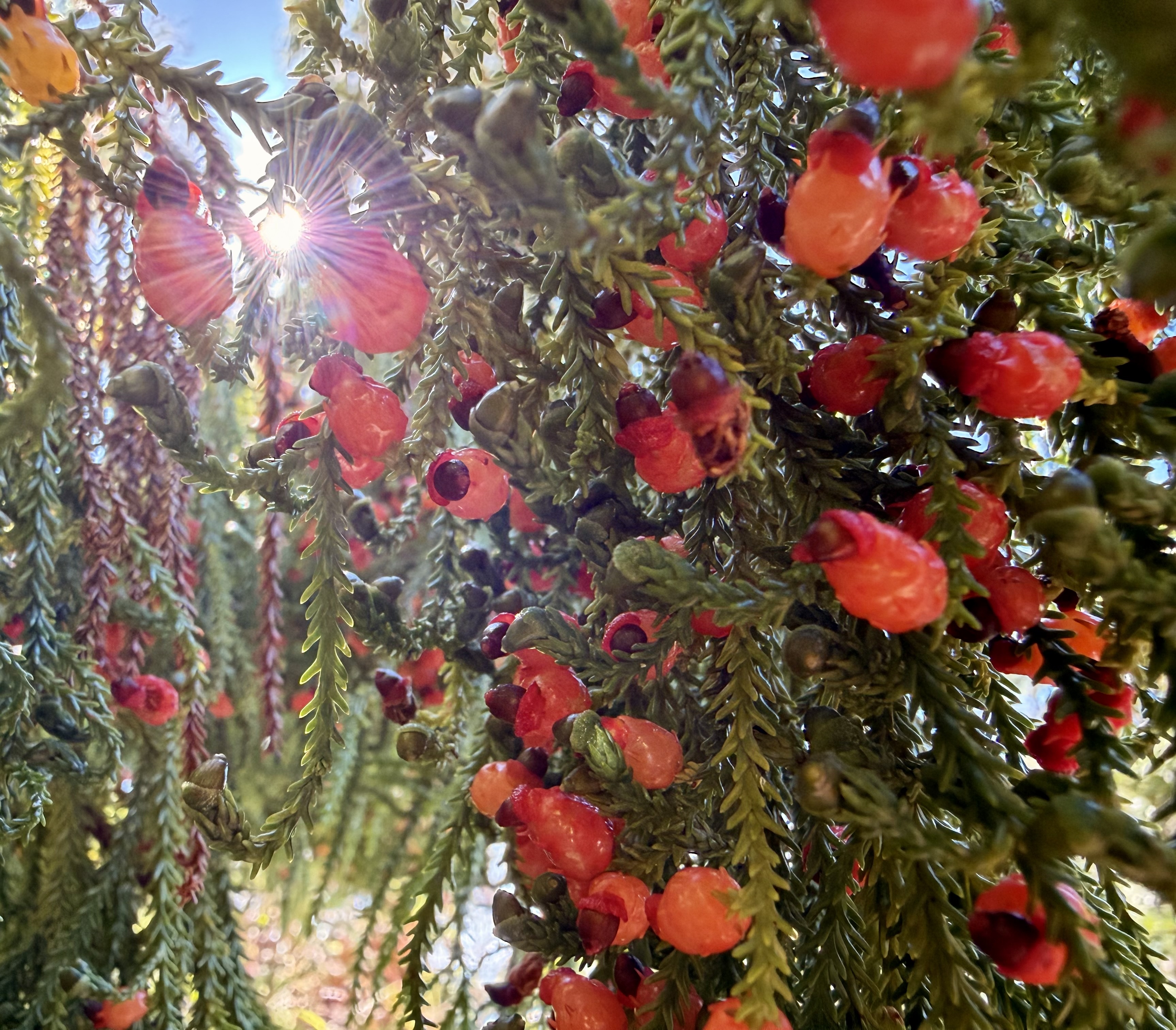 Rimu trees produce large crops of berry-like fruit every two to four years, which kakapo feed on.
Deidre Vercoe / New Zealand Department of Conservation
Rimu trees produce large crops of berry-like fruit every two to four years, which kakapo feed on.
Deidre Vercoe / New Zealand Department of Conservation
Researchers are hopeful this year’s breeding bonanza will bring the total number of kakapo up to 300. While the population seems to be steadily growing, conservationists still have a lot of work to do. Today, kakapo live only in a fenced mainland sanctuary and on protected, predator-free islands that belong to the Ngai Tahu people, who have long revered the birds. “It’s a taonga species, a treasure to us,” says Tāne Davis, a conservationist who serves as the Ngai Tahu representative for the kakapo recovery program, to Scientific American’s Elizabeth Anne Brown.
For the birds to truly thrive, Davis says humans need to restore more of their historic habitat and remove invasive predators. “It’s about letting them have their lives back in the wild,” Davis adds.
Get the latest stories in your inbox every weekday.
Comments (0)