
Remember me





Windows 11 has been around for almost five years at this point, and it wouldn't be wrong to say that it's been a rocky journey for the OS so far. Microsoft has promised to resolve some major pain points faced by users of the OS and also return some missing functionalities people have been clamoring for. As it continues to fix some of these problems, I believe that one aspect in particular is still not getting attention. Microsoft has powerful automation capabilities available in Windows 11 already, but it has been ignoring them for the past several years.
Some of you may not be aware since it's never a part of Microsoft's advertising for Windows 11, but the operating system does come with a built-in automation tool called Task Scheduler (taskschd.msc) that is over 30 years old. This is an ancient tool that hasn't received a significant upgrade in several years. In fact, version 2.0 of the software was released with Windows Vista and Windows Server 2008, and well, it certainly shows. Remember how I said that Microsoft doesn't advertise Task Scheduler for its latest OS? That's the reason: it seems to be stuck in the past.
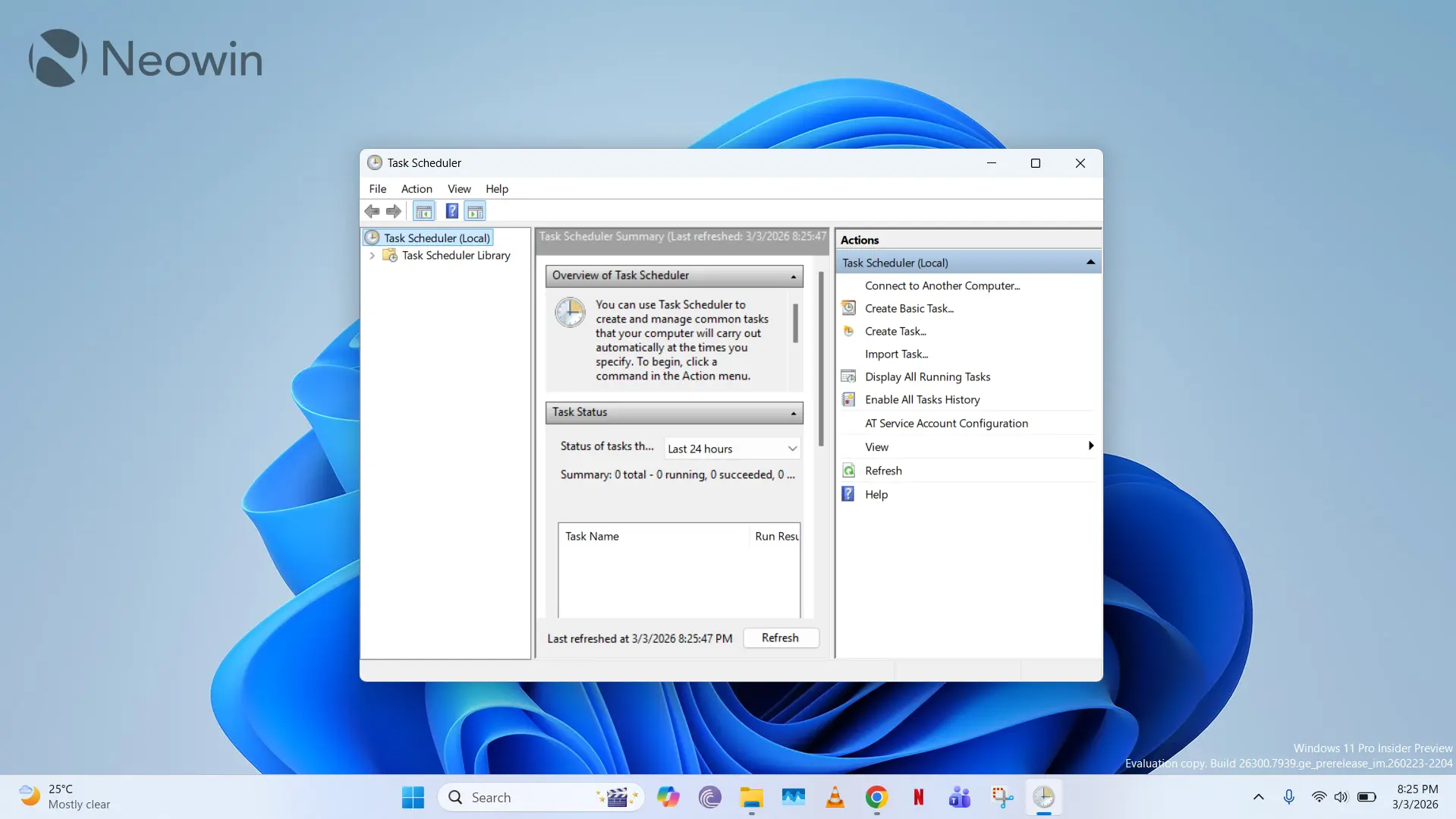
On paper, Task Scheduler sounds like a very powerful utility. You can use it to build tasks that can be automated based on certain triggers and events, or based on a time schedule. However, in reality, a lot of its functionalities are deprecated, it isn't compatible with most modern software, and if you were to try it out for the first time today, you would feel very overwhelmed by the outdated UX, the plethora of options, and the complicated jargon. Perhaps the reason for this is also that it is primarily meant for IT admins, even though it has so much potential to be consumer-oriented.
Microsoft has been a big proponent of productivity in Windows 11. Most of its marketing revolves around how Copilot and AI tools can do work on your behalf. But this ideology is in stark contrast to what's already available and can be used or even enhanced for the same purpose. Imagine just launching Copilot (or whatever Microsoft may end up calling it in Windows 11) and telling it to "Clean my Downloads folder on a weekly basis, zip it, and archive it on the D: drive". Copilot leverages Task Scheduler as an invisible bridge and simply creates a task on the backend along with the necessary triggers. It's honestly a bit surprising that Microsoft isn't working along these lines already, at least publicly. It's such a useful productivity tool to have on your fingertips, provided that it works reliably.
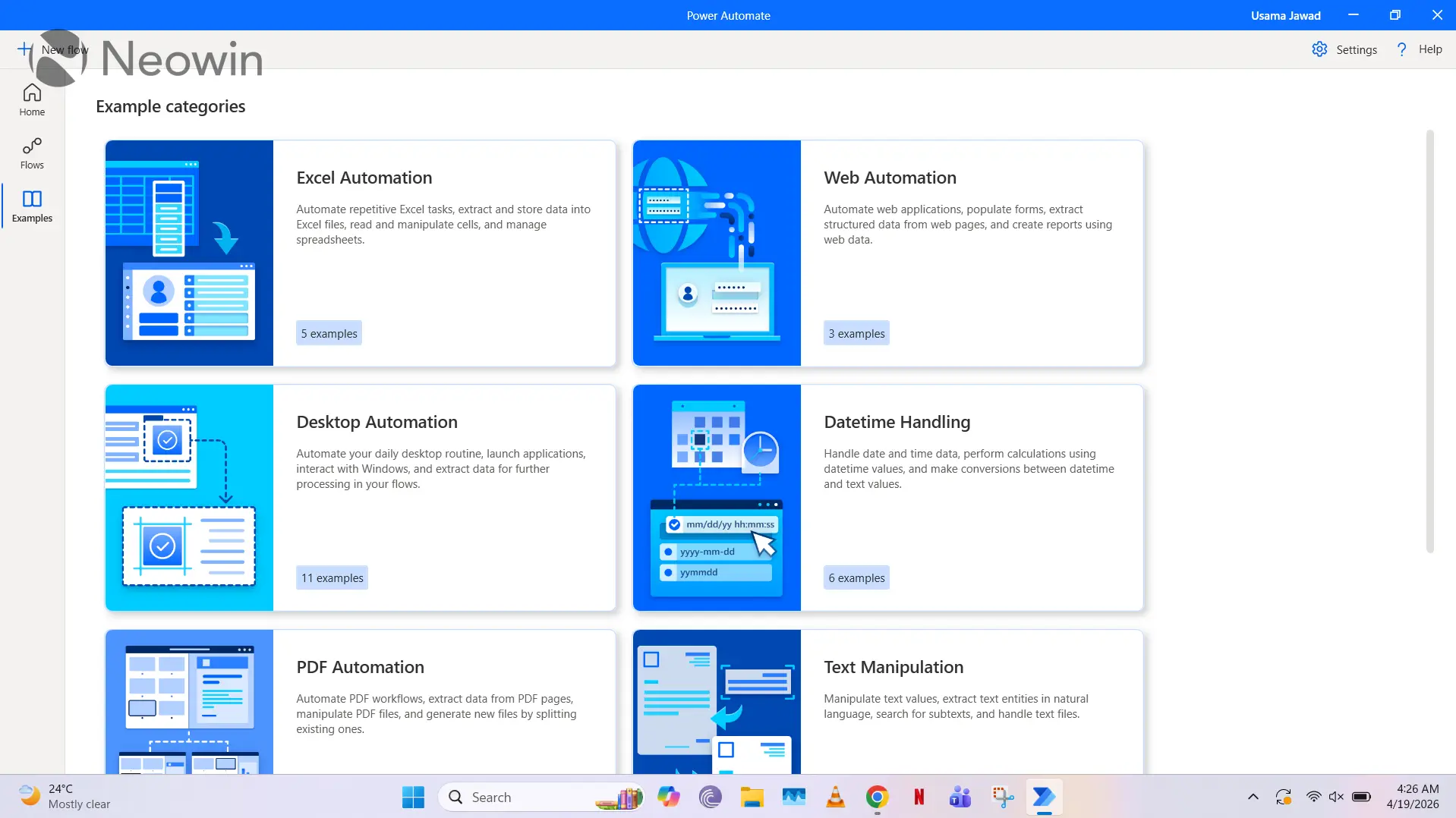
But even if you don't trust Copilot to build automated flows on your behalf, Task Scheduler should be modernized to the point that everyday users should not feel friction while leveraging it directly either. In fact, Microsoft has a blueprint for this already. The company has a tool called Power Automate which comes bundled with Microsoft 365. It already contains templates of flows that allow you to configure automations with various apps, file types, and even the browser. This low-code, GUI-based tool has a slight learning curve, but once you get the hang of it, you can set up very complex, customized automation flows as well. Of course, there are limitations with the included license, but there is just so much potential here to utilize the same learning and modernize an ancient tool like Task Scheduler.
Windows 11 is an incredibly complex piece of software, but this is one area where it doesn't necessarily have to be. Automation shouldn't be fragmented across Task Scheduler, Power Automate, and batch files, none of which are easily discoverable or usable for the ordinary user right now. I strongly believe that not combining all of these capabilities inside a unified and modern automation platform is such a missed opportunity from Microsoft to make Windows 11 truly feel like a powerhouse.
Sure, AI is changing how we interact with the technology around us and it will continue to transform this experience even further. But, one of the core principles behind most of its utilities right now is automation, be it in processes like code generation or image generation. As such, it is frankly astounding that Microsoft is not capitalizing on this potential by showing Task Scheduler some love. It doesn't have to integrate it with Copilot or merge it with Power Automate Desktop, just make it usable with better compatibility for the average user. There are some isolated third-party efforts underway to modernize Task Scheduler, but Microsoft already owns the keys to the kingdom, why wait for others to steal your thunder?
Comments (0)