
Remember me







 Credit: AARP.
Imagine the soft click of a pen, the crunch of an apple, or the gentle inhale of a sleeping partner. Most of us filter these noises out without a second thought. They simply form the harmless background hum of daily life.
But for millions of people, these ordinary sounds are deeply annoying to the point that they can be tormenting.
A knuckle cracking or someone chewing loudly can trigger a sudden, overwhelming wave of rage, panic, or the desperate urge to flee.
This visceral reaction is a condition known as misophonia. For a long time, society dismissed it as a mere quirk of personality, but more recently, a wave of new research reveals how misophonia is deeply entwined with our psychological wiring. It shares many data points with anxiety, depression, and post-traumatic stress disorder.
Overlap With Other Mental Health DisordersYou might wonder if people with misophonia are simply overly sensitive to their surroundings. They are not.
“Our survey captured the complexity of the condition,” explained University of Oxford clinical psychologist Jane Gregory, who released a 2023 survey suggesting as many as one in five people could have misophonia.
“Misophonia is more than just being annoyed by certain sounds.”
People with misophonia struggle to ignore everyday noises like breathing or swallowing, which prompt a profound sense of emotional threat that the rest of the population simply does not register.
×
Thank you! One more thing...Please check your inbox and confirm your subscription.
This intense response seems to be, at least partly, modulated by genetics.
Psychiatrist Dirk Smit and a team of researchers at the University of Amsterdam decided to look deeper. They analyzed vast pools of genetic data from the Psychiatric Genomics Consortium, the UK Biobank, and 23andMe.
They discovered that people who experience misophonia are far more likely to carry genes linked to severe psychiatric disorders.
“There was also an overlap with PTSD genetics,” Smit said.
This connection fundamentally changes how we view the condition. It implies a deep structural relationship within the brain.
“This means that genes that give a sensitivity to PTSD also increase the likelihood for misophonia, and that could point to a shared neurobiological system that affects both. And that could suggest that treatment techniques used for PTSD could also be used for misophonia,” Smit added.
Other studies have reached complementary conclusions. A recent study published in March 2026 of a nationally representative sample of adults in the United States found that 65% of people with misophonia carry at least one other psychological diagnosis. Almost half battle depression. Nearly as many face anxiety disorders.
“Results indicated that those with misophonia are significantly more likely to report symptoms and diagnoses of all mental health, auditory-sensory, and communication disorders, with a few exceptions (e.g., hyperacusis) [this refers to reports of a previous official hyperacusis diagnosis, not the hyperacusis symptoms assessment at the time of the study]. The high rates of comorbidity also emphasize the importance of identifying common underlying mechanisms,” the study authors concluded.
A Mind Stuck on Replay Credit: illustration by Ben Claassen III.
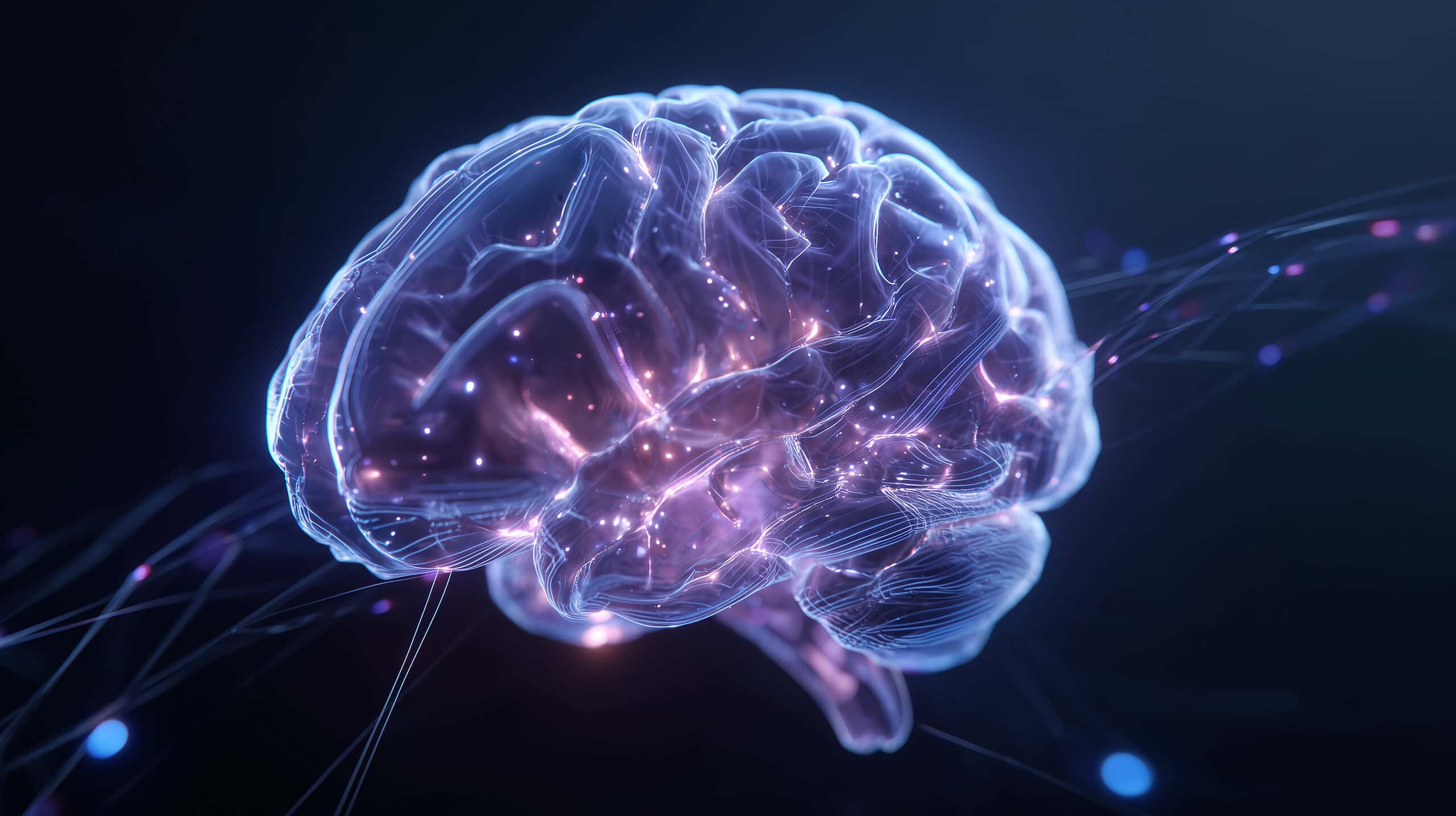
Why do these specific noises hurt so much? It all may have to do with how the misophonic brain processes emotion.
When a trigger sound hits, the brain’s threat center — specifically a region called the anterior insular cortex — lights up. It launches an immediate fight-or-flight response. For most people, the brain quickly realizes the threat is false and shifts its attention elsewhere. In misophonia, the attention lingers on the trigger sound.
Recent research reveals that people with severe misophonia have a form of impaired affective flexibility. This is the brain’s ability to shift cognitive gears in emotionally charged situations. When a chewing mouth or a tapping foot sparks sudden anger, people with misophonia literally cannot pull their attention away.
This mental roadblock breeds a severe form of rumination. Because the mind cannot switch to a new task, it endlessly replays the negative emotion, trapping the person in a cycle of brooding and anger-related thinking. The initial rage loops inward, acting as an internal echo chamber that amplifies the distress.
Does this cognitive inflexibility cause misophonia? Or does the constant exhaustion of the condition wear down the mind’s defenses?
Scientists cannot yet say which comes first. But the connection suggests misophonia is not merely a dramatic overreaction. It is a genuine, measurable breakdown in the brain’s ability to move past a sudden emotional strike.
This internal distress aligns closely with specific personality traits. People with misophonia often report higher levels of worry, guilt, loneliness, and neuroticism.
“We conclude that — based on the genetics of a common misophonia symptom — misophonia most strongly clusters with psychiatric disorders and a personality profile consistent with anxiety and PTSD,” the researchers at the University of Amsterdam, led by Smit, concluded.
The Autism SurpriseAs researchers map the boundaries of misophonia, they continually encounter surprises that challenge established dogma.
For a long time, many in the field assumed misophonia was closely aligned with autism spectrum disorder (ASD). After all, people with autism frequently struggle to tolerate trigger noises.
Yet, the genetic data suggests that people with ASD are actually less likely to experience true misophonia.
“Our results suggest that misophonia and ASD are relatively independent disorders with regard to genomic variation,” Smit and team explain in the study.
This clear separation forces scientists to rethink the condition’s boundaries entirely.
“It raises the possibility that other forms of misophonia exist, one that is mostly driven by conditioning of anger or other negative emotionality to specific trigger sounds moderated by personality traits,” they observed.
Misophonia also diverges from general sound sensitivity in other crucial ways. While conditions like hyperacusis make all noises seem painfully loud, in misophonia, the reaction depends entirely on the specific pattern of the sound, not its raw volume.
But misophonia links heavily to tinnitus, a persistent and shrill ringing in the ears. Over 40% of people with misophonia report experiencing this phantom noise.
A Path Forward for MillionsHistorically, doctors severely underdiagnosed the condition. But modern surveys suggest that in the United Kingdom alone, misophonia sits at a surprising 18.4%.
Despite this high number, fewer than 14% of the people surveyed even knew the term “misophonia” existed before the study. Millions suffer in silence, believing they are simply irritable or inherently flawed.
By placing misophonia in its proper biological and psychological context, science offers these people some much-needed validation.
They are not choosing to be angry. Their brains simply process the world differently.


Comments (0)