
Remember me





/https://tf-cmsv2-smithsonianmag-media.s3.amazonaws.com/accounts/headshot/SarahKuta.png)
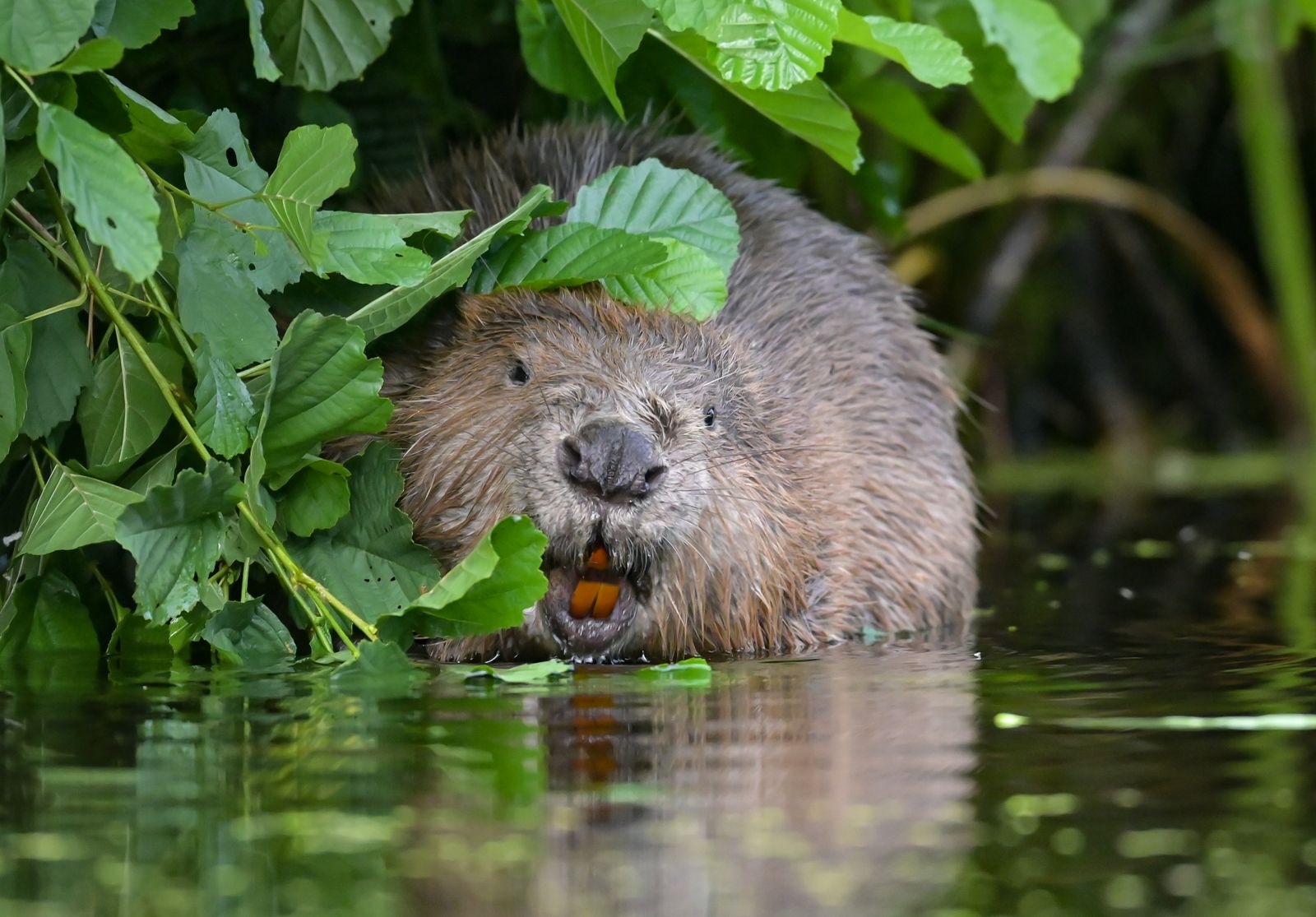
:focal(1749x1216:1750x1217)/https://tf-cmsv2-smithsonianmag-media.s3.amazonaws.com/filer_public/4e/a1/4ea1e962-53fb-4b95-aaf6-4b7c4f6088ae/beaver.jpg) The researchers studied a wetland shaped by Eurasian beavers in Switzerland.
Patrick Pleul / picture alliance via Getty Images
The researchers studied a wetland shaped by Eurasian beavers in Switzerland.
Patrick Pleul / picture alliance via Getty Images
The industrious beaver—often dismissed as a pest—might be a powerful ally in the fight against climate change. A study published March 18 in the journal Communications Earth and Environment found that the large rodents can help transform stream corridors into carbon sinks, meaning they store more carbon dioxide than they emit.
Carbon dioxide is the heat-trapping greenhouse gas responsible for most human-caused warming. So, “if we can store carbon in landscapes for long periods, it reduces how much ends up in the atmosphere,” lead author Lukas Hallberg, an environmental scientist at the University of Birmingham in England, writes in an email to USA TODAY’s Doyle Rice. “Carbon sinks act as a kind of natural buffer against climate change.”
Beavers likely won’t solve the climate crisis on their own. But they may be able to help support broader efforts to mitigate climate change, without adding much extra cost or infrastructure.
“We don’t have to do anything other than let the beavers be beavers,” says Emily Fairfax, an ecohydrologist who studies beavers at the University of Minnesota but was not involved with the research, to Live Science’s Kenna Hughes-Castleberry. “The joke in the beaver science world is, if you’ve got a problem, there’s a beaver for that.”
Eurasian beavers—not to be confused with their North American cousins—were once abundant across Europe. But they were overhunted for fur, meat and castoreum, an oily secretion historically used in medicines and perfumes, causing their numbers to plummet to near-extinction by the early 20th century.
However, in recent decades, numerous countries have been working to reintroduce the toothy mammals, which have made a significant recovery. The International Union for Conservation of Nature now considers them a species of “least concern,” with an estimated 1.5 million mature individuals now roaming across Europe.
Hallberg and his colleagues investigated beavers’ carbon-sequestration powers in a roughly half-mile section of a stream in the Rhine River basin in northern Switzerland, where the animals had established a wetland on one side. Here, the team created a comprehensive “carbon budget” by measuring the full carbon balance of the beaver-created wetland.
Between January 2022 and January 2023, they collected data from three spots along the river: both upstream and downstream of the dammed area, as well as within the beaver-modified area. They measured things including the flow of water, the amount of carbon dissolved in the water, plant growth and greenhouse gas emissions. They also analyzed the carbon-rich sediment, dead trees and biomass that had accumulated since the beavers established the wetland in 2010.
Their analysis revealed the wetland stored about 100 net U.S. tons of carbon per year, for a total of about 1,200 net U.S. tons over the 13 years the site had been modified by beavers. “That’s comparable to two Olympic swimming pools filled with charcoal,” Hallberg and study co-authors Joshua Larsen, an ecohydrologist at the University of Birmingham, and Annegret Larsen, an environmental scientist at Wageningen University in the Netherlands, write in the Conversation.
Even during the drier summer months, when the wetland released some carbon, it still stored more in sediment and wood than it emitted into the atmosphere.
The wetland also produced some methane, another potent heat-trapping greenhouse gas that’s contributing to global warming. But these emissions were “extremely small,” the researchers write in the Conversation, accounting for a tiny fraction of the total carbon balance.
Without beavers, water in the stream would move faster, carrying more carbon downstream rather than trapping it across a floodplain. The team estimates that beaver-created wetlands can store carbon at rates of almost ten times higher than equivalent stretches without the rodents.
“In terms of the long-term carbon storage, we were very surprised about the scale,” Hallberg tells USA TODAY. “We went to so much effort to make sure we could get as good [an] estimate as possible and wouldn’t risk overstating the amount.”
How exactly do beavers turn streams into carbon sinks? When they build their dams, these rodents help slow the flow of water and flood the surrounding landscape, creating a network of ponds and wetlands. Carbon-rich sediment begins to settle, rather than being washed away downstream. Wetland plants and algae begin to flourish, helping to absorb carbon from the atmosphere. And dead trees fall into the water, slowly storing carbon over long periods.
“By building dams, they create wetlands that trap and store carbon,” Hallberg tells USA TODAY. “They’re a rare example of wildlife directly engineering new carbon storage, rather than just being part of the system.”
Still, the study involved only one location, and carbon storage rates can vary greatly between sites. But based on the amount of land suitable for beaver recolonization across Switzerland, the researchers estimate the furry rodents could help offset between 1.2 and 1.8 percent of the country’s yearly carbon emissions.
Get the latest stories in your inbox every weekday.
Comments (0)