
Remember me




/https://tf-cmsv2-smithsonianmag-media.s3.amazonaws.com/accounts/headshot/SarahKuta.png)
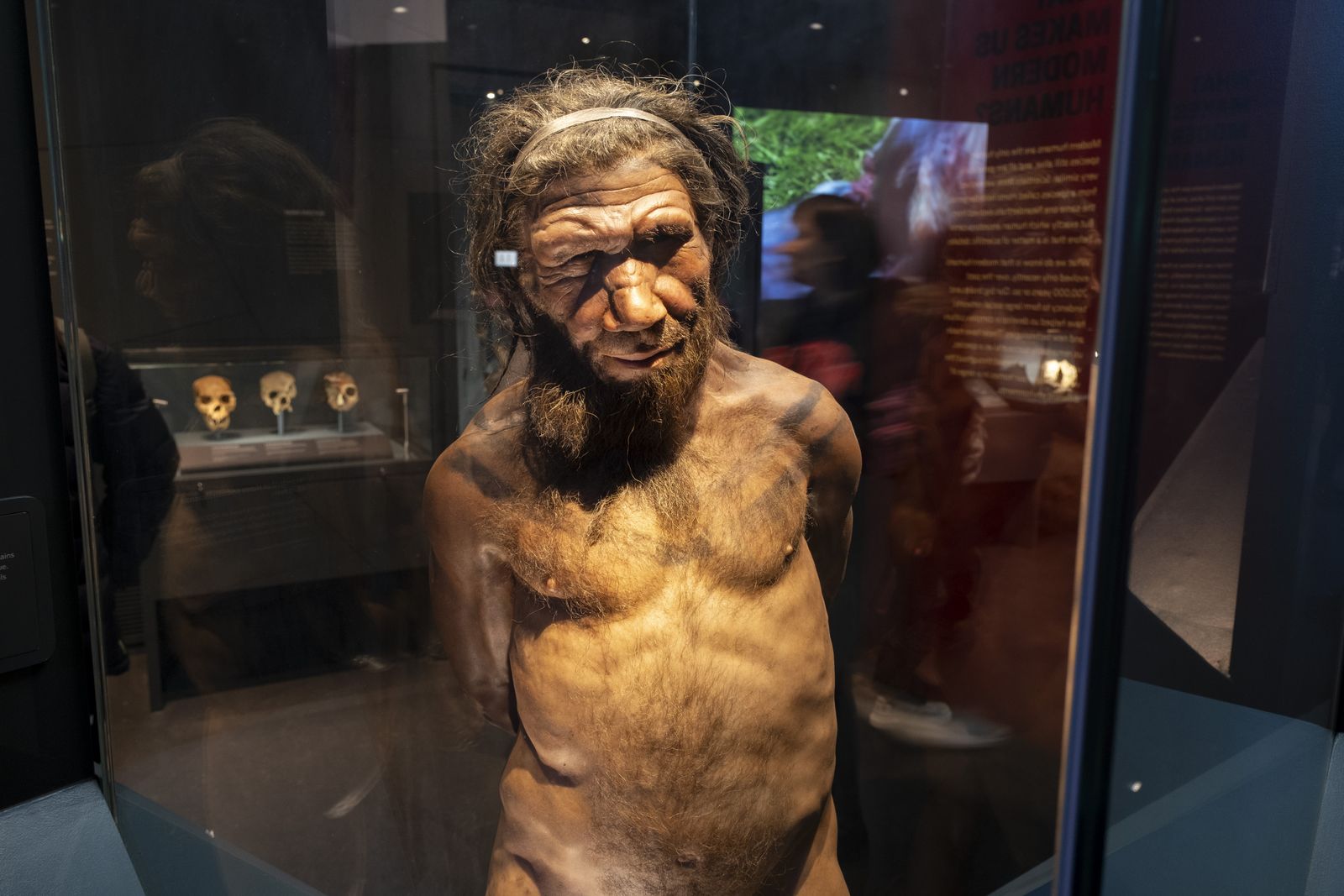
:focal(2561x1708:2562x1709)/https://tf-cmsv2-smithsonianmag-media.s3.amazonaws.com/filer_public/92/82/9282d6cf-08c2-454f-a303-3cf02c4eae6c/gettyimages-2017218126.jpg) Neanderthals survived from roughly 400,000 to 40,000 years ago, when they mysteriously disappeared.
Mike Kemp / In Pictures / Getty Images
Neanderthals survived from roughly 400,000 to 40,000 years ago, when they mysteriously disappeared.
Mike Kemp / In Pictures / Getty Images
Neanderthals lived successfully across Eurasia for hundreds of thousands of years, starting around 400,000 years ago. Archaeological evidence suggests they were not just surviving, but thriving: They hunted elephants, extracted high-calorie grease from animal bones, transformed turtle shells into tools, made art, set fires and created a sticky, multipurpose adhesive from birch bark, among other achievements.
But roughly 40,000 years ago, Neanderthals mysteriously vanished. The circumstances surrounding the species’ extinction have long been a source of fascination for researchers.
Now, new research hints at what might have happened. A paper published in the Proceedings of the National Academy of Sciences (PNAS) suggests a loss of genetic diversity may have contributed to the species’ downfall.
“We don’t think there was a single reason the Neanderthals went extinct, but this lack of genetic diversity would have made them more predisposed to not really survive climatic changes and other disruptions,” study co-author Cosimo Posth, a paleogeneticist at the University of Tübingen, tells Live Science’s Charles Q. Choi.
Researchers studied the remains of ten Neanderthals found at six sites across Belgium, France, Germany and Serbia. They compared the individuals’ mitochondrial DNA—genetic material passed down from mothers to offspring—with previously sequenced mitochondrial DNA from 49 other Neanderthals. Scientists also mapped the places where Neanderthals lived throughout Europe, and factored in changes to the climate over time.
Using this data, the researchers pieced together a chain of events that might have led to the species’ extinction. Prior to about 75,000 years ago, Neanderthals were widespread across Europe and genetically diverse. Then, the climate began to cool dramatically and the population shrank. Most Neanderthals living in northern Europe perished, while a group living in what is now southwestern France appears to have survived.
“There is a major glaciation starting around 75,000 years ago,” Posth tells New Scientist’s Michael Marshall. “We think that this is the event that triggered the contraction of Neanderthals towards south-western Europe.”
Did you know? Fond farewellThere is evidence that Neanderthals intentionally buried their dead, a first for human ancestors. That practice likely helped to create a lasting fossil record for scientists to study.
With a shrinking pool of potential mates, the species’ genetic diversity plummeted. This theory aligns with the results of another new paper, also published in PNAS, which finds that Neanderthals lived in small, isolated groups, making it more likely they mated with close relatives.
When the climate warmed up starting around 60,000 years ago, Neanderthals once again spread out across Europe. However, the damage had already been done. Though they dispersed far and wide, most Neanderthals who lived between 60,000 and 40,000 years ago descended from the same lineage that arose roughly 65,000 years ago, the researchers found.
“There was a kind of genetic impoverishment among the Late Neanderthals,” Posth tells Live Science. “Since they appeared to emerge from this single group, their genetic diversity overall was reduced drastically compared to what came before—they were all extremely similar on a genetic level across Europe, from Spain to the Caucasus to northern Europe.”
This lack of genetic diversity probably made the “fragile, inbred survivors” more vulnerable to threats, such as the arrival of Homo sapiens and changing climate conditions around 45,000 years ago, writes Science’s Andrew Curry.
Some Neanderthals interbred with H. sapiens. But, overall, their population began to contract again, reaching a low point roughly 42,000 years ago. Then, the species disappeared altogether.
“It’s pretty striking to see how fast they go down,” Bence Viola, a paleoanthropologist at the University of Toronto who was not involved with the research, tells Science. “Climate could have weakened them, and then modern humans come in and were so much larger a population that Neanderthals get swallowed up and diluted.”
Get the latest stories in your inbox every weekday.
Comments (0)