
Remember me






I need you to inhabit the mind and spirit of a lobster: you have been fished from your tank and hurled like a frisbee into the English Channel. Spinning, disoriented, delirious, bewildered, dazed, dizzy, giddy… free? “Thalassa! Thalassa!” Greek mercenaries shouted when they finally saw the Black Sea in 401 BC, proof that they were nearly home from a perilous and long campaign in Persia. For a brief moment, did the lobster feel such triumphant, anthropomorphic relief? The sea, the sea… And then bang – contact with the water, dead on impact.
Domesticated lobsters, you see, are not used to such vertiginous temperature shocks, and therefore the intervention probably proved fatal. I know this because I have been closely following a case of lobster homicide. It goes like this: an animal rights activist barged into a seaside restaurant in Weymouth, grabbed the lobster (Reggie), hurled it into the nearby harbour, rescuing it – or so she thought – from its boiled-alive, buttery, lemony fate. But here is the catch (ha!): Reggie is not a lobster but a crayfish; he was not going to be eaten – he was an “educational” crayfish; and his tank-mate, Ronnie, died shortly after, perhaps of loneliness.
What the hell – it would be totally appropriate to ask – is an “educational crayfish”? I don’t know either. “Sorry, Your Honour – this is actually my emotional support prawn. And that there is a therapy oyster.” Never mind, we let people say all sorts of strange and unaccountable things. But this case got me thinking. Aside from her shoddy tactics and paper-thin research, did this woman – charged last week with criminal damage to a crustacean – have a point? One man’s petty vandal might be another’s freedom fighter. I went in search of captive lobsters to find out.
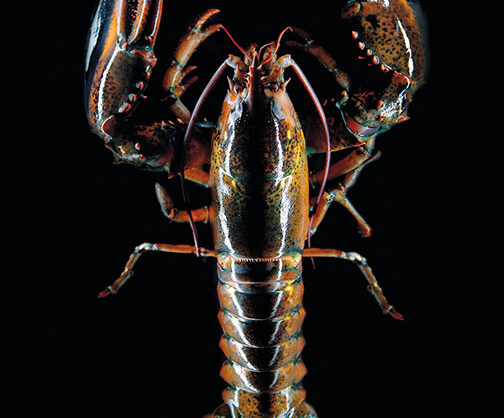
First, to Chinatown. I weave my way through the tall, narrow aisles of SeeWoo Supermarket – past the Shaoxing wine, black vinegar, light and dark soy sauces, carefully taxonomised chillies, and abundant noodles. In the back corner I find them: lobsters, crabs, and what I can only describe as a singular “giant lobster” (lobster Hulk?), all alive and well-ish in their tanks. The lobsters are still; perhaps it would be generous to describe them as serene. Their claws are strapped closed with green bands, lest they tear each other limb from limb.

Subscribe to the New Statesman today and save 75%
It’s the crabs I am most concerned about here. I don’t know if crabs are supposed to move, but these ones certainly do not. They are piled high in their small, watery purgatory. Crab mountain! Not cheap either – £30 per kilo. Is the urge to liberate them creeping up on me? Onwards, down an inconspicuous alleyway behind Shaftesbury Avenue, where I find a hole-in-the-wall seafood vendor, and another morass of tangled lobsters; I make eye-contact with one of them. Antennaed and mournful? No, don’t be silly, Finn. It’s just an aquatic bug, and it is not making eye-contact with you.
Down the road is the semi-popular but turbo-naff Burger & Lobster – London’s chain-restaurant answer to the American invention “surf and turf”. That is more commonly steak and lobster, and in this configuration would be called “turf and surf” anyway. I go in and gaze at their stacks of lobster tanks. It would take weeks for one woman to briefly liberate, but ultimately kill, this many lobsters – owing, if anything, to the distance between Dean Street and the sea.
Do I think it’s nice to be a lobster in these conditions? Probably not. Even though we have developed more humane practices now, do I want to boil creatures alive? Of course not – such is the nature of my advanced morality. Do I think that perhaps we are also over-indexing the extent to which lobsters possess an inner life and powers of self-reflection? Well, that’s between me and the lobster roll I have just ordered. Guiltily.
Lobsters, once boiled into that shocking red, are rather beautiful. The meat is sweet, with a gentle saline minerality. You can lift it with lemon and complement it with clarified butter, or spoon it with mayonnaise into a brioche roll to be eaten, ideally, in Maine. But this one in London is just fine: I take a bite and there it is. Thalassa, thalassa.
[Further reading: Let children into restaurants]
Content from our partnersRelated



This article appears in the 29 Apr 2026 issue of the New Statesman, The cover-up?