
Remember me







I once asked a survivor from the British cinema of the late 1940s and 1950s what the film industry then was like, and she replied: “There wasn’t one.” That was an exaggeration, as a new season at BFI Southbank, “Great Expectations: British Postwar Cinema 1945-1960”, to an extent proves. Through May, a selection of films from British studios in that period will show not only that there was an active industry, but that it made quite a few excellent films.
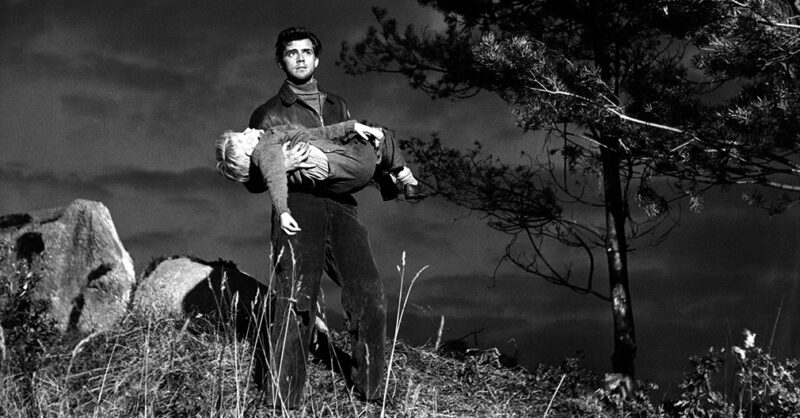
The great boon of the season is that some of its films will be virtually unknown to all but hardcore aficionados, often unjustly because they are so good. From the end of the period, there is Never Let Go (1960), directed by John Guillermin. He would later direct The Towering Inferno (1974), Death on the Nile (1978) and other Hollywood adventures, but this picture from his British period is tense and profound. It is about a salesman, played by Richard Todd, whose car is stolen by a gang controlled by an especially nasty Peter Sellers. To those who think of Sellers predominantly as a comic actor, it is a revelatory role: it is a pity no other director ever exploited his range as Guillermin did.
In a way, the desperation that seeps out of Never Let Go – a man who can’t do his job without his car, and the hopeless youths whom Sellers’s character exploits in his criminal enterprise – is a metaphor for British films at the time. It was made at the start of the “kitchen sinks”, which seemed to indicate a new dawn for the industry – Room at the Top (1958) and Saturday Night and Sunday Morning (1960) are not included in the season, perhaps because they are so well-known. But British films had been struggling for resources since 1947, a situation made worse by the spread of television (particularly after the 1953 coronation), which pulled people away from cinemas.
The golden age for British cinema had, in fact, begun earlier, during the Second World War, when writers and directors realised the need to replace clichéd melodrama with elements of documentary realism. A little later, slapstick was supplanted by comedies of various degrees of sophistication, the apogee being Robert Hamer’s Kind Hearts and Coronets (1949). But however good British films were, the public had an insatiable appetite for Hollywood glamour, not least as an escape from bombed-out, rationed austerity.

Subscribe to the New Statesman today and save 75%
In August 1947 a change of government policy managed at a stroke to starve the public of the American films they wanted, and British studios of the money they needed to try to compete. The sterling crisis was on, and a high proportion of dollars leaving the UK were paying the rental fees of Hollywood films – so the government imposed a 75 per cent tariff on them. The US retaliated by boycotting the British market. The main financier in Britain, J Arthur Rank, found his profits – which he had used to keep the British industry afloat – all but wiped out.
The effects of this myopic policy (which was revoked in May 1948) undermined the industry until well after the “Great Expectations” cut-off point of 1960. Thanks to an enlightened initiative of Harold Wilson when he was president of the Board of Trade, the National Film Finance Corporation was established to find the money for films that Rank either would not, or could not, bankroll. Like all commercial studios it had its successes and its failures, but confidence haemorrhaged from it through the 1950s.
The “Great Expectations” season (and the David Lean film of that novel is another not being shown) has films that always merit an outing on the big screen. These include Humphrey Jennings’s evocative but flawed (by an occasionally patronising script by EM Forster, and by an overripe narration by Michael Redgrave) A Diary for Timothy (1945); Carol Reed’s sensitive adaptation of Graham Greene’s The Fallen Idol (1948); and Frank Launder and Sidney Gilliat’s magnificent 1950 film The Happiest Days of Your Life (the prototype for the St Trinian’s series), which came to define the British sense of humour in the 1950s before it was further developed by the Boulting brothers in Private’s Progress and I’m All Right, Jack, neither of which is included. There’s also Alexander Mackendrick’s Mandy (1952), with one of the finest performances imaginable by a child actor (Mandy Miller, in the title role, was just seven) as a profoundly deaf little girl enabled to live a more normal life by her specialist teacher, played by Jack Hawkins; Charles Crichton’s Hunted (also from 1952), which provided a starring role for Dirk Bogarde as a murderer trying to flee the law; and Val Guest’s gripping, and innovative, Hell Is a City (1960), with its stunning lead performance by Stanley Baker and superb photography of Manchester.
The British Film Institute correctly promotes the much-derided British B-movie, which filled up cinema programmes in the 1950s but seemed often to provide a social service to otherwise out-of-work actors. A highlight of the season is The Flying Scot (1957) about a bungled train robbery and how the gang that tries to carry it out comes to grief. Its star is Lee Patterson, a Canadian who was able to pass himself off as an American. He was one of a number of jobbing North American actors cast in British films in the hope that a familiar accent would help sell them to American distributors. The success of this ploy was limited, at best: US audiences did not respond to British culture and their way of life in that period so easily as their British cousins happily soaked up the exciting worlds that Hollywood offered.
The season ignores entirely that staple of 1950s British cinema, the war film. The cultural importance of this genre is immense. Few such films appeared until about 1950 because of the public’s desire to escape those memories. Thereafter, they lapped them up. The UK, like its film industry, was in relative decline. Stories of beating the Nazis reminded us that, for all the failures of postwar society, we had not long ago been a brave and stoical people who had helped see off a vile enemy and the existentialist threat it posed. To try to evoke the reality of UK cinema in the 15 years after the war without mentioning this is rather like a season of British classical music of the same period that ignores the contribution of Benjamin Britten.
Perhaps it was thought that the greatest war films were too familiar – The Wooden Horse (1950), Reach for the Sky (1956; though it’s not really a war film, anyway), Ice Cold in Alex (1958), Carve Her Name with Pride (1958) or, finest of all, The Cruel Sea (1953). But if so, there were other excellent films that could have been considered: Guy Green’s Sea of Sand (1958) about the Long Range Desert Group, with superb location filming in Libya; Brian Desmond Hurst’s Malta Story (1953), with a stellar cast including Alec Guinness, Jack Hawkins and Flora Robson; or Powell and Pressburger’s too-little known The Small Back Room (1949), with its powerful central performance by David Farrar, now an almost forgotten star of the era.
The BFI’s season is barely an introduction to the treasures of a period when, despite dwindling resources and audiences, the British cinema sought to fulfil its traditional functions to entertain but also to be a mirror of society. Many films of that time have acquired the status of valuable historical documents. One hopes the BFI will revisit the era before too long, and in still more depth, because so many of its films have something new to say each time we watch them.
“Great Expectations: British Postwar Cinema 1945-1960” runs until 30 May at BFI Southbank, London
[Further reading: The perils of adapting Kazuo Ishiguro]
Content from our partnersRelated


This article appears in the 29 Apr 2026 issue of the New Statesman, The cover-up?