
Remember me
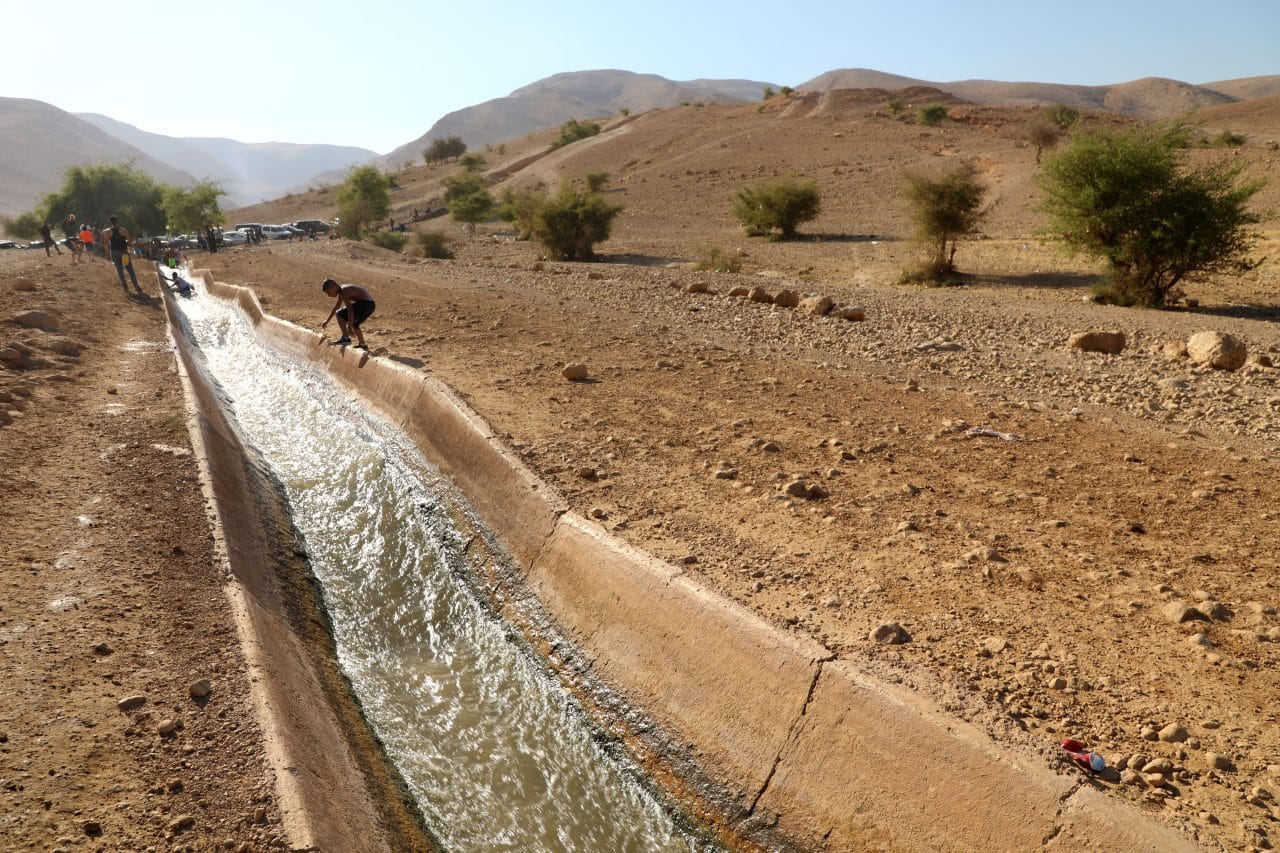

Khaled Miqarqir used to grow bananas and vegetables year-round on his land in al-Auja, a farming village in the Jordan Valley northeast of Jericho. A year ago, Israeli settlers diverted the spring on which his crops depended, and now he and his family are trying to adapt to the new situation. But with summer ahead, “staying here is becoming harder every day,” he told Mondoweiss. “Very soon, if this continues, we will barely be allowed to drink.”
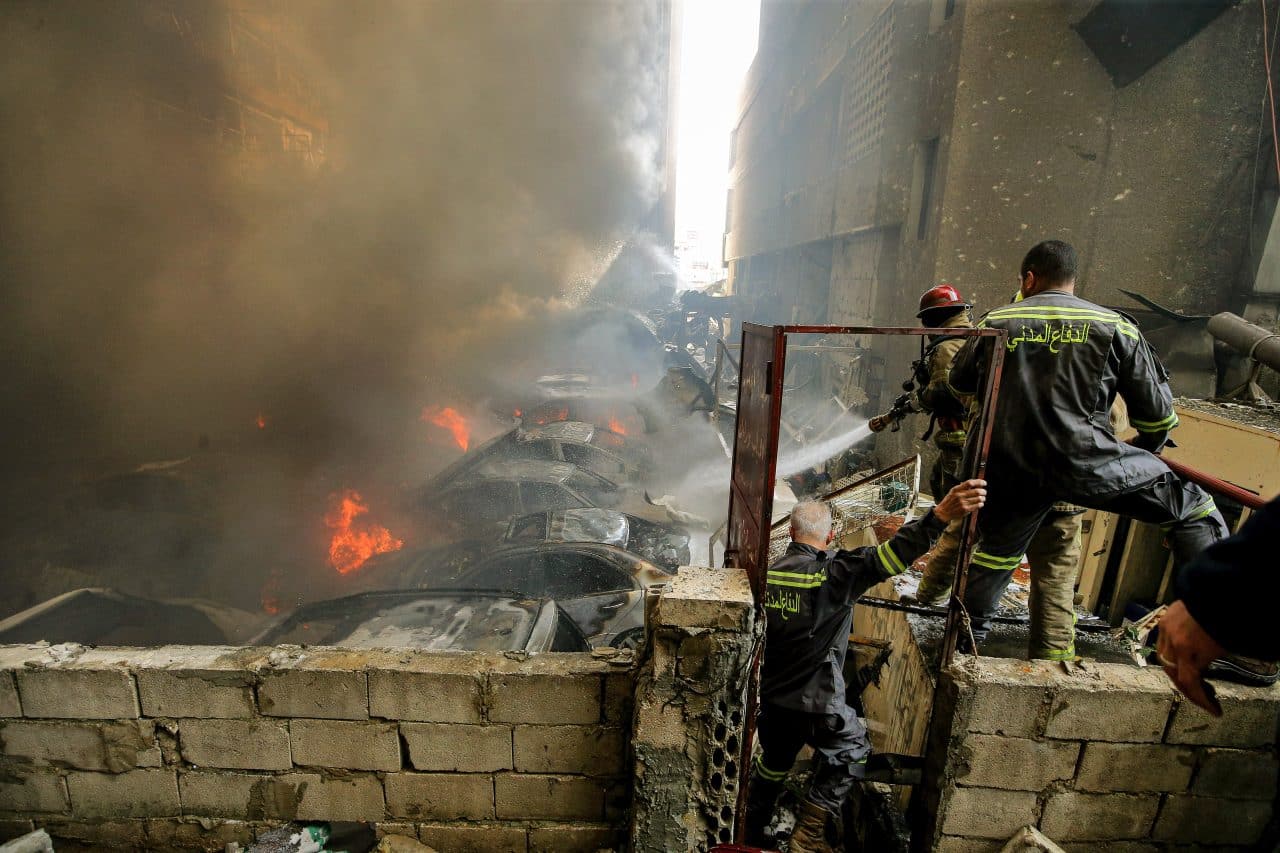
Israeli settlers and the Israeli army have escalated their seizure of water sources and the demolition of water infrastructure across the West Bank since 2023, deepening the water shortages Palestinians already face under Israeli control. Out of over 1,000 attacks against Palestinians settlers carried out across the West Bank in 2025, over 350 of them have targeted water sources and infrastructure, averaging out to nearly one attack per day, according to the UN Office for the Coordination of Humanitarian Affairs (OCHA).
Among the most significant were the repeated raids on the Ein Samiya water source near the town of Kufr Malik, northeast of Ramallah, which supplies running water to some 100,000 Palestinians; attacks on the wells of Yatta, in the South Hebron Hills, which serve around 150,000 Palestinians; and the takeover of the Ain al-Auja source near Jericho, which serves around 20,000 Palestinians.
According to a report by Jerusalem’s Land Research Center, Israeli forces have destroyed 1,986 wells, springs, reservoirs, and water tanks over the past decade.
“The Ain al-Auja source was mainly used for farming and livestock in a predominantly agricultural region of the Jordan Valley,” Fares Fuqaha, a human rights activist in the Jordan Valley, told Mondoweiss. He explained that the communities most dependent on the source were al-Auja village and the Ras Ain al-Auja Bedouin community. The latter group of around 600 Palestinians was forced to leave permanently last January after months of settler harassment, including being cut off from the spring.
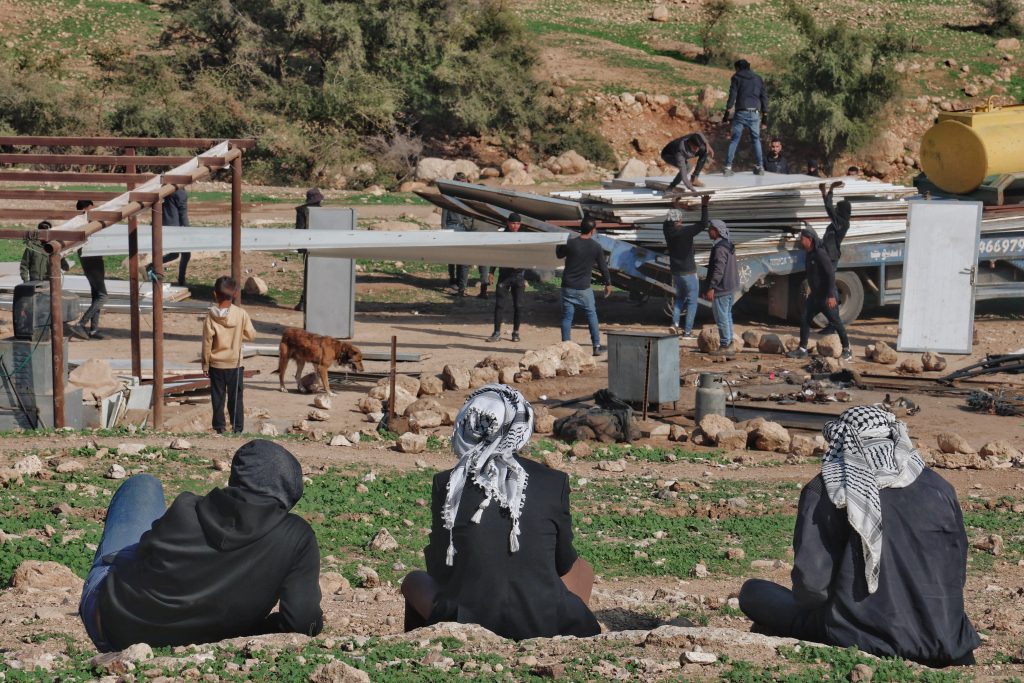 Palestinian Bedouin residents of Ras Ain al-Auja dismantle their homes as Israeli settlers forcibly expel them from their lands, January 2026. (Photo: Wahaj Bani Moufleh)
“In the village, people buy their clean drinking water from the Israeli Mekorot company, which draws from the same spring from Ain al-Auja that it has used for years to supply surrounding Israeli settlements,” Fuqaha explained. “But the villagers are farmers, and they depended on direct access to the source for their livelihoods. Now they have been forced to overhaul their entire production model,” he said.
The Jericho area is known for its agricultural activity, especially its production of vegetables and fruits. The rest of Palestine has long relied on Jericho to supply vegetables and fruits during the off-season in the highlands, especially during the autumn and early spring. This agricultural cycle has always depended on water sources like Ain al-Auja.
“Bananas and seasonal vegetables were my primary source of income — I grew them all year round,” Miqarqir said. “Since the settlers took over the source, I have had to rely on the village well, but the water there is too salty and inadequate for growing vegetables or bananas.”
Like many farmers in the Jericho area, he has shifted to date palms, which require little water but take several years to bear fruit. Even then, however, “the market is too competitive, especially with Israeli dates and the big settler plantations,” he added. “Basically, my work as a farmer is over, and so is banana production in al-Auja.”
Ihab Sweiti, an engineer at the Palestinian Water Authority, told Mondoweiss that “settler attacks and takeovers of water sources are strategically targeted.” In his view, “these attacks concentrate in areas where settler expansion is most active, and Israeli military authorities react accordingly.”
Sweiti sits on a joint committee charged with coordinating water affairs between the Palestinian Water Authority and Israeli occupation authorities, the body that formally requests Israeli intervention when settlers attack water infrastructure. That dynamic, he said, changed after October 2023.
“In the immediate aftermath of October 7, the Israeli side suspended all contact with us for weeks, and when communication resumed, things began to change,” he said. “Over time, we noticed that field officers who had previously been able to resolve problems on their own now needed approval from higher up. Eventually, it became clear that the entire Israeli military decision-making process for the West Bank had been placed under a civil authority in the Defense Ministry, reporting directly to Finance Minister Bezalel Smotrich,” Sweiti said.
This restructuring of the Israeli military’s daily management of the West Bank occupation is what Smotrich himself reportedly called a change “in the system’s DNA,” and what many observers have described as the de facto annexation of the territory. This shift has subordinated every decision to the political logic of settlement expansion, including on matters related to water.
“We noticed, for instance, that when we reported the repeated settler attacks on the Ein Samiya reservoir east of Ramallah, the Israeli army eventually intervened and reined them in,” Sweiti said. “But when it came to Yatta’s wells or Ain al-Auja, there were delays and bureaucratic deferrals that ultimately did nothing but allow settler groups to keep doing what they were doing.”
For Sweiti, the disparity isn’t a mystery: both the South Hebron Hills and the Jordan Valley are priority zones for settlement expansion, where the expulsion of Palestinians is an explicit and ongoing Israeli agenda.
According to Fuqaha, Palestinians in the Jordan Valley now have access to roughly 20% of the water available to them before October 2023, a supply that was already grossly inadequate. Before October 2023, Palestinians consumed an average of around 80 liters per day, compared to up to 240 liters per day for Israelis.
As Israel accelerates its settlement expansion alongside a sustained rise in settler violence, Palestinians in the West Bank are heading into another summer with less access to water than the year before. This is the latest front in a struggle for existence in which the most essential element of life has been turned into a weapon.
Comments (0)