By Meng Hao, Vision Times
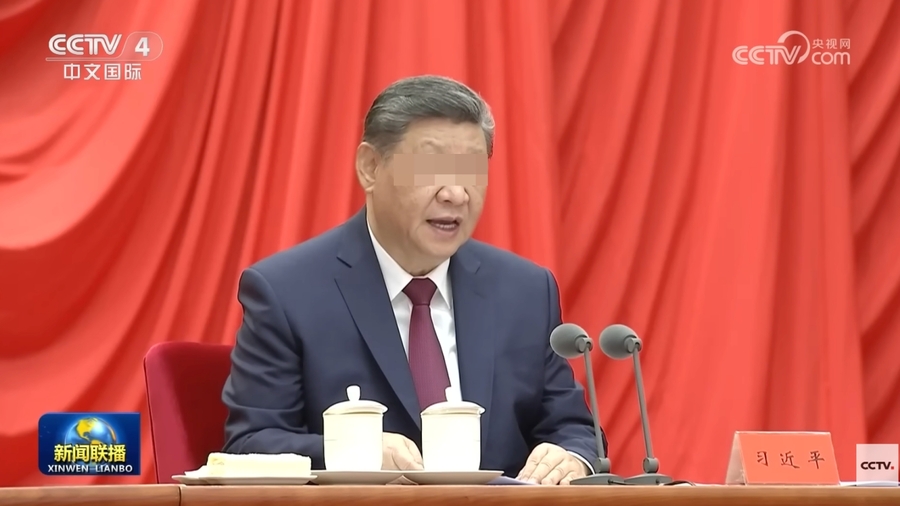
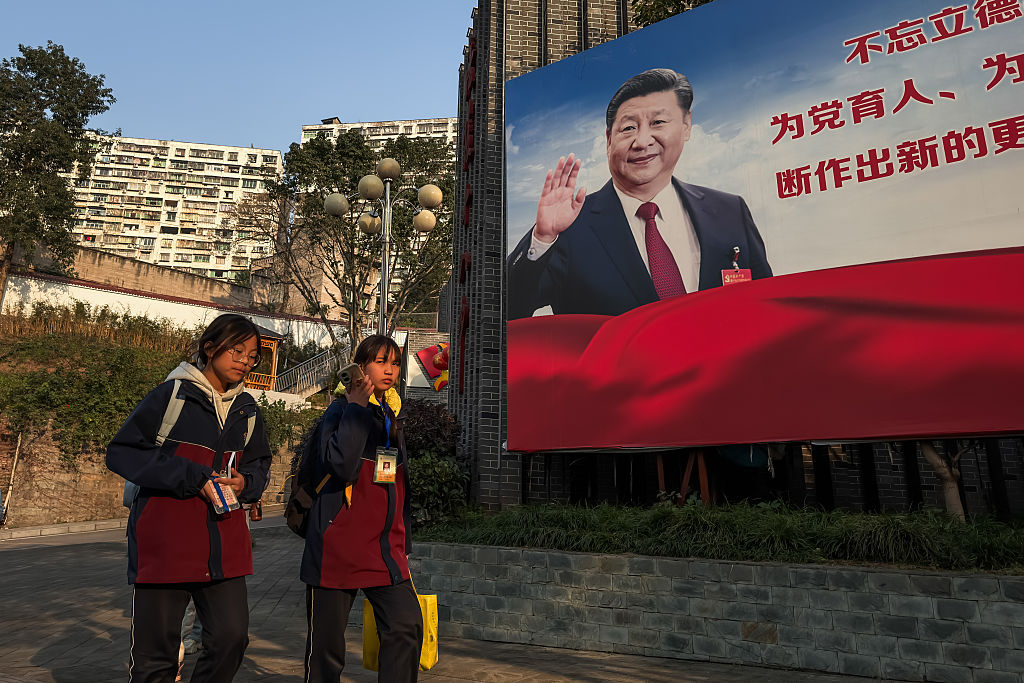
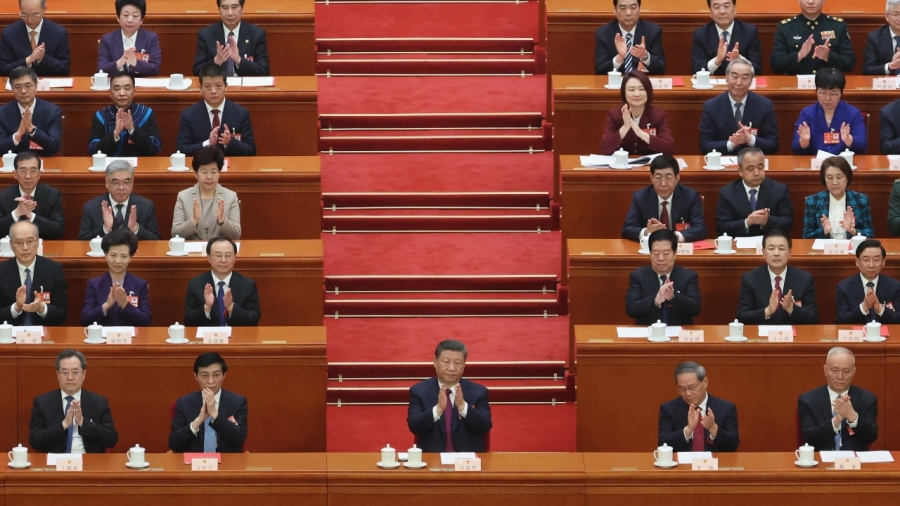
The U.S. military’s operation to capture Venezuelan President and longtime dictator Nicolás Maduro has not only upended Latin American politics but also triggered a chain reaction across the globe. China expert and political commentator Chen Pokong said that Chinese President Xi Jinping was “terrified,” prompting a series of emergency countermeasures that reveal acute fear within China’s top leadership of a potential U.S. “decapitation strike.”
From the sudden disappearance of Zhongnanhai from Chinese digital maps, to nationwide riot-control drills, to the eerie late-night broadcast of “Xi Jinping quotations,” the signals point to deep anxiety and fear at the heart of the CCP. At the same time, military blogger Zhou Ziding dissected the U.S. operation in detail, emphasizing that America’s ability to capture Maduro with zero casualties demonstrates a level of military dominance now at its peak, “so formidable that any adversary would think twice.”
RELATED: US Strike Sends Shockwaves Through Beijing as the CCP Faces a Multi-Front Crisis
Taiwan National University political science emeritus professor Ming Chui-cheng added that the operation wiped out two decades of CCP influence in Latin America overnight, signaling that a global anti-authoritarian tide is accelerating.
Sending a message
Success
You are now signed up for our newsletter
Success
Check your email to complete sign up
The chain of events began in the early hours of Jan. 3 when U.S. President Donald Trump ordered the execution of a special operation codenamed “Absolute Resolve.” Within hours, U.S. Delta Force operators successfully captured Maduro and his wife Cilia Flores from the Presidential Palace in Miraflores, Caracas. From planning to execution, the operation is already being described as a textbook case in modern military history.
Zhou Ziding explained that intelligence dominance was decisive. According to his analysis, the Central Intelligence Agency began preparations as early as August the previous year, building a comprehensive profile of Maduro’s daily life, including his eating habits, schedule, and even the types of pets he kept. Trusted informants close to Maduro provided real-time location data.
RELATED: Venezuela Sees Regime Change After Delta Force Raid and Maduro Arrest
To ensure success, the U.S. military reportedly built a full-scale replica of Maduro’s residence on American soil, allowing Delta Force to rehearse repeatedly. By early December, all preparations were complete. Trump even offered Maduro a final option: voluntary resignation and safe exile to Russia. Maduro refused.
At 10:46 p.m. local time on Jan. 2, Trump gave the final order. Within one hour, 150 aircraft launched from 20 platforms near the Caribbean, including F-22 stealth fighters, F-35 multirole fighters, F/A-18 Super Hornets, and EA-18 Growler electronic warfare aircraft. Stealth drones provided intelligence support.
By 2:00 a.m., U.S. forces reached Caracas airspace and initiated suppression of enemy air defenses. Key military sites, including La Guaira Port, Fort Tiuna, and La Carlota Air Base, were struck with surgical precision. Video footage showed La Guaira engulfed in flames as containerized weapons depots exploded. Fort Tiuna was flattened, with wreckage including Chinese-supplied “Lynx” armored vehicles. Russian-made S-300 and Buk air defense systems were also destroyed.
RELATED: US Military Escorts Maduro to NY Trial as Drug Trafficking Charges Come Into Focus
Meanwhile, Delta Force operators flew low, just 100 feet above ground, aboard Chinook helicopters of the U.S. Army’s 160th Special Operations Aviation Regiment, under the cover of AH-1Z Cobra attack helicopters. Though U.S. forces had prepared equipment capable of breaching a reinforced steel bunker within 47 seconds, the operation moved so quickly that Maduro was captured in his bedroom.
The assault force split into two teams — one to block reinforcements, the other to make the arrest. At 3:26 a.m., Maduro was transferred to the USS Iwo Jima. The entire operation lasted 14 hours and 40 minutes, with zero U.S. casualties.
Zhou Ziding remarked: “This represents the pinnacle of U.S. special operations — cleaner and more efficient than the operation that killed Osama bin Laden.”
Venezuela’s military collapsed psychologically. Fighter jets never took off, ground patrols became meaningless, and crowds flooded the streets celebrating. Maduro was later transferred to Brooklyn, New York, to await trial.
Beijing’s LATAM strategy collapses overnight
The capture dealt a severe blow to Beijing’s regional strategy. Venezuela had been a key CCP ally and oil supplier, sending roughly 80 percent of its exports to China. Just hours before his arrest, Maduro met with Beijing’s special envoy Qiu Xiaoqi, reaffirming an “all-weather partnership.”
RELATED: Maduro’s Capture Rattles Authoritarian Allies as Beijing Faces Energy Shock
That partnership evaporated overnight. Venezuela’s new authorities began gifting oil to the United States and permitted the seizure of Chinese and Russian tankers. Ming Chui-cheng noted that while Venezuela’s oil wealth once fueled leftist revolutions under Chávez and Maduro, decades of socialism devastated the economy. U.S. intervention, he argued, was driven not only by oil but by geopolitical necessity, to halt CCP expansion.
China’s long-term strategy of influence through loans, weapons systems, and military technology was exposed as fragile. Two decades of effort were effectively erased in a single operation.
Shockwaves spread to Iran and beyond
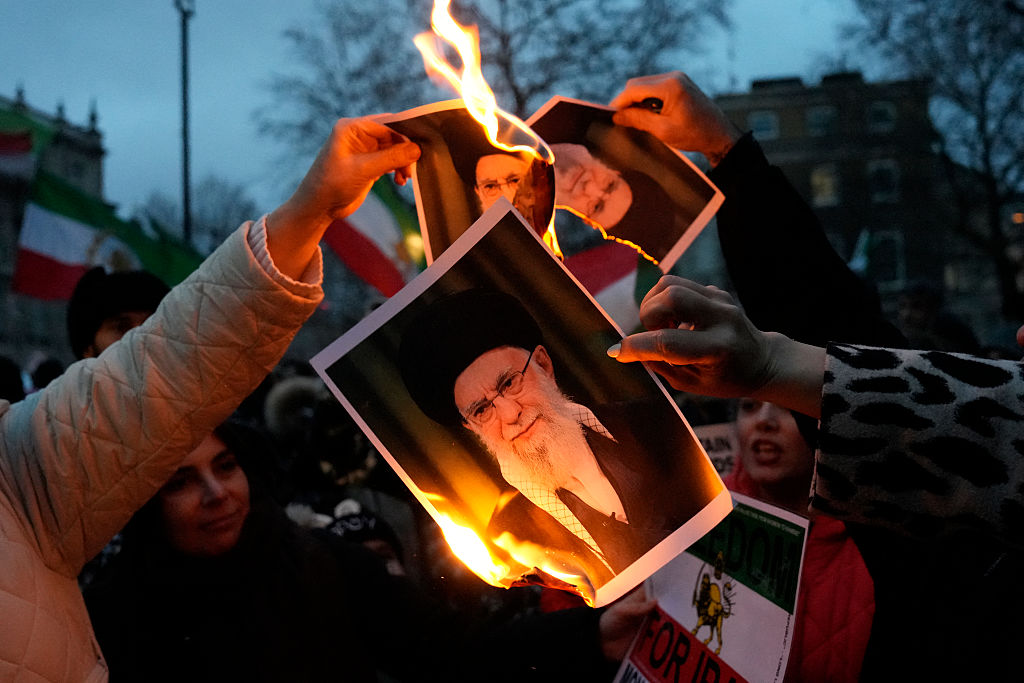
The Maduro operation emboldened protests elsewhere. Chen Pokong observed that Iran, already destabilized by inflation and economic collapse, saw demonstrations expand from December 29 onward to all 31 provinces, covering nearly the entire population. Protesters seized major cities, forcing Revolutionary Guard units to withdraw.
RELATED: Protests Erupt in 88 Iranian Cities as Tehran Faces Venezuela-Style Crisis Scenario
Supreme Leader Ali Khamenei ordered a crackdown that reportedly killed more than 40 protesters and detained hundreds, while cutting internet and phone services. However, Elon Musk’s Starlink reportedly restored connectivity, allowing protests to continue. Chants included “Death to the dictator” and “Death to Khamenei,” alongside calls to restore a constitutional monarchy.
Trump publicly warned Khamenei: “If you massacre the people, I will show no mercy.”
He also spoke of a “very hard strike” against Iran’s vulnerabilities. Analysts said Washington was coordinating with Saudi Arabia, Egypt, and Israel. Ming Chui-cheng warned that if Iran collapses, China’s oil supply, roughly 15 percent of its demand, would suffer devastating losses, pushing total losses toward 20 percent and unraveling Beijing’s Middle East strategy.
Xi’s emergency countermeasures
Against this backdrop, Chen Pokong outlined what he described as Xi Jinping’s visible panic.
First, on Jan. 4, Zhongnanhai vanished from Baidu, Gaode, and Tencent Maps. Searches returned messages such as “no relevant address found in Beijing.” Netizens mocked the move: “Do you think the U.S. military uses Baidu? They use Google.” Chen interpreted this as Xi effectively admitting fear of being captured alive, worrying about U.S. or even Taiwanese “decapitation strikes.” Online jokes spread: “From ‘the East rises, the West falls’ to ‘the East hides, the West hunts.’”
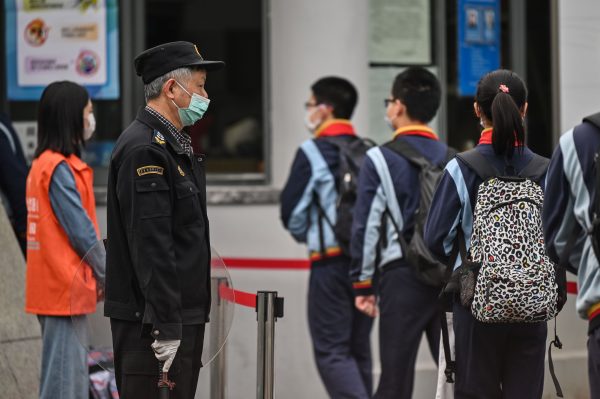
Second, security in Beijing was dramatically tightened. Tourist groups were barred, entry permits were enforced for travelers from Hebei, and facial recognition checks multiplied. Chen quipped, “Are they worried tourists are assassination teams?”
Third, riot-control drills erupted nationwide. In provinces including Shandong, Sichuan, and Guangdong, heavily armed police conducted street exercises. Chen stressed: “This is not preparation for Taiwan or foreign enemies; it is aimed at the Chinese people.”
Fourth, in the early hours of Jan. 9, a five-minute broadcast of “Xi Jinping quotations” suddenly aired overnight in Anqing, Anhui province. After public complaints, authorities claimed responsibility had been “handled.” Chen interpreted this as a Mao-era psychological tactic, testing indoctrination methods, but noted that public revulsion showed how much China has changed since the reform era.
Chen added that activity around underground bunkers in Beijing has increased, with layers of protection surrounding Xi. Trump’s approach, combining warnings with decisive action, has clearly resonated. Chen recalled Trump’s direct message to Xi: “If you attack Taiwan, I will bomb Beijing.” Xi has since reiterated he will not use force in his lifetime, now with even less confidence.
A warning to the CCP
Zhou Ziding concluded that the zero-casualty capture of Maduro showcased the overwhelming integration of U.S. intelligence, training, and technology. He dismissed online bravado about replicating such an operation against Taiwan: “The PLA cannot match Russia’s airborne forces—let alone the U.S. military.”
Chen Pokong emphasized that Maduro’s capture struck the CCP on multiple fronts: oil supply disruption, shrinking influence in Latin America, and the exposure of Chinese military equipment’s weaknesses. If Iran follows, Beijing’s Middle East strategy will also collapse.
Ming Chui-cheng warned that the episode has created a negative demonstration effect for the CCP: Latin American countries may realign toward Washington, global authoritarian regimes continue to fall, and Beijing’s influence is growing weaker by the day.
Editorial note: Views expressed in this article are the opinions of the author and do not necessarily reflect the views of Vision Times.


Comments (0)