By Yin Hua, Vision Times
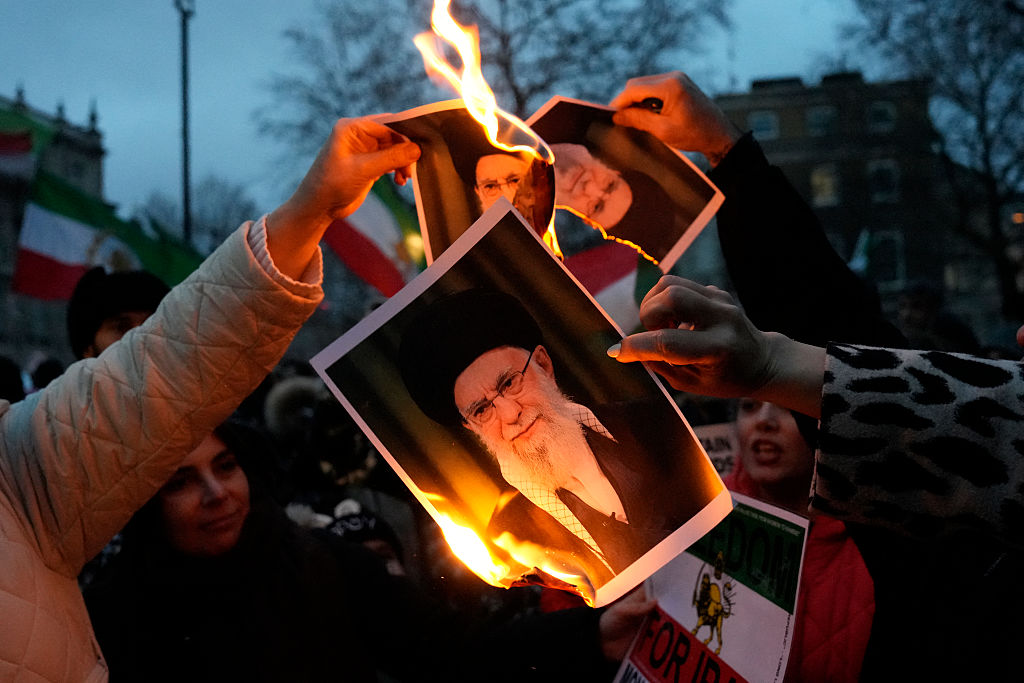
At the start of 2026, the Middle East’s geopolitical powder keg has been ignited. Reports indicate that Iran’s violent suppression of nationwide protests has resulted in up to 20,000 deaths, prompting U.S. President Donald Trump to revive the “tariff hammer” while simultaneously issuing his strongest military warnings yet. Trump has said the U.S. “stands at the ready” to help the people of Iran.
Political commentator Tang Hao and military analyst Zhou Ziding (host of the YouTube channel Military Intelligence Bureau) have each offered in-depth analyses — one from a political-economic angle, the other from a battlefield perspective — to dissect Trump’s “combined strike strategy” and explain why the Chinese Communist Party (CCP) leadership under Xi Jinping now finds itself trapped in what Tang calls “seven major nightmares,” resulting in strategic paralysis.
RELATED: Iran Protests Escalate Nationwide Amid Crackdown and Strikes
US military action
Responding to Trump’s Jan. 13 post on Truth Social telling the Iranian people that “help is on the way,” Zhou Ziding provided a technical breakdown of what U.S. action could realistically look like in early 2026.
Success
You are now signed up for our newsletter
Success
Check your email to complete sign up
Despite Trump’s aggressive rhetoric, Zhou argues that current U.S. force posture in the Middle East sits in a delicate “deployment gap,” making large-scale ground operations unlikely in the near term. Instead, Washington would rely heavily on technology-driven, stand-off strikes that exploit overwhelming capability gaps.
Geographic Constraints and the “Time Lag” Problem
Zhou notes that U.S. global deployments are still affected by the situation in Venezuela.
Carrier gap: The USS Gerald R. Ford, the U.S. Navy’s most powerful carrier, remains in the Caribbean following operations tied to Venezuela. Meanwhile, the USS Abraham Lincoln, originally assigned to the Indo-Pacific, is currently operating in the northern South China Sea. Even if ordered to move immediately through the Strait of Malacca into the Indian Ocean, it would take 12–14 days to reach a combat position near the Persian Gulf.
Shield, not sword: Only three Arleigh Burke class destroyers are currently deployed in the Persian Gulf and Gulf of Oman. Their role is defensive by using upgraded radar systems to intercept potential Iranian Sejjil medium-range ballistic missiles and protect U.S. bases in Qatar and Bahrain, not to launch amphibious assaults.
Air Superiority: A Deadly Contest With Iran’s Air Defenses
Zhou compared the current situation to the June 2025 “Midnight Hammer” operation, emphasizing how the U.S. would strike without mass troop buildup.
Stealth threshold: Iran’s air defense network combines Russian-made S-300PMU2 systems with Iran’s indigenous Bavar-373. Zhou explains that without large formations of F-22 or F-35 stealth fighters conducting electronic warfare, non-stealth aircraft currently stationed in Qatar and the UAE, such as F-15Es and A-10s, would struggle to penetrate Iran’s defenses without suffering losses.
The B-2 “one-way transparency”: The U.S. military’s strongest card is the B-2 Spirit stealth bomber, flying intercontinental missions from Whiteman Air Force Base in Missouri. With a radar cross-section under 0.1 square meters, the B-2 can evade Iran’s low-frequency radar. However, Zhou cautions that even B-2s alone could only destroy dozens of critical nodes, insufficient to fully disable Iran’s 150,000-strong Islamic Revolutionary Guard Corps (IRGC) in a short time.
Stand-off strikes: Zhou predicts Trump’s preferred option would be Ohio-class guided-missile submarines (SSGNs) launching Tomahawk cruise missiles (range exceeding 1,600 km), combined with B-52H bombers firing AGM-158B JASSM-ER stealth missiles from outside Iranian airspace. While this approach cannot seize territory, it can precisely cripple Khamenei’s communications hubs, air-defense command centers, and key nuclear facilities.
The Difficulty of a ‘Decapitation Strike‘
Zhou said Iran’s supreme leader Ali Khamenei is believed to be hiding near the northeastern holy city of Mashhad, where deep, Soviet-era hardened bunkers remain.
GBU-57 bunker busters: A true decapitation strike would require B-2 bombers carrying the 14-ton Massive Ordnance Penetrator (MOP). Such an operation hinges on real-time human intelligence (HUMINT). With Iran under nationwide internet blackouts and secret-police sweeps, pinpointing Khamenei’s live location is currently the single hardest challenge.
Tariffs as a weapon
From a political-economic perspective, Tang Hao analyzed Trump’s Jan. 12 announcement of a 25 percent “collective liability” tariff on all countries trading with Iran. Tang described this move as a “non-military nuclear weapon,” a way to crush Iran without firing a shot. Any country trading with Iran would face an extra 25 percent tariff when exporting to the U.S., effectively cornering Beijing, New Delhi, and Ankara.
The aim, Tang said, is to cut off the IRGC’s financial lifeline. Once China reduces purchases of Iranian oil to protect access to the U.S. market, Iran’s currency (the rial) would collapse completely. Trump’s strategy, Tang argued, is to let Iran’s regime implode financially, creating a power vacuum that would later allow for precise military action if necessary.
Xi in crisis
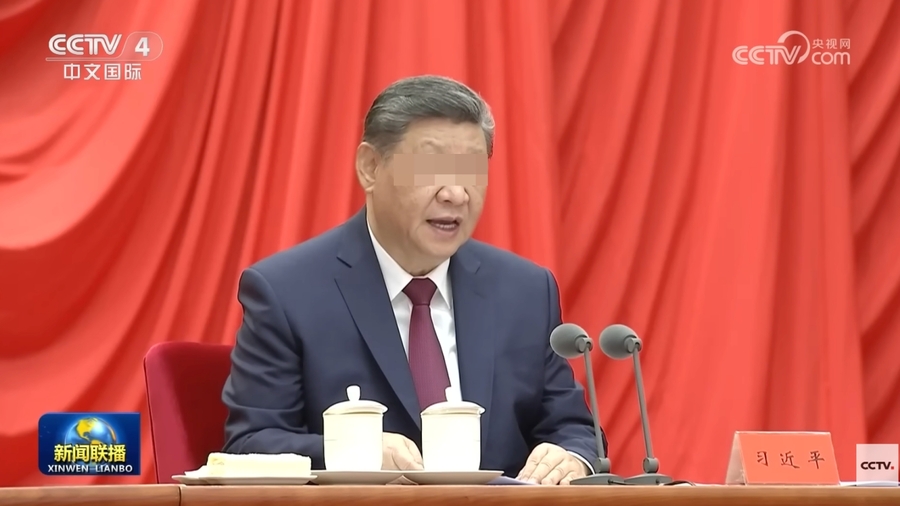
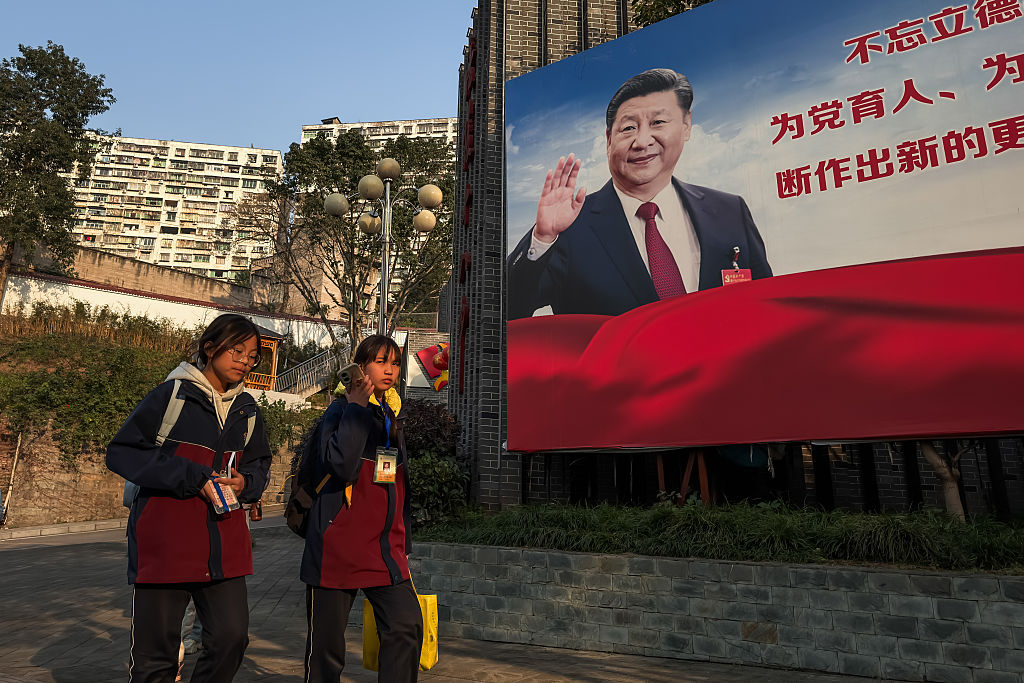
Tang Hao explained that Beijing’s unusual silence and hesitation amid Iran’s crisis reflect not just Tehran’s predicament, but Xi Jinping’s collapsing sense of personal security. Tang summarized this as seven nightmares:
Loss of personal security: After Venezuela’s leader was captured in what he thought was a secure underground command center, Xi fears the U.S. may already know every escape route beneath Zhongnanhai, the Qinling Mountains, or Beijing’s western hills.
The loyalty paradox of personal guards: If Cuban bodyguards failed Maduro, Xi now doubts the absolute loyalty of China’s Central Guard Bureau under high-tech U.S. pressure.
Hidden links between anti-Xi factions and Washington: With leaks enabling Maduro’s capture, Xi fears that disaffected PLA officers, especially after purges involving Qin Gang, Li Shangfu, and the Rocket Force, could leak his real-time coordinates during a crisis.
The collapse of Chinese weapons mythology: Chinese-supplied radar and drones in Venezuela proved useless under U.S. attack, forcing Xi to reconsider whether the PLA’s celebrated strength is little more than a paper tiger.
Psychological shock from suspected sonic weapons: Zhou noted reports of U.S. forces using LRAD acoustic weapons, instantly incapacitating defenders—highlighting a generational technological gap Beijing cannot match.
Growing fear among generals: As authoritarian leaders fall one by one, PLA commanders increasingly seek personal escape routes, raising Xi’s fear of battlefield betrayal.
Domestic collapse and coup risk: Xi’s greatest fear is that fully backing Iran would trigger total U.S.–China decoupling, combining economic collapse with internal opposition to spark a coup in Beijing.
A global power reshuffle
Both analysts agree Iran is approaching a critical tipping point. Zhou predicts that within two weeks, as the USS Abraham Lincoln and stealth aircraft reposition, the U.S. could launch a “blinding strike” to cripple Iran’s defenses. Tang argues that Trump’s tariff offensive has already economically sentenced the Islamic regime to death.
With Xi immobilized by his seven nightmares and unable to act, the Iranian people’s determination to resist may become the first domino in a broader collapse of global authoritarianism. Trump’s three-pronged strategy — military deterrence, economic strangulation, and political isolation — is not aimed at Iran alone, but serves as a direct warning to Beijing.
In 2026, the political clocks of both the Middle East and the Far East appear to be ticking toward what many now describe as a moment of historic upheaval.
Editorial note: Views expressed in this article are the opinions of the author and do not necessarily reflect the views of Vision Times.



Comments (0)