By Li Jingyao, Vision Times
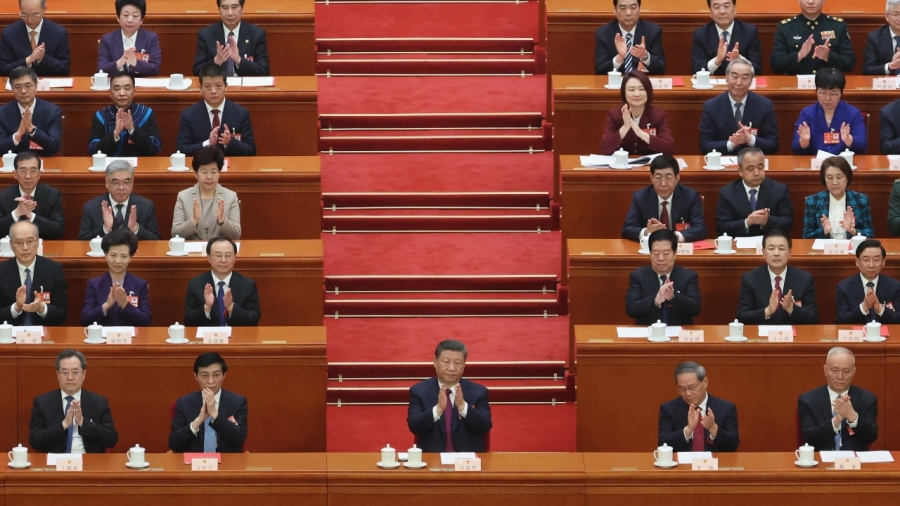
Though the Fifth Plenary Session of the Chinese Communist Party’s (CCP) Central Commission for Discipline Inspection (CCDI) wrapped up on Jan. 14, the political signals continue to ripple within Beijing. Analysts say the meeting exposed an “extraordinary shift” in power dynamics at the top of the CCP: CCDI chief Li Xi appeared to openly overstep his bounds, while leader Xi Jinping saw his authority sharply downgraded, with his power, in effect, “locked into a cage.”
RELATED: Xi’s Power Wanes Amid Sweeping Party Purge and Succession Uncertainty
A shrinking voice
Commentator Jiang Feng noted that in China’s authoritarian system, diminishing rhetoric almost always reflects diminishing real power. Xi’s reduced presence at this year’s CCDI plenum offers a clear example.
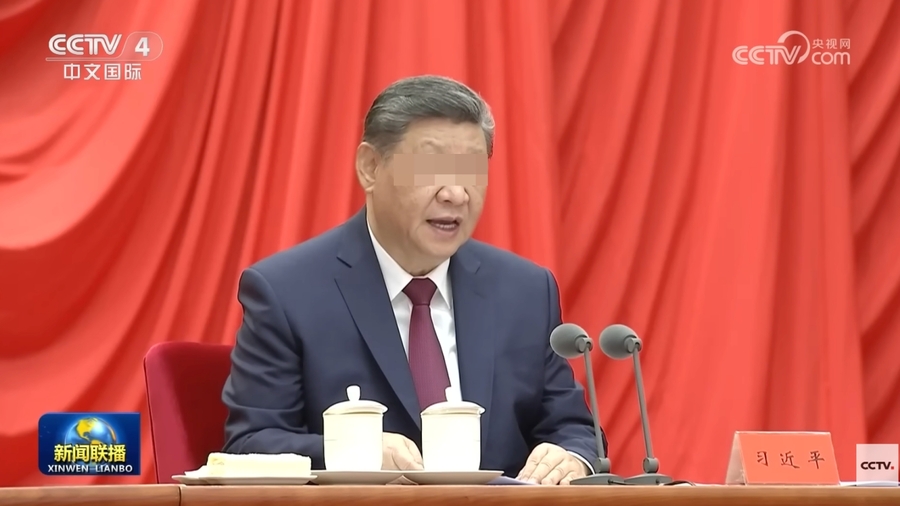
At the opening of the Fifth CCDI Plenum, Xi’s speech ran about 1,290 words across five paragraphs. By comparison, at the Third Plenum in 2024, his address stretched to approximately 2,240 words across twelve paragraphs. The drastic cut, analysts argue, suggests that Xi’s remarks were constrained by a newly imposed “red line.”
Success
You are now signed up for our newsletter
Success
Check your email to complete sign up
RELATED: Xi’s Anti-Corruption Sweep Backfires as Record Number of Loyalists Fall
Independent producer Li Jun observed that the reduction, from 12 paragraphs to five, indicates that CCDI operations are no longer firmly under Xi’s direct control.
The shift was further reflected in the official communiqué. Traditionally, the fourth paragraph is devoted to praising and studying Xi’s directives. Yet the length of that section fell sharply: 446 words at the Third Plenum, 457 at the Fourth, and just 319 at the Fifth. Familiar exaltations once used to describe Xi, phrases such as “far-sighted historical vision,” “towering strategic foresight,” and “thunderous awakening,” were entirely absent.
Li Xi’s ‘audacity’
The most striking, and to some observers, astonishing, moment came when Li Xi’s work report adopted the exact same headline theme as Xi’s own remarks: “Advancing full and strict Party self-governance with higher standards and more concrete measures to provide strong guarantees for achieving the goals of the 15th Five-Year Plan.”
RELATED: Fearing a ‘Decapitation Strike,’ Xi Tightens Security as Zhongnanhai Vanishes From Maps
U.S.-based political analyst Chen Pokong argued that this “collision” signals the re-emergence of a collective leadership system following the Third Plenum, one in which Xi is no longer treated as a singular, unchallengeable authority.
Jiang Feng was more blunt, calling Li Xi’s move a clear act of political overreach. “By Party norms, the General Secretary sets the tone. Standing Committee members can only study, implement, and execute; it is taboo to place themselves on equal footing,” he said.
By echoing Xi word for word, Li Xi effectively declared that his statements now carry the same weight as Xi’s. The obvious question, analysts ask, is: who gave him that authority?
A new power center?
Attention has turned to persistent online rumors about a newly formed “Central Decision-Making and Coordination Body.” According to commentator “An Ordinary Person Inside the Firewall,” this body, reportedly established last year, has effectively sidelined the Politburo Standing Committee. The Politburo serves as China’s top ruling body.
The alleged structure places former Premier Wen Jiabao as chief coordinator, with Wang Yang as executive deputy, operating from within the General Secretary’s office at Zhongnanhai. Liu Yuan is said to oversee military affairs from the August 1 Building. While unconfirmed, these reports align with observable shifts in power distribution.
Analyst Zhong Yuan highlighted two highly unusual phrases in the Fifth Plenum communiqué as:
The need to “maintain Party unity” as a top priority, and
The requirement to “lock power into the institutional cage” to meet the 15th Five-Year Plan objectives.
By comparison, last year’s Fourth Plenum emphasized “strict Party governance” and “deepening anti-corruption.” This year’s pivot, from discipline to unity, represents a major reversal of Party rhetoric.
Zhong argued that this signals CCDI’s loss of autonomy and its transformation from a personal weapon of the top leader into a more constrained, institutionally supervised body. Notably, the communiqué also stated that the National Supervisory Commission would now report directly to the National People’s Congress Standing Committee and “actively accept oversight” to prevent internal abuses, adding another layer of what Zhong described as a new “institutional cage.”
“Power is never voluntarily caged in the CCP,” Zhong wrote. “But internal struggle can cage specific individuals. The expanded Politburo meeting already confined the Party leader’s authority. This CCDI communiqué appears to formalize that cage.”
Anti-corruption push turns inward
Li Jun noted that the communiqué’s repeated use of the word “more” — “more resolute implementation of central decisions” and “more scientifically locking power into institutions” — sounded less like loyalty than quiet rebellion. “Xi used to mention ‘locking power in a cage’ briefly when he first came to power,” Li said. “Then he stopped because he could not possibly accept limits on his authority. Now the phrase has returned, but not from his mouth.”
Official CCDI data underscore the ferocity of the ongoing purge. In 2025 alone, 65 centrally managed officials fell, with 789,000 cases filed nationwide between January and September, including 90 provincial-level cadres. The most shocking front was the military: investigations reached the Central Military Commission itself.
Ahead of the Fourth Plenum, He Weidong, Vice Chairman of the Central Military Commission and a Politburo member, along with eight other senior officers including political chief Miao Hua, were removed. Such high-level military purges are extremely rare. Crucially, Li Jun emphasized, those targeted were overwhelmingly officials promoted and trusted by Xi himself.
From supreme leader to waning power
Analysts now trace a clear sequence: Xi lost effective control of the military at the Third Plenum, lost dominance over Party affairs at the Fourth, and with the Fifth CCDI Plenum has now been stripped of control over the disciplinary apparatus that once served as his sharpest weapon.
In short, Xi Jinping’s authority has been comprehensively reined in. The message emerging from the CCDI’s latest gathering is unmistakable: The era of unchecked personal rule is over, and Xi’s power has been firmly “locked into a cage.”



Comments (0)