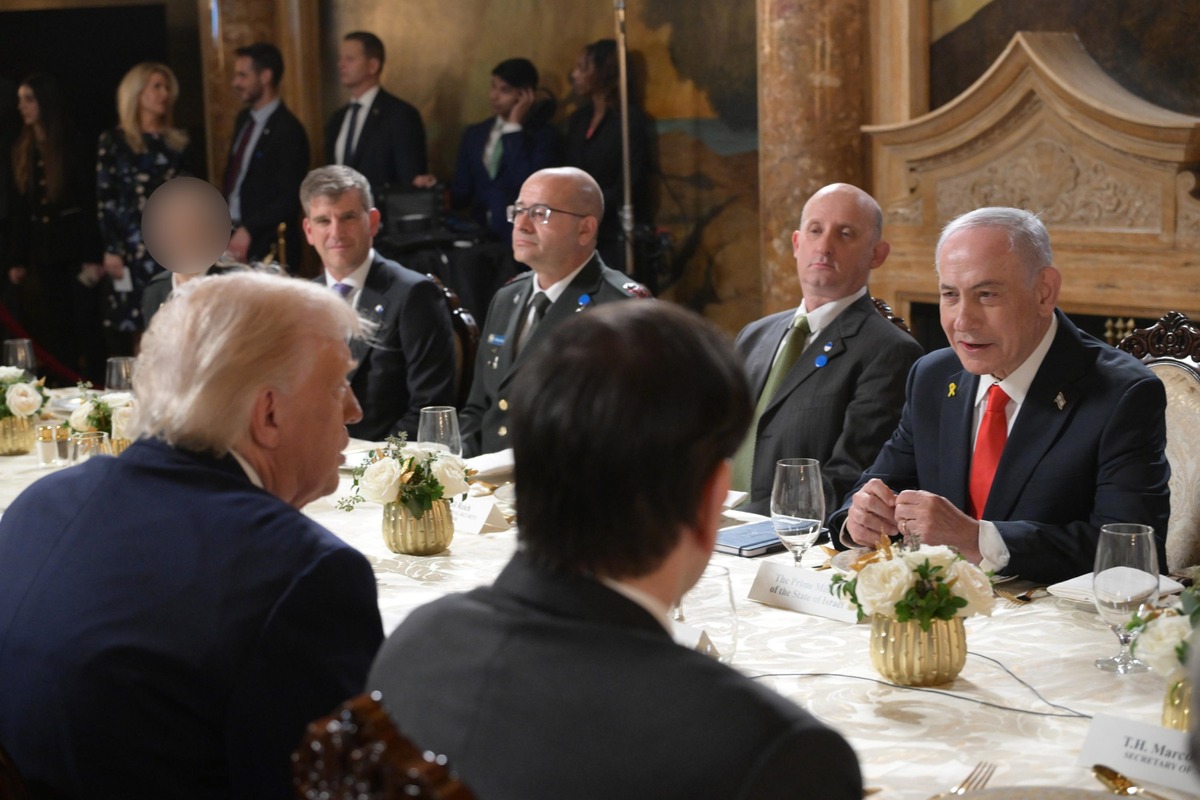
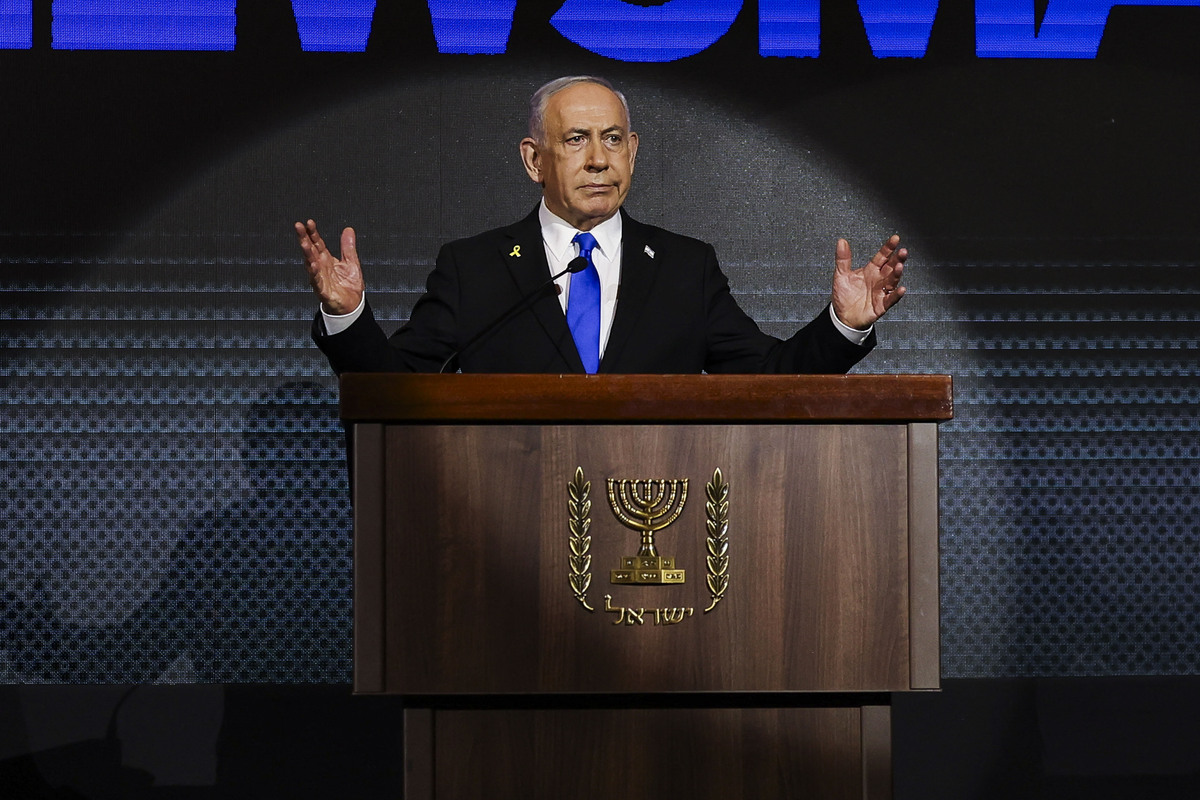
Nothing about Donald Trump’s invitation for Benjamin Netanyahu to join the proposed ‘Peace Council’ for Gaza changes the Israeli prime minister’s calculations. Netanyahu, accustomed to disregarding international resolutions, does not view any multilateral framework as anything more than a piece of paper he can ignore or tear apart without consequence, no matter how many states sign on.
The irony is stark: the invitation arrived only months after the International Criminal Court issued an arrest warrant for Netanyahu in November 2024, charging him with war crimes and crimes against humanity in Gaza. Yet Washington presented him as a partner in ‘peace’ without hesitation.
Even Steve Witkoff’s announcement that ’20 or 25 world leaders’ had agreed to join the council does little to shift the balance. Large numbers do not intimidate or persuade Netanyahu. He knows that real power lies not in diplomatic headcounts, but in controlling the ground.
READ: Ali Shaath begins duties as head of Gaza administration committee, signs mission statement
The proposed ‘International Peace Council’ is not a technical mechanism for post-war administration. It is an attempt to redefine who has the right to determine Gaza’s future. Strikingly, the council’s charter does not mention Gaza at all, suggesting that the enclave is merely a pilot project for a new political architecture — a parallel framework to the United Nations, led by Washington and designed to project American influence beyond traditional institutions.
The council also reflects a deeper shift in conflict management: the privatisation of international decision-making. Rather than Gaza being addressed through the Security Council, the issue is now being handled by ad hoc alliances, political loyalties and transactional interests. If this model is successful, it could set a precedent for other conflicts, replacing international legitimacy with the legitimacy of power and international law with political deals. Gaza has effectively been transformed from an open wound into a ‘file’ over which global powers compete, as if a humanitarian catastrophe could be managed through a new committee. A deeper question is whether Gaza has truly become an American domain or if Washington is merely constructing an international façade for a dominance that it cannot enforce alone.
What is often overlooked is that the Peace Council is emerging at a time when the legitimacy of international institutions is collapsing. The United Nations — once the natural venue for any discussion on Gaza — has become incapable of enforcing its resolutions or even upholding the symbolic weight of international law. This vacuum enables Washington to propose an alternative framework and simultaneously allows Netanyahu to dismiss it. The council is being born into a fractured global order: it has no roots, no moral authority and no enforcement tools. The paradox is clear: the United States wants to fill the vacuum, but Israel benefits from it more than it fears it.
The question is whether we are witnessing the reconstruction of the global system or its gradual dismantling.
READ: Tony Blair distances himself from $1bn fee for Trump-led Peace Board membership
The United States wants to play a central role in shaping the post-war landscape. Under Trump, the Peace Council has become less of a multilateral platform and more of an attempt to rewrite the rules of the game — an alternative framework that begins with Gaza and could extend to other crises. However, this Americanisation collides with a simple reality: Israel retains operational control, and its veto power comes into play even before the council convenes.
Israel swiftly rejected the council’s composition — not because of the concept itself, but because it includes countries it considers “undesirable”, such as Turkey and Qatar. It is as if Washington is trying to bring Tel Aviv’s rivals into the room through a side door.
This is where the real tension between Trump and Netanyahu emerges. Their ideological alignment does not prevent them from disagreeing over who gets to define ‘peace’ in Gaza. Trump has leverage in the form of funding, political support and the ability to influence the international narrative. However, Netanyahu has a more potent weapon: the ability to obstruct any initiative on the ground and render any international framework toothless.
This is a negotiation between two men who recognise that they need each other yet disagree on the boundaries of power. The inclusion of Turkey and Qatar sends a dual message: Washington wants to distribute roles, but not leadership. Israel views this as an attempt to internationalise the issue in a manner that restricts its freedom of action.
Three scenarios emerge:
– A conditional Americanization of the file that still leaves Israel dominant.
– A soft clash between Washington and Tel Aviv ending in a face‑saving compromise.
– The council’s failure and a return to fragmented, competing tracks.
But the core issue lies beyond scenarios. Can Gaza be turned into an international project without acknowledging that its tragedy is political before it is humanitarian? And can any council—whatever its name—impose peace without justice?
Gaza today is not merely an American or Israeli matter. It is a moral test for the world, and a political test for anyone who believes maps can be redrawn while the wound remains open.
OPINION: The guilty cannot fix the world
The views expressed in this article belong to the author and do not necessarily reflect the editorial policy of Middle East Monitor.