Israel’s once-lucrative agricultural export industry is facing an existential crisis, with farmers warning of a looming “collapse” as the country becomes increasingly isolated in global markets. The sharp downturn comes in the wake of growing international opposition to Israel’s genocidal assault on Gaza, and is being described by Israeli media as part of an “alliance of the boycotted”.
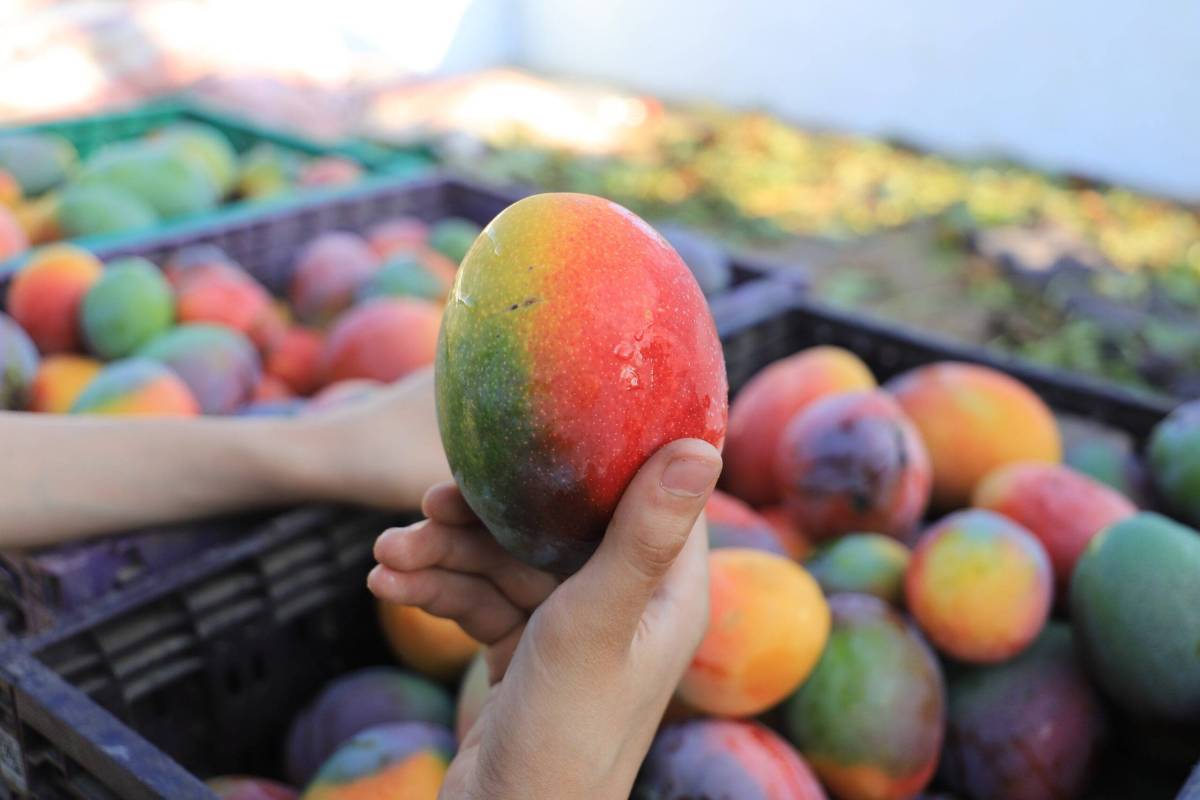
Recent reports by Israel’s public broadcaster Kan 11 reveal that Israeli exporters—particularly citrus and mango producers—are being hit hardest, with orders from Europe and Asia drying up. The decline in exports is said to be so severe that farmers now fear the total collapse of a sector long portrayed as central to Israel’s national image and economy.
“We’re actually operating at a loss since the war [in Gaza],” said Nitzan Weisberg, an orchard manager in Givat Haim Ichud, in a televised segment. He warned that the entire citrus sector may soon be uprooted due to the drastic fall in overseas demand.
At Ein Hahoresh and Hibat Zion, once key exporters of Israeli citrus, farmers now keep their produce for local consumption or low-profit juice markets. “Before the war, we were exporting to Scandinavia,” explained Daniel Klusky, secretary general of the Israeli Citrus Growers’ Organisation. “But after the war, we haven’t even exported a single container.”
Farmers blame multiple factors—including logistical disruptions due to Yemen’s Houthi blockade in the Red Sea—but most acknowledge that the backlash over Israel’s genocide in Gaza is central. “They don’t want our mangos,” mango grower and retired general Moti Almoz admitted. “In Europe, they talk to us only if they’re missing something… If they have an alternative, they avoid buying from us.”
Read: 40,000 Israeli companies have closed since October
The consequences are stark. Mango producers in the north have seen up to 700 of 1,200 tonnes of fruit rot on trees. “It’s a crisis the likes of which we haven’t ever experienced,” said Dodi Matalon, who now relies on direct local sales to remain afloat.
Some Israeli farmers, like Almoz, are so ideologically committed to the war that they have refused to sell to Palestinian markets in Gaza, even if it would bring in desperately needed revenue. “If there’s a chance that I lose money because this turns into a Hamas interest, then I need to lose money,” he insisted, while simultaneously lamenting hundreds of thousands of shekels in losses.
Kan 11 reporters noted that the only remaining export market appears to be Russia. One grower dubbed it the “alliance of the boycotted”, a club in which Israel now finds itself alongside other globally sanctioned states.
The reputational damage, Mondoweiss observes, is profound. Perhaps no symbol better captures Israel’s declining image than the near-total disappearance of “Jaffa oranges” from global markets. Originally cultivated and exported by Palestinian farmers in the port city of Jaffa—most of whom were ethnically cleansed during the 1948 Nakba—the Jaffa orange became a world-renowned brand long before the establishment of Israel. Its appropriation by Israel has long stood as a symbol of settler colonial expropriation. Its current decline, Mondoweiss notes, is being interpreted as a market-driven moral reckoning.
The collapse of agricultural exports is just one indicator of a much wider economic reckoning underway. According to a detailed investigation by +972 Magazine, Israel’s economy is beginning to buckle under the strain of its assault on Gaza and the growing global backlash. Major sectors—particularly tech and investment—are suffering significant contraction, with foreign investors increasingly hesitant to engage with a “pariah state”.
+972 notes that Israeli government data points to economic activity dropping by 26 per cent in the final quarter of 2023—the sharpest downturn since the COVID-19 pandemic. Consumer spending, too, has plummeted as thousands of families face displacement or mobilisation, and public debt soars due to wartime expenditure. While the government has sought to frame this downturn as temporary, economists cited in the report warn that the crisis may signal a longer-term unravelling of Israel’s global economic integration.