
Remember me








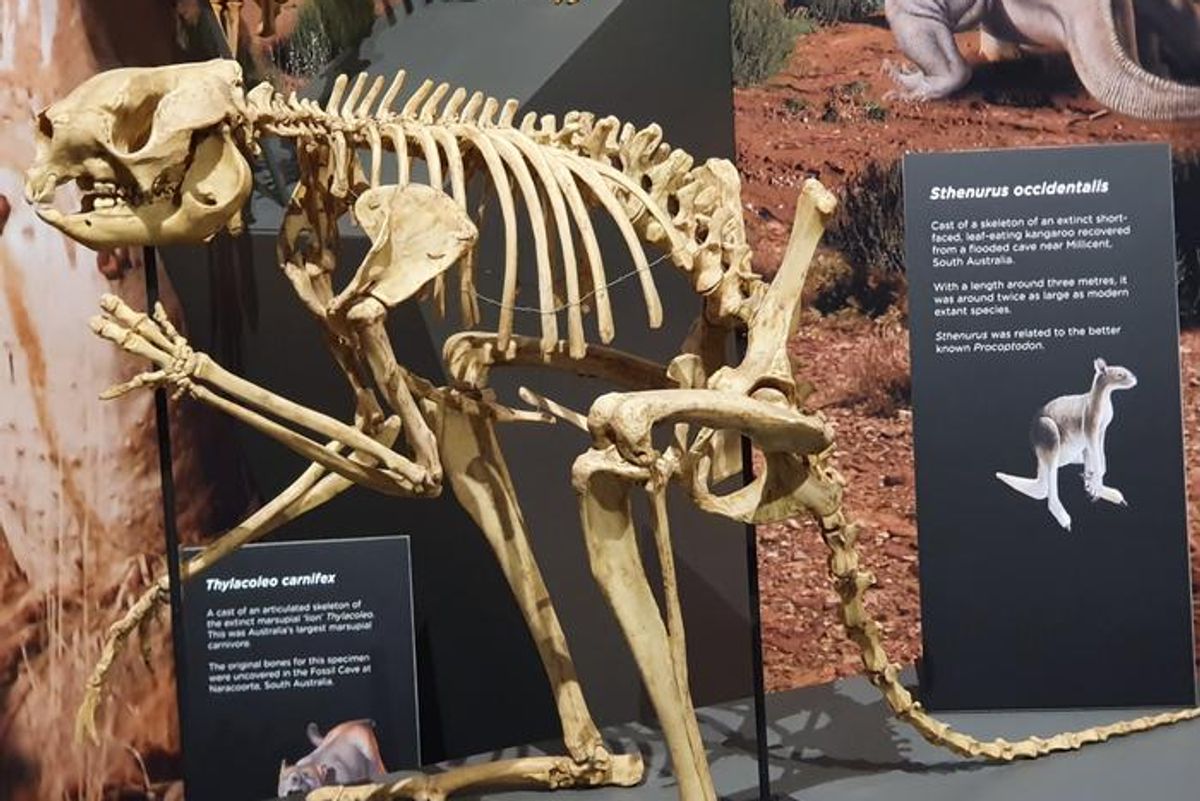
While modern-day kangaroos are well known for their hopping abilities, their giant ancestors likely didn’t hop from place to place because of their large size. However, new research may have just revealed the giant kangaroos' ancient hopping past.
Some of these ancient kangaroo species could weigh up to 550 pounds, and because of their weight, previous research indicated that these kangaroos were too heavy for their ankle bones to support hopping. In a paper published in Scientific Reports, researchers reanalyzed fossils and bones of kangaroo species to determine whether these claims held up.
"Our findings show that these animals weren’t just larger versions of today’s kangaroos. They were built differently, in ways that helped them manage their enormous size," said Megan Jones, who is the lead researcher, in a press release.
Read More: A New Relative of the Kangaroo Has Just Been Discovered — Only They Are Already Extinct
Comparing Ancient Kangaroos to Modern Kangaroos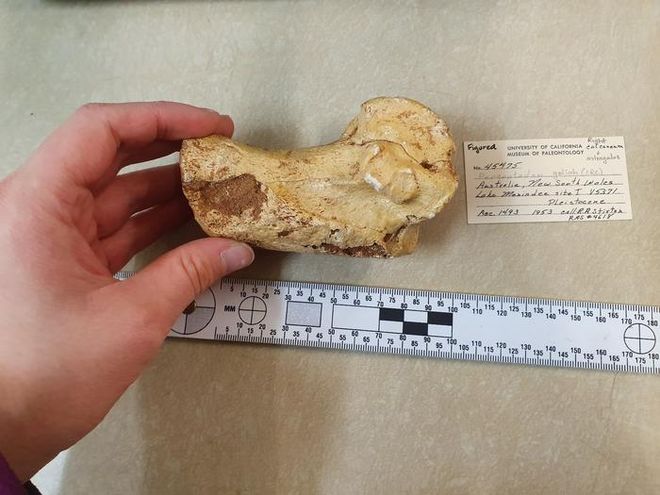
The heel bone of Procoptodon goliah, the largest known giant kangaroo species.
(Image Credit: Megan Jones/ UCMP)
Megan Jones from the University of Manchester and colleagues from the University of Bristol and the University of Melbourne conducted new research, looking at past claims that it would not be mechanically possible for a kangaroo weighing over 330 pounds to hop. These claims come from research that sized up modern kangaroos.
Megan Jones and the research team believed that these findings may be misleading.
“Previous estimates were based on simply scaling up modern kangaroos, which may mean we miss crucial anatomical differences,” Megan Jones said.
Examining Ancient Kangaroo Foot BonesFor the study, the research team analyzed hindlimbs from 94 modern and 40 fossil specimens representing 63 kangaroo and wallaby species, including Protemnodon, an extinct group of giant kangaroos that lived during the Pleistocene (2.6 million to 11,700 years ago).
The team looked for limiting factors that would prevent these species from hopping. From their analysis, they identified two: foot bone strength and the ankle’s ability to anchor powerful tendons that support a hop.
The results revealed that giant kangaroo foot bones were shorter, thicker, and likely capable of withstanding landing forces. They also found that the kangaroo heel bones were wide enough to support thicker ankle tendons compared to modern kangaroos.
Shaping Ecological DiversityThough the results showed that these ancient kangaroos did hop, the team believes they didn’t hop as often as modern kangaroos do.
“Thicker tendons are safer, but they store less elastic energy,” said Katrina Jones, Royal Society research fellow at the University of Bristol and study co-author, in the press release. “This likely made giant kangaroos slower and less efficient hoppers, better suited to short bursts of movement rather than long-distance travel. But hopping does not have to be extremely energy efficient to be useful; these animals probably used their hopping ability to cross rough ground quickly or to escape danger."
The research team also found that these ancient kangaroos may have had a variety of movement strategies, including walking upright on two legs or using all four legs. Hopping may have been one of many ways these ancient kangaroos moved across their landscape.
Because the ancient kangaroos weren’t as adept at hopping as their modern counterparts, the team also thinks that these movement strategies may have contributed to the ecological diversity in prehistoric Australia.
“Our findings contribute to the notion that kangaroos had a broader ecological diversity in prehistoric Australia than we find today, with some large species grazers like modern kangaroos, while others were browsers — an ecological niche not seen in today’s large kangaroos,” Robert Nudds, a senior lecturer in Evolution, Infection and Genomics at the University of Manchester and co-author of the study, said in a press release.
Read More: First Kangaroo Embryo Produced Using IVF Could Be Crucial for Conservation
Article SourcesOur writers at Discovermagazine.com use peer-reviewed studies and high-quality sources for our articles, and our editors review for scientific accuracy and editorial standards. Review the sources used below for this article: