Sometimes, it just takes one researcher picking up on a single inconsistency to uncover how an earthquake long believed to be one of the most devastating in Greece’s history was most likely not as dramatic as previously thought.
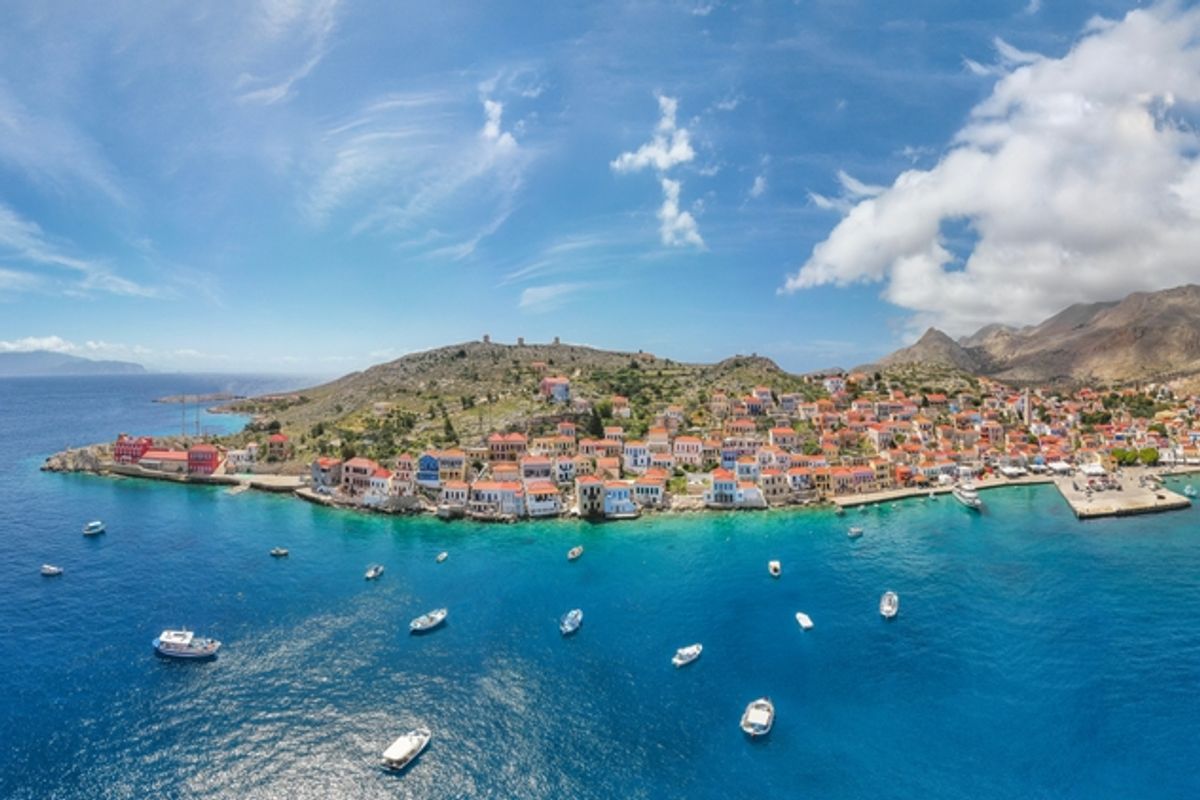
Analyzing old newspaper reports and one traveler’s writings, a scientist from the Hellenic Mediterranean University showed that the records of the 1843 earthquake on the island of Chalke, reported as a magnitude 6.4 quake, followed by a tsunami and a death toll of 600 people, need to be updated.
A new study, published in Seismological Research Letters, will most likely lead to a change in seismic risk calculations for the region, proving that keeping accurate historical records is critical for risk management today.
No Tsunami or Casualties Found During 1843 Earthquake
Associate researcher at the Institute of Physics of the Earth’s Interior & Geohazards at the Hellenic Mediterranean University in Greece, Ioanna Triantafyllou, started working on Greece’s most impactful earthquakes in 2017, with a particular interest in the 1843 quake in Chalke, a small Greek island close to Rhodes.
Long believed to be one of the top 10 deadliest earthquakes in the country to date, official records describe the incident as having a magnitude between 6.4 and 6.75, followed by a tsunami, and claiming more than 600 lives. This surprised Triantafyllou, making her wonder how such a small island nearly 200 years ago could have had such a high death toll. That question prompted her to search for primary and original historical sources that would confirm the number of victims, she said in a press release.
Taking a closer look at previous studies revealed that the authors didn’t include any primary macroseismic information — reports on how people, buildings, and the visible environment were affected. To set the record straight, Triantafyllou tracked down contemporary primary sources not included by previous authors, painting a different picture of the events.
Her new calculations showed that the mainshock was likely closer to a magnitude 5.93 earthquake. But what about the tsunami and casualties? Surprisingly, none of the primary sources included any records of a large ocean wave or deaths.
Read More: What 500-Year-Old Transylvanian Diaries Teach Us About the Climate
Seismic Sources From 200 Years Ago
Finding historical reports to reconstruct past earthquakes is a laborious undertaking. “The further back in time you go, the more difficult it is to find primary sources related to earthquakes,” said Triantafyllou in the statement.
Traditionally, researchers dig through archives in search of news clippings, church records, and sometimes travelers’ diaries, as opposed to how geological events are tracked in the digital era today.
In this particular case, a collection of Greek and international newspaper reports, paired with the writings of German archaeology professor Ludwig Ross, held the key to accurately reconstructing what really happened.
“The book by Ross is a good example of a reliable author who kept a detailed diary during his travels in the Greek islands,” Triantafyllou explained. “His earthquake descriptions provide appropriate information for reconstructing the earthquakes and assign macroseismic intensities based on building damage, ground failures and shaking felt.”
Impact on Seismic Risk Calculations
But why is it important to correct the details of an event that happened so long ago? As explained in the statement, the magnitudes of historical earthquakes are added to regional earthquake catalogs, which are crucial for hazard assessments today.
With Triantafyllou’s correction of the 1843 Chalke earthquake magnitude, she expects the overall seismic risk of the region to be reduced. This does not mean the risk is eliminated, but rather that the understanding of the threat has evolved, leading to better infrastructure management and more efficient economic investment.
Triantafyllou’s work shows how some historical records of past, seemingly significant geological events warrant fact-checking, instead of blindly trusting information passed down through a decades-long game of telephone.
Read More: AI Reveals What Was Behind Those Santorini Earthquakes in Early 2025
Article Sources
Our writers at Discovermagazine.com use peer-reviewed studies and high-quality sources for our articles, and our editors review for scientific accuracy and editorial standards. Review the sources used below for this article: