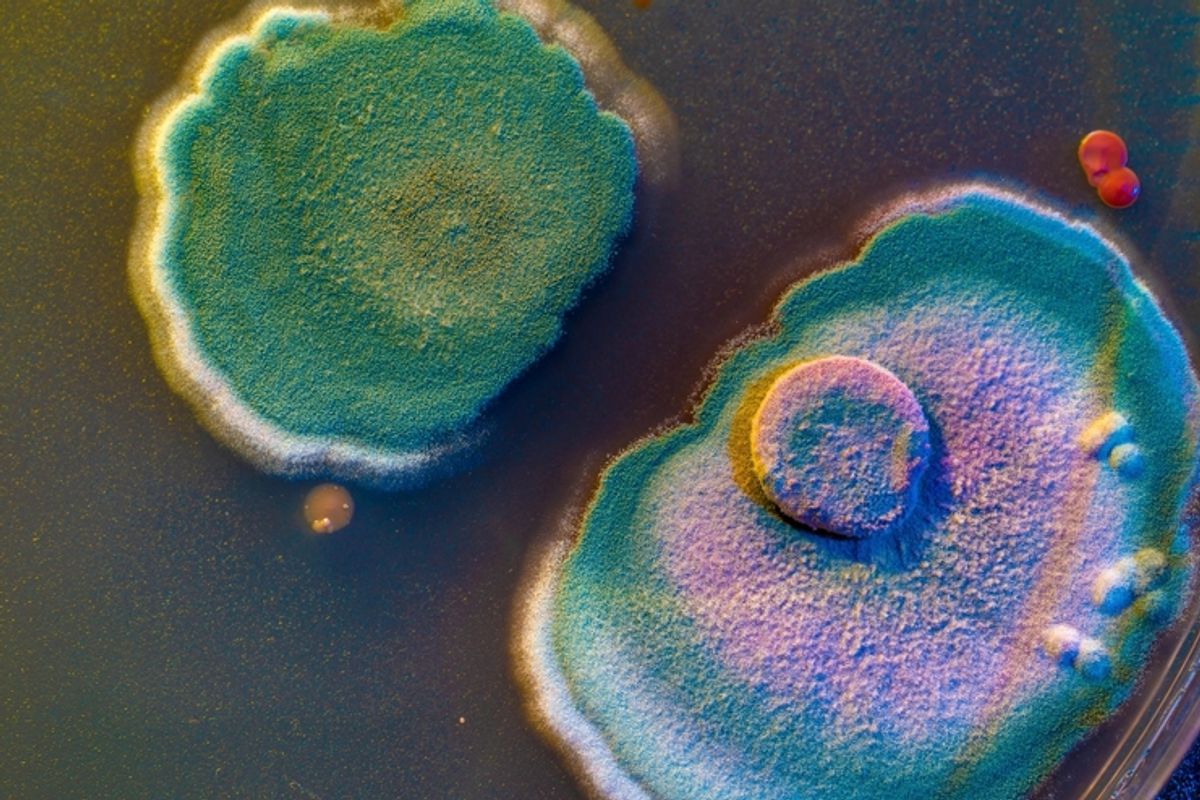
Microorganisms rarely live alone. Instead, they form dense, organized communities known as biofilms, structured assemblies of bacteria, fungi, and other microbes embedded in a shared matrix. These communities coat plant roots, line human tissues, and support essential processes like nutrient uptake, stress tolerance, and protection against disease. Researchers are now suggesting that biofilms may also be critical for sustaining life in space.
In a new Perspective article published in npj Biofilms and Microbiomes, an international research team outlines how studying biofilms during long-duration spaceflight could reshape our understanding of microbial life. The paper proposes a research agenda focused on how biofilms behave under spaceflight conditions, and how those insights could inform biological systems on Earth.
“Biofilms are often considered from an infection viewpoint and treated as a problem to eliminate, but in reality they are the prevailing microbial lifestyle that supports healthy biological systems,” said first author Katherine J. Baxter, in a press release.
Microbial Communities as a Stress Test for Life in Space
On Earth, biofilms are integrated into living systems. In humans, they help organize microbial communities in the gut, mouth, and skin. In plants, biofilms around roots influence nutrient uptake, stress tolerance, and resistance to pathogens. These interactions evolved under relatively stable conditions, including constant gravity and low radiation exposure.
Some researchers argue that biofilm-like structures may have played a role in the earliest stages of life on Earth, providing physical scaffolds that concentrated molecules and supported early metabolic interactions. Seen through that lens, biofilms are not just modern biological systems but products of billions of years of evolution. Spaceflight alters many of those conditions at once.
Experiments aboard the International Space Station (ISS) and in ground-based simulations show that microgravity and radiation can change biofilm structure, gene regulation, microbial signaling, and stress responses. Some biofilms become denser and more resilient, while others lose organization or function. The effects vary across species and experimental platforms, complicating interpretation.
“Spaceflight offers a distinctive and invaluable testbed for biofilm organisation and function, and, importantly, evidence so far makes it clear that biofilms need to be better understood, managed, and likely engineered to safeguard health during spaceflight,” said Baxter.
Read More: Space Mice Babies Born From Frozen Stem Cells Give Hope for Human Fertility in the Cosmos
Why Plants and Biofilms Matter for Long-Duration Spaceflight
As space agencies plan longer missions, including sustained lunar habitats and eventual travel to Mars, plants are expected to play a central role in life-support systems. But plant performance depends heavily on microbial biofilms in and around root systems.
To study those interactions, the researchers highlight an approach known as multiomics, which combines multiple types of biological data — including genetic, metabolic, and biochemical information — to capture how complex microbial communities function as integrated systems.
“By combining multispecies genetics and biochemistry, modern multiomics has the exciting capability to reveal new biofilm mechanisms from spaceflight responses, and is starting to fill in major gaps in our understanding of signalling and metabolism at the interface of biofilms and plant roots,” said co-author Eszter Sas.
From Spaceflight to Everyday Life on Earth
Although the Perspective centers on spaceflight, its implications are not limited to orbit. Biofilms influence chronic disease, antibiotic resistance, soil health, and how ecosystems function. Understanding how these microbial communities respond to unfamiliar stress could inform new ways to manage them on Earth.
“Spaceflight can reveal new biology under unfamiliar stress, and those insights can tell us a lot about how life might survive in space but also inform approaches for health and agriculture on Earth,” said senior author Nicholas J. B. Brereton.
Read More: Revived 40,000-Year-Old Microbes in the Arctic Could Release Greenhouse Gases
Article Sources
Our writers at Discovermagazine.com use peer-reviewed studies and high-quality sources for our articles, and our editors review for scientific accuracy and editorial standards. Review the sources used below for this article: