
Remember me
It started with an innocuous Google search... and ended with me being lied to, harassed and spied on by the health board at the centre of one of Britain’s biggest NHS scandals.
I’d never heard of ‘Cryptococcus’ before but as soon as I typed it into the search engine, I was thrown headlong into a seven-year battle with NHS Greater Glasgow and Clyde (NHSGGC) for the truth about rare infections plaguing cancer patients... and a battle for justice which also took a heavy personal toll on me as a journalist.
The Queen Elizabeth University Hospital (QEUH) had opened in 2015 to great fanfare. The Scottish Government constantly boasted about how it was ‘on time and under budget’ and berated anyone who dared to criticise its shiny new achievement. The late Queen Elizabeth had even been guest of honor at the opening ceremony.
How was it possible that four years later patients had contracted Cryptococcus – which my googling told me was an infection related to bird droppings – at this £1 billion state-of-the art facility?
NHSGGC had issued an inconspicuous press release about the incident on January 18, 2019, just after 5pm and a second the next day confirming two patients had died.
Alarm bells were ringing and my list of questions continued to grow no matter how many times I tried to get an explanation.
I’ve spent the last seven years investigating the problems at the QEUH and the adjoining Royal Hospital for Children (RHC). The more I looked, the more I found and the more concerns I had that something was seriously wrong.
But the more I pressed, the greater the pushback. I was now firmly in the grip of the health board stasi... and it was relentless.

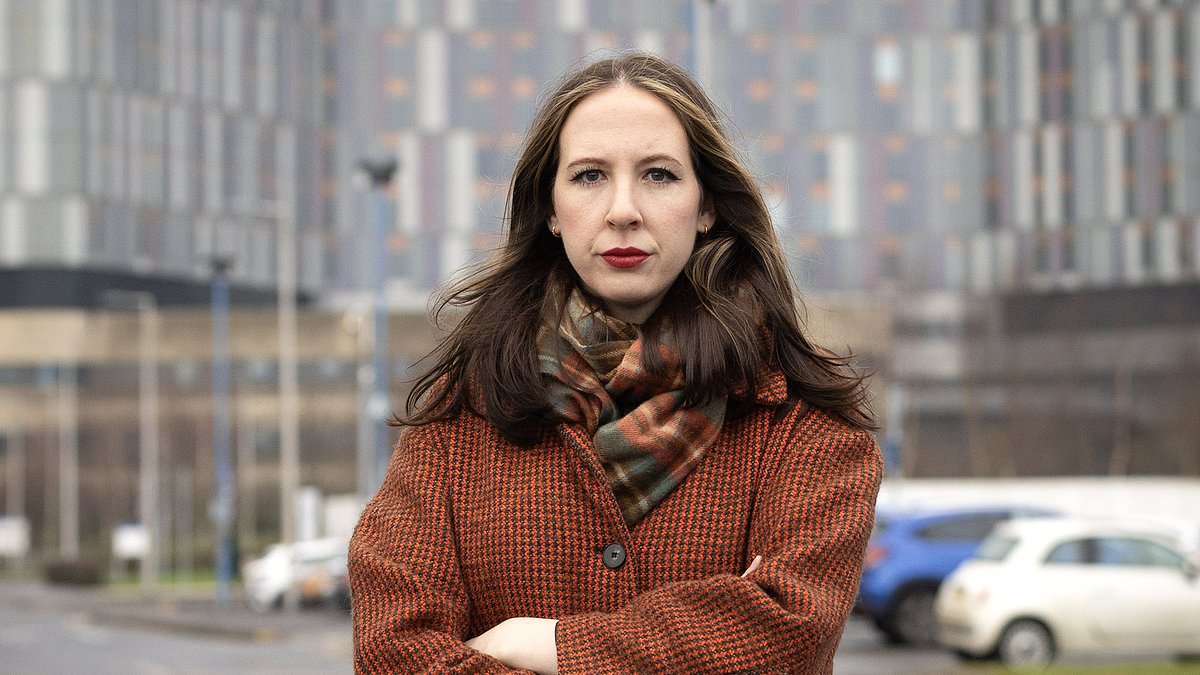
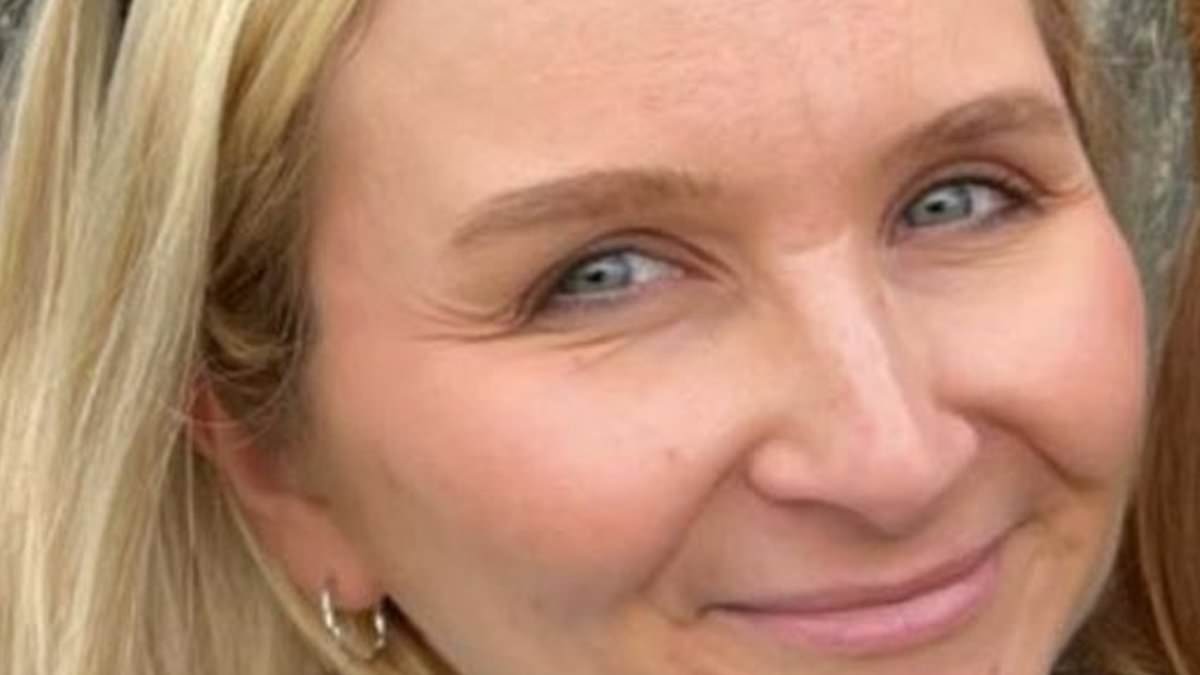
Hannah Rodger has been investigating the hospital scandal for seven years
The work I’ve done trying to get to the truth has taken over more of my life than I want to admit.
I know more than any normal person should about bacteria, ventilation systems and infection control. Last year I even woke my fiancé up in the middle of the night muttering about the Scottish Hospitals Inquiry in my sleep.
I’ve faced some of the most obstructive and aggressive tactics from NHSGGC during this scandal as I’ve seen from any organisation. Brick walls were thrown up when I tried to find out what happened.
While my own experience has caused sleepless nights and a huge amount of stress, it’s nothing compared to what whistleblowers, patients and families have been through.
At first, NHSGGC would complain about every story I wrote. They’d request corrections for minor things and delay responding to my queries for days.
One of the first stories I wrote was about a £50 million repair bill for the hospital, which I’d figured out had a serious problem with ventilation if spores from pigeon poo were able to infect people already very sick with cancer.
Health bosses insisted this figure wasn’t true and demanded the story be removed. Luckily I had good sources and a brave editor who backed me all the way.
This time last year the repair bill was sitting at around £78 million, although it’s most likely gone up since then. My first victory.

It emerged the NHS was spying on Hannah's social media as well as that of Louise Slorance whose husband Andrew contracted an infection while undergoing treatment at the QEUH
They desperately tried to find out who my sources were. I remember one press officer joking that my sources were on holiday and that’s why I hadn’t written anything that week.
Another said they knew I had certain sources and suggested these supposed sources were mentally unstable. I was appalled that a health board would be attempting to use someone’s mental health as a reason to discredit them.
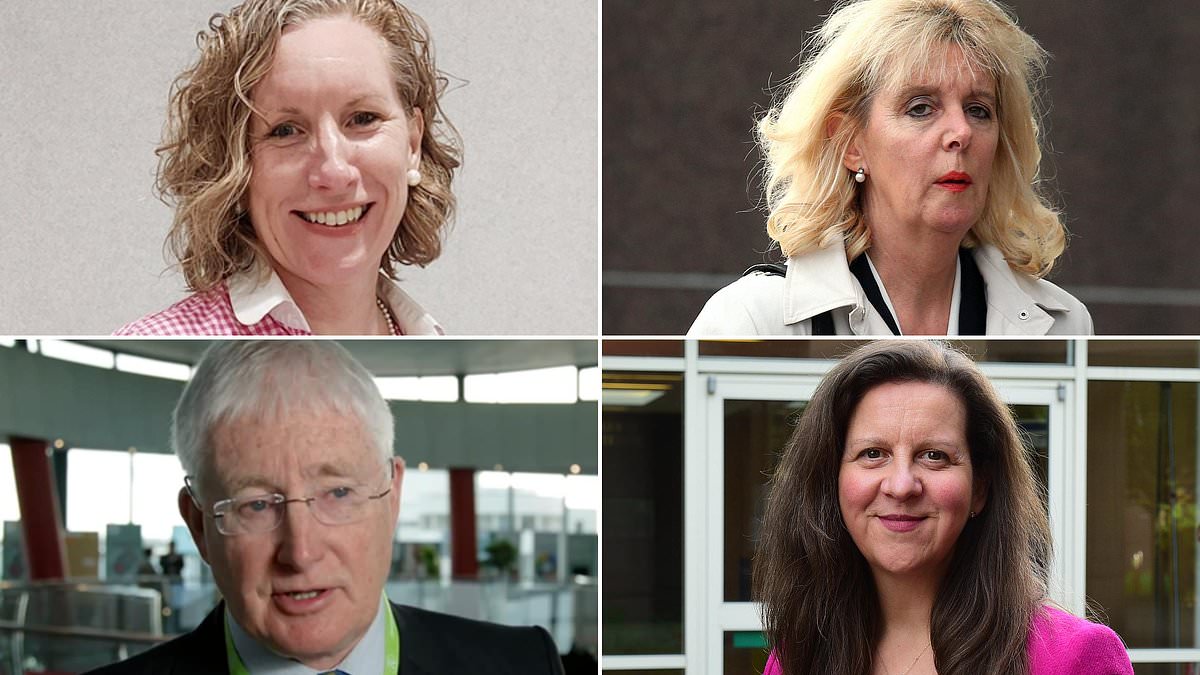
When the Scottish Hospitals Inquiry started in 2020 I discovered that NHSGGC had been conducting a full-blown mole hunt to try to find out who was speaking to me. Their detective work didn’t yield anything conclusive, but that didn’t stop them pointing the finger at three brave whistleblowers – Drs Teresa Inkster, Penelope Redding and Christine Peters – who they appeared to be fixated on as the source of all my stories.
Another common tactic was to bombard me with information in the hope I’d get confused.
Sometimes basic questions would illicit swathes of text in reply. When I sent freedom of information requests they were refused, delayed or ignored.
I’ve asked NHSGGC to interview its chief executive probably a dozen times in the last seven years - each time they’ve refused.
The same for the government, with the exception of former health secretary Jeane Freeman - the only minister to ever accept my request.
She commissioned a review then a public inquiry, apologised to patients and met whistleblowers. I felt she was the only one brave enough to tackle the problem even if it was going to create a headache for her government.
It’s a shame her successors haven’t been so brave.
In mid-2024 I decided I wanted to know what information NHSGGC had about me, and put in a ‘Subject Access Request’.
What I uncovered was shocking and frankly creepy. While a lot of the information was redacted, what was revealed showed an organisation that didn’t respect me or my work and seemed to think what I was doing was somehow immoral. Put quite simply, they were spying on me. In 2019 they claimed talking to me was ‘dangerous’ and that I ‘twisted’ the truth. They described questions I was asking about the death of a toddler as ‘shenanigans’.
In 2020 I started working in Westminster but did a handful of QEUH stories during this time.
Even then NHSGGC were monitoring my career progression.
After being promoted, NHSGGC staff emails stated: ‘…Did you see she’s been made Westminster Editor?’ The reply: ‘Well done her (at least she’ll be leaving us alone!!).
While it made me chuckle that I clearly had gotten under their skin, I was uncomfortable with their monitoring to say the least.
The most upsetting was when I discovered a personal message I’d sent to a former colleague, who now works for NHSGGC, had been relayed around the communications team.
During the pandemic my gran had been diagonosed with cancer and was in the QEUH before she died. I’d trawled the NHS website and all the guidance on hospital visits but my head was scrambled with worry.
In desperation I’d texted my former colleague asking if they knew if I’d be able to visit or not.
To my horror I saw that message had been passed on to the communications team with an unsympathetic reply from one employee saying there was ‘very clear guidance’ online so ‘not sure where Hannah is looking’.
They monitored my social media and discussed my posts. An email chain from 2021 is simply titled: ‘Hannah Rodgers - summary timeline’ details my interactions with them, albeit spelling my name incorrectly.
I later found out they were spying on others who were critical, including Louise Slorance whose husband Andrew contracted aspergillus while awaiting a bone marrow transplant at the QEUH in 2020.
Louise was one of many people subject to the health board’s ‘social listening’ campaign, where they used private software to monitor what specific people were saying online. My article about their spying was raised in parliament and it forced an apology.
Having followed the whole Scottish Hospitals Inquiry, I never thought I would end up submitting evidence to it myself but I had to last year when Sandra Bustillo, NHSGGC communications manager, claimed I had previously revealed my sources. Any journalist knows that protecting your sources is the number one priority and it is something I categorically did not do.
Thankfully my evidence has now been published by the inquiry, putting my points on the record.
The QEUH scandal has been a story - although story isn’t the right word for it- that’ll stay with me forever. Some of my original sources are now people I’d consider friends. I’ve watched children affected by infections grow up into headstrong teenagers, and seen families move abroad to rebuild their lives away from the shadow of the hospitals scandal.
I’ve also seen the devastating impact on those who tried to expose this sorry episode. With the conclusion of the public inquiry coming later this year, many hope it will answer their questions about what happened. I’m not so confident, but I won’t stop asking questions.