
Remember me



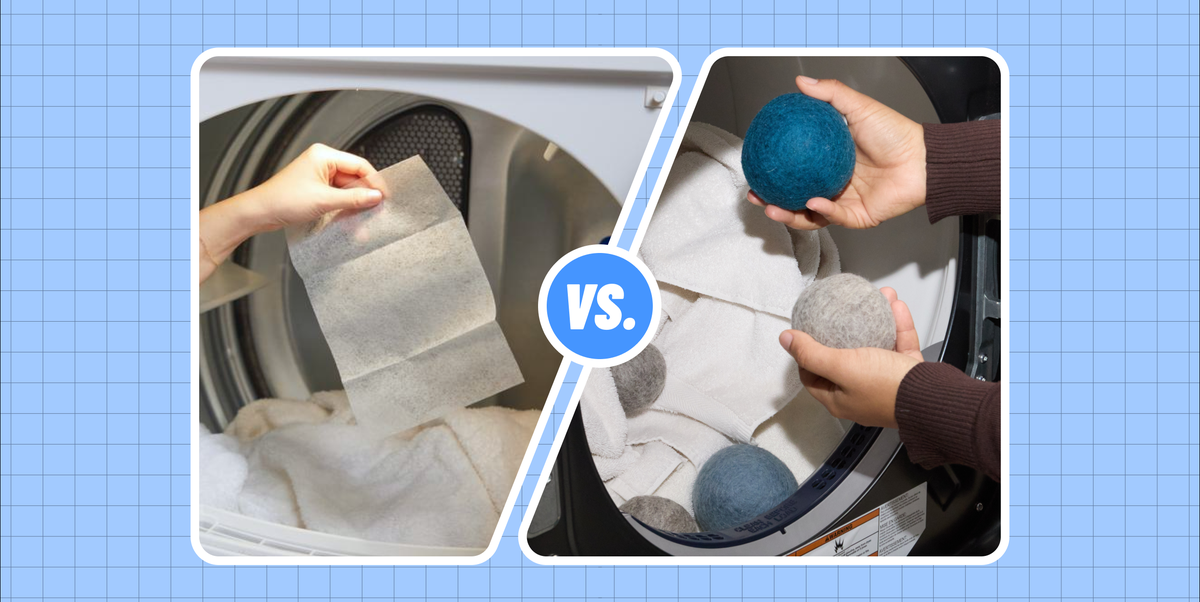





Tossing a load of laundry into the dryer is easy. Deciding whether to add something extra—like a dryer sheet or a set of dryer balls—is where it can start to feel like you need an advanced degree. While both products are designed to improve the drying process, they work in very different ways—and they’re not exactly interchangeable. In some cases, they’re not even recommended.
Dryer sheets have long been a laundry staple for their ability to add a fresh scent while keeping clothes from clinging to each other. The thin, single-use sheets are coated with fabric-softening and static-controlling agents, and the heat of the dryer transfers these coatings onto the fabrics.
More recently, dryer balls have gained popularity as a reusable alternative that promises softer, fluffier clothes with less waste. Dryer balls are generally made of fabric-friendly wool, but plastic and rubber versions are also available. They’re added to the dryer with wet laundry and work through physical motion rather than chemical coatings.
Understanding what each does best can help you decide which option makes the most sense for your laundry routine.
 Dryer balls vs. dryer sheets
Softness and static control
Best bet: Dryer sheets
Dryer sheets: The dryer’s heat activates the dryer sheet’s fabric-softening coating and transfers it onto your laundry as the load tumbles, creating noticeable softness and helping prevent clothes from clinging together.Dryer balls: Dryer balls fluff clothes by separating garments as they tumble. This fluffing can make clothes feel softer and help mitigate static, but it does not deposit softening ingredients, so they won’t create the same level of softness.Wrinkle reduction
Best bet: Dryer sheets
Dryer sheets: Dryer sheets help reduce wrinkles by smoothing and relaxing fibers and preventing clothes from clinging together as they tumble. This is especially useful for fabrics like cotton and linen and can help minimize the need for ironing or steaming.Dryer balls: Dryer balls can reduce wrinkles to some extent by keeping garments separated and improving airflow, but they won’t prevent wrinkles as effectively as dryer sheets. For loads where wrinkle control is a priority, dryer sheets are generally the better choice.Fragrance
Best bet: It depends!
Dryer sheets: Most dryer sheets are scented—though fragrance-free options exist for those with sensitivities—so they’re the better choice if you love a clean scent or are fighting odors.Dryer balls: Dryer balls are naturally unscented. They’re the pick for those who are sensitive to fragrances. (Note: Some users want to add a few drops of essential oils to dryer balls, but the experts in the Good Housekeeping Institute Cleaning Lab caution against this, since essential oils are flammable and can build up over time.)Fabric compatibility
Best bet: Dryer balls
Dryer sheets: Dryer sheets shouldn’t be used on all materials, including flame-resistant sleepwear, microfiber, fleece, and many athletic or performance garments. The coating on dryer sheets can diminish flame resistance and leave residue that affects absorbency or moisture-wicking properties. Dryer sheets are ideal for everyday clothing items, like T-shirts or pajamas, when softness, static control, and scent matter most.Dryer balls: Dryer balls, by contrast, are generally safe for most fabrics, including those sensitive to chemical coatings. They’re especially useful for bulky items like comforters, duvets, and puffy coats, since they keep fabrics separated and fluffed to help them dry more evenly.Reusability
Best bet: Dryer balls
Dryer sheets: Dryer sheets are single-use, which creates ongoing waste and requires continual repurchasing.Dryer balls: Dryer balls are reusable for hundreds of loads, reducing waste and saving you money long-term.Can you use both?The short answer: Yes—but it depends on your goals and the fabrics you’re drying.
Using both can give you the softness, fragrance, wrinkle reduction, and static control of a dryer sheet, plus the fluffing and separation that dryer balls provide. However, the same usage rules still apply: Avoid dryer sheets on flame-resistant sleepwear, fleece, microfiber, or performance fabrics. And manage your expectations, since using both won’t make clothes dramatically softer or speed up drying significantly.
And a word of expert advice? Some people try to use tennis balls as a quick substitute for dryer balls, especially for fluffing large bedding. While tennis balls can separate garments, they are often noisier than dryer balls, they can emit odors when heated, and they may even transfer dye onto clothing. For the safest and most effective results, it’s best to stick with products designed for laundry.
Why trust Good Housekeeping?Contributing writer Brigitt Earley has been covering household products for more than 15 years, including washing machines, laundry detergents, and cleaning essentials. This guide was informed by testing and research from the Good Housekeeping Institute Cleaning Lab, where hundreds of laundry products are evaluated each year. Brigitt also worked closely with Carolyn Forté, Home Care & Cleaning Lab Executive Director, to understand exactly how dryer sheets and dryer balls work and factor into drying efficiency.
Brigitt is a writer, editor and craft stylist with nearly 15 years of experience. She specializes in lifestyle topics, including home, health, parenting, beauty, style, food, entertaining, travel and weddings. She has written for Glamour, People, Good Housekeeping, Women's Health, Real Simple, Martha Stewart, Apartment Therapy, The Spruce, and more.