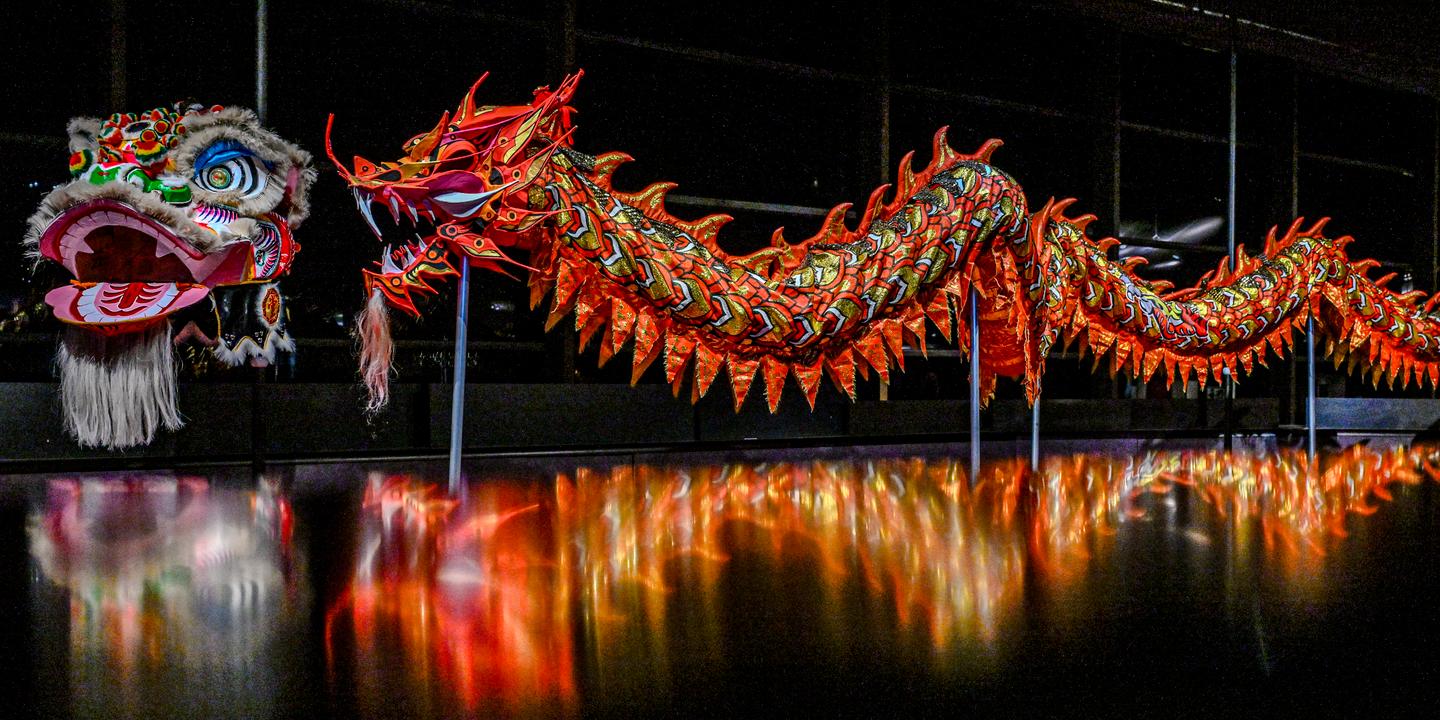
The dragon reveals its thousand incarnations at Paris's Quai Branly Museum
A jade dragon-pig, from the end of the Hongshan culture (4700-2900 BCE). NATIONAL PALACE MUSEUM, TAIPEI Hunting for the flaming pearl was among their favorite pursuits, nine was their lucky number and the entire universe was their home. These are just a few of the many facts visitors learned at the Musée du Quai Branly-Jacques-Chirac in Paris about the dragon, as it has traversed the Chinese imagination for five millennia. Do not imagine it as evil and fire-breathing, as it is often depicted in the West. Instead, it is an embodiment of vital energy, as evidenced by the sumptuous objects on loan from Taiwan for the "Dragons" exhibition. The dragon's many avatars take many forms, from vases to headdresses, tripod cauldrons and inkstones. It first appears emerging from the egg during the Neolithic era, in jade ornaments unearthed in the tombs of high-ranking individuals. It does not yet have its majestic appearance: more like a "dragon-pig," it emerges with a snout and small ears on one of the very first objects depicting it, which dates to around 3,000 BCE. You have 77.46% of this article left to read. The rest is for subscribers only.










Comments (0)