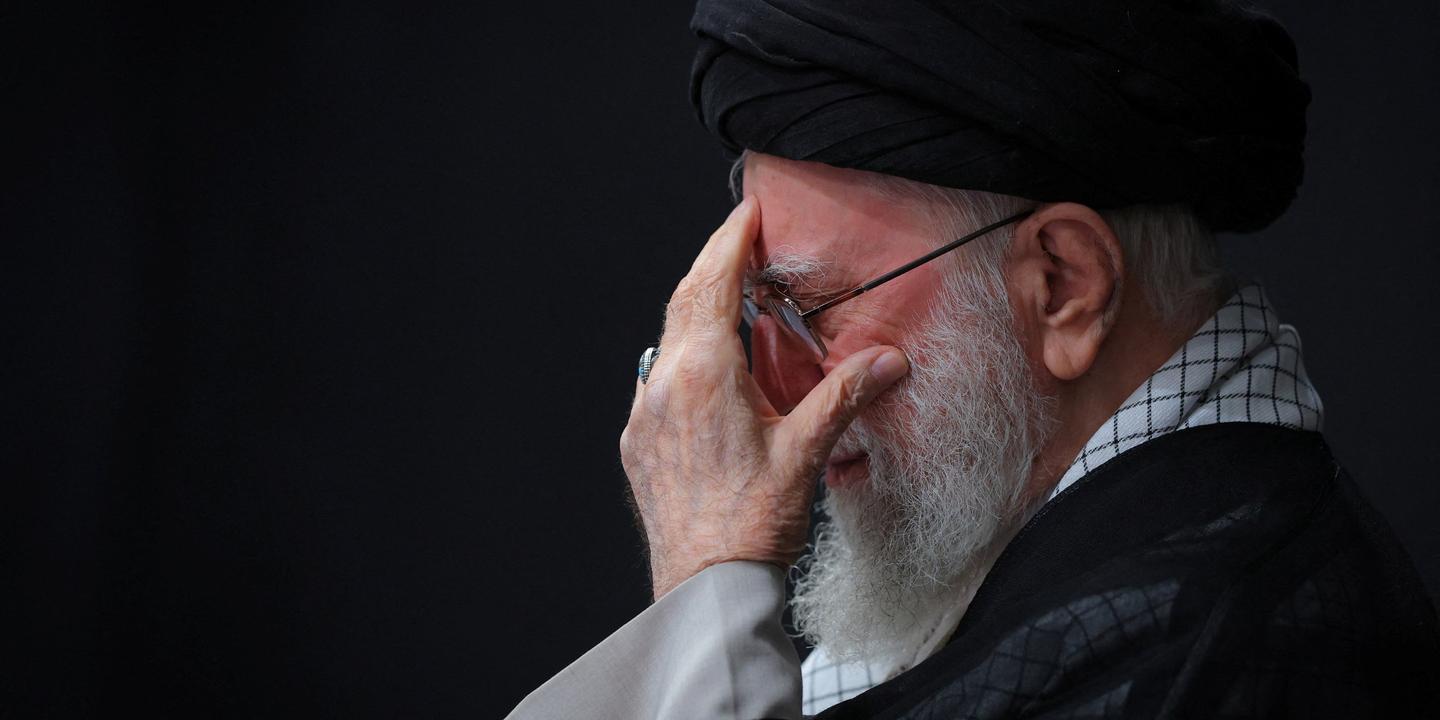
Iran's Ayatollah Ali Khamenei: The twilight of a tyrant
Nothing predestined Ali Khamenei to become the ruler of Iran for nearly four decades. Born in 1939 in Mashhad, in the east of the country, he devoted himself to religious studies, following in the footsteps of his father and two of his brothers. It was at the Shiite seminaries in Qom, not far from Tehran, that he studied under the guidance of Ayatollah Khomeini. While Khamenei was barely out of adolescence, Khomeini was already a respected figure in his sixties, to the point of being recognized as a "Grand Ayatollah," the highest rank in the Shiite hierarchy. Increasing numbers of disciples regarded Khomeini as a "marja" (reference) whose opinions prevailed over all others. Khomeini strongly opposed the pro-American and pro-Israeli policies of the shah of Iran, to the extent that he was exiled in 1964. Khamenei served as one of Khomeini's main conduits for increasingly revolutionary propaganda inside Iran, which led to his repeated imprisonment and even banishment far from Tehran. When the Islamic Revolution overthrew the shah in February 1979, Khamenei became part of the collegial leadership that now governs Iran. Ten months later, Khomeini had a constitution approved by referendum that established an unprecedented regime. The "Islamic Republic of Iran" became a theocracy based on a unique duality of power, in which an elected president remained subordinate to the supreme leader, Khomeini, who answered only to God. Khamenei's rise became unstoppable with Iraq's invasion of Iran in September 1980. As deputy defense minister, he forged strong, lasting ties with the Revolutionary Guards, the armed wing of a regime that justified internal repression by external aggression. Appointed to lead prayers in Tehran, he survived a bomb attack in June 1981 that left his right arm paralyzed. His unwavering loyalty to Khomeini made him the ideal candidate for the presidency of the Islamic Republic, to which he was first elected in October 1981 and re-elected in August 1985. You have 64.33% of this article left to read. The rest is for subscribers only.









Comments (0)