
Remember me

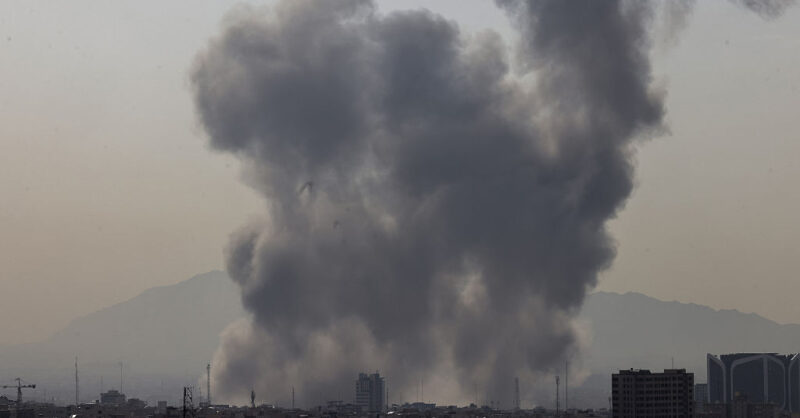

Keir Starmer has given the US permission to use UK bases to launch “defensive” airstrikes on Iranian missile sites, in a major development for the British position on the developing situation in the Middle East.
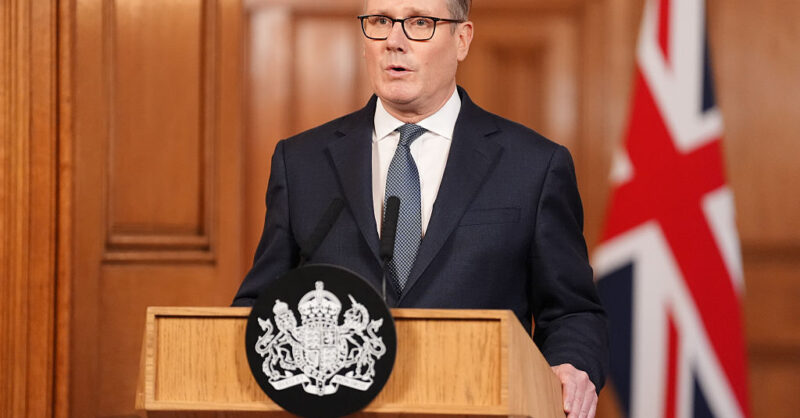
There was a particularly striking passage at the end of Starmer’s announcement, which I think is worth quoting in full here:
“I want to be very clear,” the prime minister said in his video address, “we all remember the mistakes of Iraq. And we have learned those lessons. We were not involved in the initial strikes on Iran, and we will not join offensive action now.
“But Iran is pursuing a scorched earth strategy, so we are supporting the collective self-defence of our allies and our people in the region. Because that is our duty to the British people. It is the best way to eliminate the urgent threat, and prevent the situation spiralling further.

Subscribe to the New Statesman today for only £1 a week.
“This is the British government protecting British interests and British lives.”
Rarely, if ever, has Starmer been so publicly explicit about his intention to avoid repeating the mistakes of Iraq. You might remember the surprise when, upon entering No 10 in July 2024, Starmer did not appoint Emily Thornberry, who had served as shadow attorney general, to his cabinet. Instead, he brought in Richard Hermer KC to take on that role in government.
At the time, someone familiar with his thinking told me that Starmer had brought Hermer in specifically with Iraq in mind. As a highly experienced lawyer himself, Starmer didn’t just want a politician with some legal experience (like Thornberry, who was once a barrister but is very much a politician of long standing), but a legal mind he deeply respected to provide legal advice on the thorny questions of international law that could arise. Remember, Starmer was an Iraq war critic at the time. As my source put it, if Starmer couldn’t do all the legal work himself, he wanted to outsource it to someone whose advice he would deeply respect and trust.
Hermer, a frequent target in the press and often criticised for that very lack of political experience, has now had his moment. Starmer has taken his advice. The prime minister has drawn a distinction between defensive and offensive action, attempted to reassure the British public of the difference and published the legal thinking behind the action: all the while saying explicitly that he does not want a repeat of the mistakes of Iraq. He has also taken an approach of moving in lockstep with the other E3 countries (France and Germany) rather than the US.
It is, nevertheless, a step up in terms of British involvement in the Middle East and an inch towards working more closely with the Trump administration in its operations there. As well as the British bases that the US will use, British military assets are flying in the region – out of Qatar and Cyprus, according to a government source – to intercept drones and missiles targeting countries not previously involved in the conflict.
“This regime is lashing out,” Defence Secretary John Healey said this morning. “It’s lashing out in an increasingly indiscriminate and widespread way, and people will be really concerned that it’s not just military targets, but civilian airports like Kuwait. Hotels in Dubai and Bahrain are being hit. And so that’s why we’ve strengthened the UK defences in the region. We are active in regional defence operations.”
How long will the distinction between “defensive” and offensive hold? If Iran strikes British military personnel or British bases in Cypus or elsewhere, Britain could soon find itself dragged in far deeper. A Labour government was badly damaged once before by conflict in the Middle East, having struggled with the demands of maintaining a strong relationship with the US alongside needing to take legally defensible and strategically sound actions in the region, all while maintaining public support. Starmer is only too aware that Labour failed on that front before. He is going in eyes wide open, determined to make sure history doesn’t repeat itself. But with Trump in the White House, the task ahead could yet be more difficult than that faced by Tony Blair.
[Further reading: Will Iran’s Islamic Republic survive the US onslaught?]
Content from our partnersRelated

Comments (0)