
Remember me
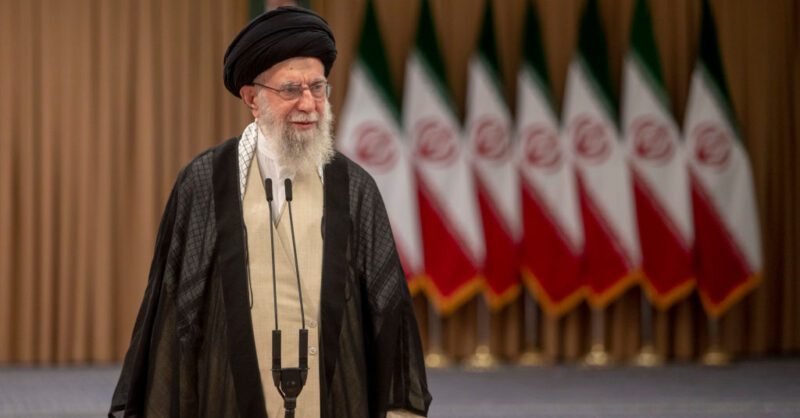
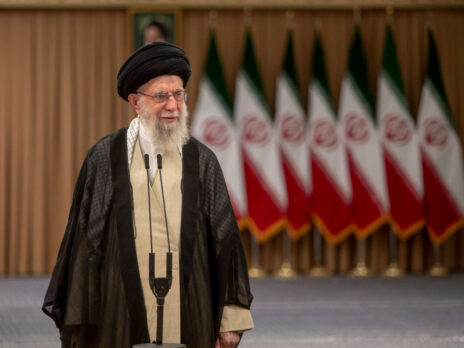
Ali Khamenei was the supreme leader of Iran for more than three decades. Given his longevity, the system developed around him and his personal autocracy. Power was centralised, the supreme leader’s office expanded its reach, the Revolutionary Guards became more powerful, and opponents were silenced. Under Khamenei’s rule, the political system grew increasingly authoritarian. Protests were repeatedly crushed, presidents who once appeared influential were gradually side-lined, and thousands of Iranians who challenged the system were killed, imprisoned, or forced into exile.
But now Khamenei is gone. This is therefore more than the death of the supreme leader of Iran. It is a test of the entire Iranian system. Will it now hold together without the person who held it together for 36 years? Will the country crumble or will it solidify?
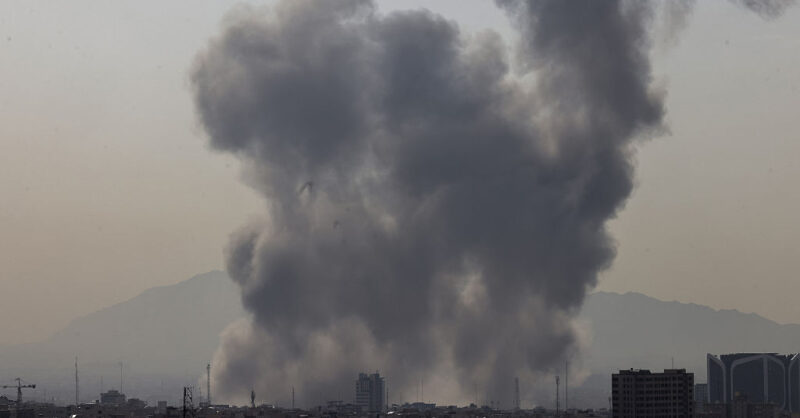
No speech or protest on the streets of Tehran can answer this question. It will be decided inside the Iranian security establishment. This is where power is located – a fact Iran’s enemies are well aware of. Some Israelis have hinted that the strikes may continue and, according to a report from Axios based on information from an Israeli security source, the strikes may be intended to destroy not only the current leaders of Iran but also anyone who has a role to play in its future. If this is the plan, then the strikes against Khamenei were more than the death of the supreme leader of Iran. It was an attempt to destroy an entire line of succession.
But history shows that the removal of leaders does not destroy a government. Air strikes do not destroy a state. For the Iranian state to crumble, something fundamental must happen to it. The question is: will the security forces remain united? If the Revolutionary Guards stick together, the regime will survive. But if there is the first sign of disintegration – disagreements, weakening loyalties, disorganised command structures – then the regime could fall quickly. This unity is already precarious due to economic strain. War is costly, and the sanctions are already severe. The regime may struggle to pay its security forces, so loyalties may waver. But as long as the regime pays its soldiers, it is unlikely to totally fall.

Subscribe to the New Statesman today for only £1 a week.
If the Guards remain united, the more likely scenario in the short term will not be liberalisation, but securitisation. Technically, the Assembly of Experts will select a new supreme leader. But in the middle of a war, de facto power will reside with the security elites. The clerical process, though constitutional, will likely follow the balance of power within the command structure.
Even before the death of Khamenei, Iran’s system was already deeply embedded with the Revolutionary Guards, the elite units of the Iranian army. The death of the supreme leader could accelerate a change that was already underway, from a clerical to a security-dominated system. A new supreme leader could be technically appointed in a hurry. But whether the new supreme leader rules in his own right, or under the effective control of the military establishment, remains to be seen.
Any new leader will immediately have to take a line on security questions. Hardline figures might well use the death of Khamenei to justify their argument that negotiations with the West have been a mistake. They would argue that America and its allies have never been trustworthy, that the “Great Satan” was deceitful from the very beginning. This argument, if it takes root among the Guards, could propel Iran into a more confrontational position against the West.
More pragmatic leaders, such as Ali Larijani or Mohammad Bagher Ghalibaf, might try to position themselves as the “stabilisers”. They might claim that de-escalation, albeit controlled, is needed to save the system. Their chances, however, will be less dependent on their ability to speak to the population and more on whether the security leadership views them as trustworthy. A return of the original figures behind the nuclear deal, such as Hassan Rouhani or Javad Zarif, seems very unlikely in the near future. In a time of war, the political landscape tends to close, not open. Ultimately, the new civilian leader emerging in this scenario will be defined by the security leadership.
Speculations have been made regarding alternatives, such as Reza Pahlavi, the son of the last Shah, whose name has been heard in the streets. However, despite years of political activism, he has not succeeded in bringing together a broad and cohesive opposition that includes the diverse strands of Iran’s anti-regime movement. Critics argue that his leadership style – and the approach of some of his close associates – appears overly centralised, raising concerns among other opposition groups around the risk of replacing one form of authoritarianism with another. As a result, a significant portion of regime opponents, both inside and outside the country, remain reluctant to rally behind him as a unifying figure.
At the same time, in a country with Iran’s geopolitical position – and at a moment when political stability has been deeply shaken – the role of external powers such as China and Russia cannot be overlooked. Neither would benefit if Iran descended into total chaos. China’s principal concern is the stability of the region’s energy resources. Russia derives some benefits from the US’s distraction by Iran, but it would not actively wish to see Iran fall. Their stance, be it support, mediation, or strategic distance, might affect the confidence of Iran in its ability to hold its ground.
Less than two months before the death of Khamenei, Iran saw one of the most intense waves of unrest in the country’s recent history. According to government statistics, over 3,000 people died during this period, though the true total could be far higher. This could also be one of the defining factors in the events to follow.
The decision-makers in the Islamic Republic face a dilemma over whether to make significant changes to the way the country is run and calm the internal unrest or risk another wave of the same. Currently, there are reports of people celebrating the death of Khamenei in the streets in various cities across the country and sounding the death knell for the regime. This seems evidence of a revolutionary pressure from within the country that will not subside with piecemeal reforms. Khamenei’s removal also means the absence of the person who, for so long, was the final authority and mediator among the different factions. Without him, the internal strife and competition among the different actors within the system could increase.
It also cannot be ruled out that any new leadership, after initial rhetorical escalation aimed at domestic audiences and displays of defiance toward the United States and Israel, may ultimately choose a different path. One possible model could resemble Venezuela’s approach – engaging in negotiations with President Donald Trump in pursuit of a new agreement and structural adjustments within the Islamic Republic. Such a recalibration could be seen as a way to avoid the fate that befell Khamenei, Qassem Soleimani, and other senior IRGC commanders.
However, what the future holds will not depend on who shouts the loudest. Nor will it be decided by the ideology and convictions of the different actors. Instead, it will depend on whether the security forces remain united and cohesive, or whether they start to break apart. This is the line along which the future of the country will be determined.
But this is all assumes that the Islamic Republic remains structurally and organisationally intact. It is possible that the continuation of US-Israeli attacks against Iran will lead to overwhelming unrest. In such a case, the external military pressure and the internal strife could combine to propel events much faster and less predictably than both Iran and its opponents ever imagined.
[Further reading: Will Iran’s Islamic Republic survive the US onslaught?]
Content from our partnersRelated
Comments (0)