
Remember me
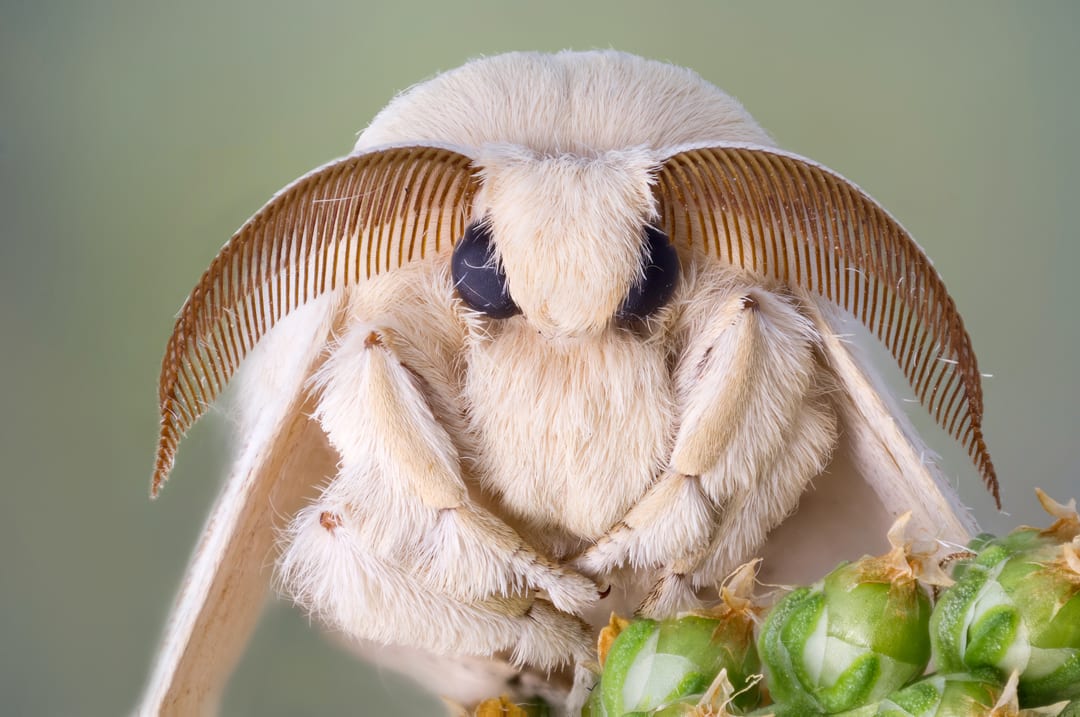







Meet Bombyx mori — the domesticated silk moth, a creature so thoroughly shaped by 5,000 years of human breeding that it can no longer fly, find its own food, or survive without us. In return, it gives us silk: one of the most prized textiles on earth, spun from a cocoon that can unravel into a single continuous thread up to 900 meters long.

The practice of raising silk moths is called sericulture, and it’s been central to Chinese civilization since at least 2700 BCE. The process begins with tiny eggs that hatch in about two weeks, releasing larvae with a single-minded obsession: eating white mulberry leaves. They do this through four molting stages, growing rapidly before spinning themselves into their famous cocoons using silk secreted from their salivary glands. The cocoons are then harvested — typically by boiling them, which preserves the thread but ends the pupa inside. It’s a process that has fueled global trade, shaped the Silk Road, and clothed emperors.


But here’s where things get genuinely strange. If a silk moth is allowed to complete its full lifecycle and emerge as an adult, what you get is one of the more improbable-looking creatures in the animal kingdom. Centuries of selective breeding for maximum silk yield have left the adult moth with a body too heavy to fly, wings too small to be useful, and eyes so oversized and soulful that people keep them as pets. Their dense, downy fur — white and impossibly soft — is what earned them the nickname “sky puppies.” It’s not hard to see why it stuck.


They don’t bite, they don’t fly away, and they only live a few days as adults — just long enough to mate and lay eggs before the cycle begins again. Strange, a little melancholy, and somehow completely charming. Nature has given us weirder things, but few that look quite so much like they belong in a teacup.
Sources: Getty Images, Wikipedia, Pethelpful.
Discover more from Moss and FogSubscribe to get the latest posts sent to your email.
Comments (0)