
Remember me
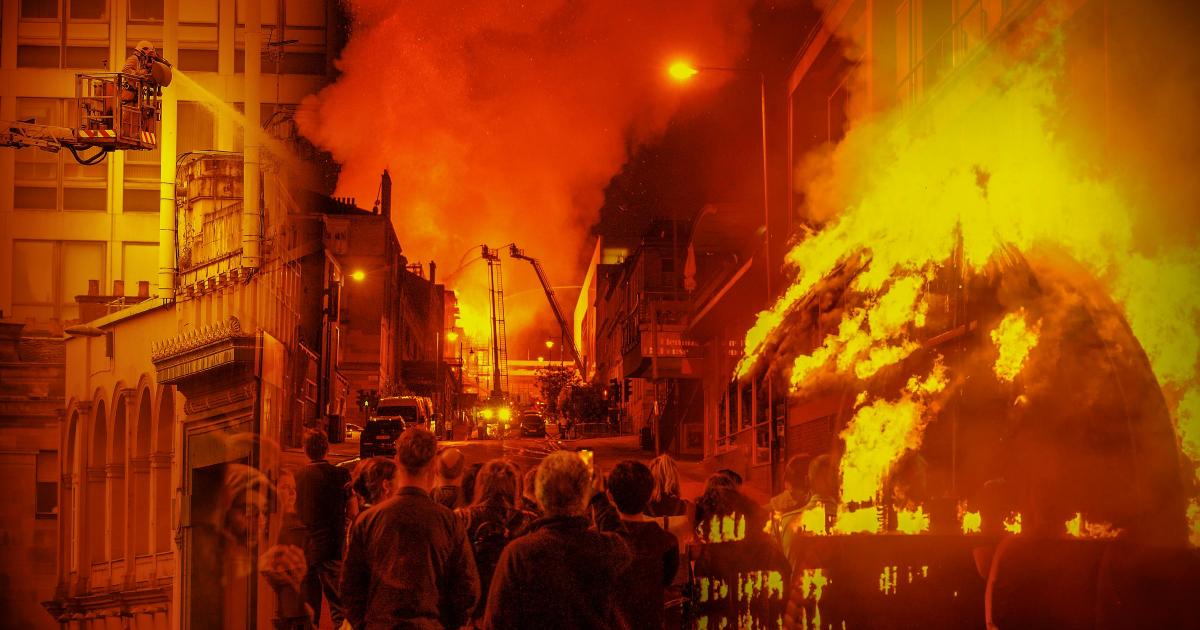








Firefighters battled the inferno through the night as locals gathered behind cordons, watching another piece of the city’s historic fabric disappear.
By morning, the dome of the 175-year-old landmark had collapsed – much of the building has, in fact.
For Glaswegians, it all feels painfully familiar.
READ MORE: 'Colossal incident': John Swinney responds after devastating Glasgow Central fire
In recent years, the city has watched as some of its most recognisable buildings have burned down. Take the devastating blazes in 2014 and 2018 that destroyed the Glasgow School of Art and the nearby O2 ABC music venue. Or the fire at the listed Victorian building on Sauchiehall Street in 2018, which closed the popular Victoria’s nightclub for good.
Now, as investigators examine the hollowed-out shell of the Union Corner building, an uncomfortable question looms over the city’s architectural heritage.
Why do so many of Glasgow’s historic buildings seem to end the same way – in flames?
Conflict between safety and conservation?Billy Hare, a professor of construction management at Glasgow Caledonian University, said that the Glasgow Central fire – while devastating – is “not that unusual” in and of itself.
"An older building of this age, dating back to the 1850s, will rarely feature the fire protections of modern buildings, which must conform to national building standards,” he told The National.
“In fact, when first built, such buildings would usually contain more structural timber and more timber used in the decorative finishes, increasing the ‘fire loading’ (a calculation based on how much combustible material is in a building). This, combined with a lack of adequate fire protection and engineering controls, all leads to a higher risk of fire.”

He added that while older buildings must be improved safety-wise each time they are refurbished, it isn’t always as simple as that.
“In the case of listed buildings, any alterations need to be sympathetically balanced with the internal and external appearance of the building,” Hare said.
“The resulting plans may therefore be a complex process creating conflict between regulatory compliance and heritage conservation.”
Rising costs and cutsHenry Landis, a fire safety expert and former firefighter who is leading the first comprehensive study into the risk our historic buildings face from fire, said that another risk factor is that listed buildings are more expensive to maintain and keep up.
The PHD student at Glasgow Caledonian added that many of these buildings also once had one occupant – say, a bank – but are now multi-occupancy.
“One of the main issues you have in a lot of the buildings is fire stopping within the building and compartmentation,” he told The National.
READ MORE: Call for donations to businesses affected by devastating Glasgow Central fire
“Historic Environment Scotland and Historic England are both recommending that they have fire strategies for the building. The problem being, in a multi-occupancy building, who does the fire strategy? Is it the building owner, is it the occupier?”
Landis added that the fact fire services across the UK are losing funding is another issue.
He asked: “Have the crews got time to go out in Glasgow and drive around and go, ok this lot's grade A, this lot is grade B, and if we had a fire here – how would we deal with it? The chances are that they don't have that time. And if you look at the Historic Environment Scotland map for Glasgow, most of your city centre is green, blue or red dots, which is listed.”
Steve Emery, a heritage fire safety consultant with over 40 years of experience including senior advisory roles at Historic England and Oxford University, said there are a “number of issues” when it comes to fire safety and historic buildings.

“One is we don't really know how many historic buildings are burning down because the Home Office hasn't got any statistics on it, so it's difficult to compare,” he told The National.
“The impact is greater because, if you've got a Premier Inn burning down or something like that, you're not gonna worry about it as much as long as everyone gets out. But because it's an important building, it's a historic building and it's a landmark – it makes the impact greater.”
Emery added: “But a lot of buildings, they have cycles in their life where they're either prosperous and things are going well for the building or they fall into disrepair. And when it's starting to go that sort of cycle where it's not valued as much as it should be that you start getting these fires.
“I think the main thing is we don't look after our buildings when they're in the decaying phase as well as we ought to, and if we looked after them they wouldn't catch fire.”
Comments (0)