Indonesian diplomat Aloysius Selwas Taborat recently responded to our article titled “Indonesia’s cabinet secretary is sanitizing genocide in Gaza.” His response argues that our criticism of Cabinet Secretary Teddy Indra Wijaya misrepresents a factual observation about declining casualty numbers and misunderstands the realities of diplomacy.
The disagreement, however, is not about statistics or the complexity of diplomacy. It concerns how mass civilian suffering is framed in public discourse.
Mr. Taborat argues that recognizing declining casualty figures simply reflects factual observation and may suggest that diplomacy is helping reduce hostilities. According to his reasoning, acknowledging that deaths have decreased from tens of thousands to lower figures does not imply that remaining casualties are acceptable but rather indicates that diplomatic efforts may be producing results.
This interpretation is deeply problematic.
A reduction in the rate of killing does not necessarily demonstrate diplomatic success, nor does it alter the nature of the violence itself. When allegations of genocide are being seriously debated within international legal and scholarly arenas, presenting a decline in killings as evidence of progress risks normalizing the continued destruction of civilian life.
The key question is not whether fewer people are dying than before, but whether the structures that enabled mass civilian killing remain in place.
If those structures persist, interpreting casualty reductions as meaningful progress risks transforming an ongoing humanitarian catastrophe into a technocratic indicator of policy effectiveness.
Mr. Taborat also argues that Mr. Wijaya’s statement—that violence cannot stop instantly—reflects historical realities of conflict resolution, citing cases such as Northern Ireland and the Balkans where violence declined gradually before ending.
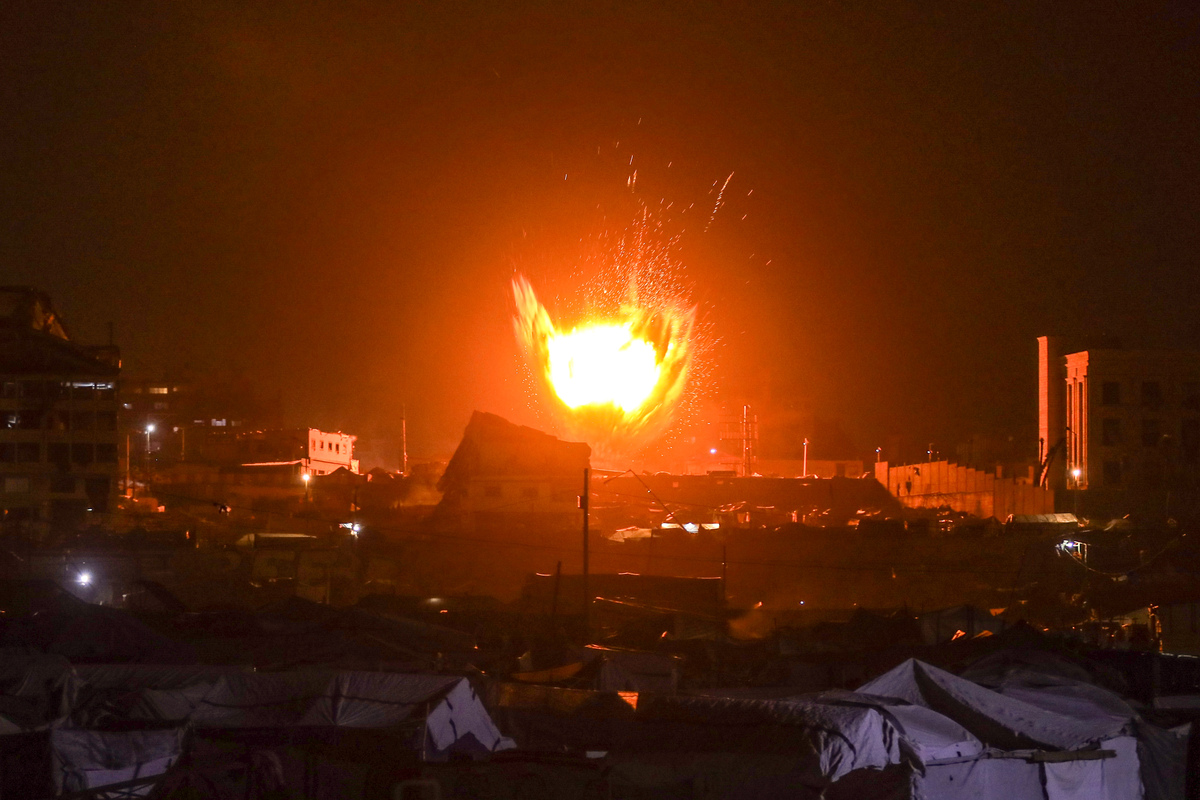
These comparisons are misleading. The peace processes he references emerged from negotiated settlements between political actors and eventually produced institutional arrangements aimed at ending hostilities. Gaza today does not resemble such a negotiated transition. It remains the site of an extraordinary humanitarian crisis whose legal and moral implications continue to be intensely debated.
More importantly, the argument that violence cannot stop immediately overlooks the profound asymmetry that defines the present situation. In contexts of alleged genocide, the capacity to inflict large-scale violence is typically concentrated in identifiable state actors possessing overwhelming military power. When the continuation of civilian harm depends primarily on the decisions of those actors, ongoing violence cannot simply be explained as the inertia of conflict. It reflects continuing political and military choices.
READ: Hamas accuses Israel of escalating attacks and massacres in Gaza
Mr. Taborat further suggests that our argument implies that referring to casualty figures reduces human lives to statistics. This misrepresents our position. Humanitarian data is indispensable for documenting atrocities, assessing needs and coordinating responses. Institutions such as the International Committee of the Red Cross and the United Nations rely heavily on such information to monitor crises and mobilize assistance.
The issue is not the existence of statistics but how they are used in political narratives.
When declining casualty figures are presented as evidence that diplomacy is succeeding while widespread suffering continues, numbers risk becoming tools of normalization rather than accountability.
This concern becomes even more significant given the legal debates surrounding Gaza. The characterization of the violence as genocide is not merely rhetorical activism. It reflects serious legal discussions informed by obligations under the Convention on the Prevention and Punishment of the Crime of Genocide and by ongoing proceedings before the International Court of Justice.
Diplomacy remains essential for achieving a just and lasting peace, and Indonesia has long supported Palestinian self-determination. But diplomacy does not require the dilution of moral clarity.
If the success of diplomacy is measured primarily by whether fewer civilians are dying today than yesterday, rather than by whether the violence itself has ended, an uncomfortable question inevitably arises: at what point does the reduction of mass suffering become mistaken for its resolution?
History shows that atrocities often persist when political actors adopt technocratic language that frames mass suffering as an unfortunate but manageable feature of geopolitical reality. When violence is evaluated primarily through declining numbers rather than the conditions that enable it, discourse risks shifting from condemnation to accommodation.
Diplomacy should not aim merely to reduce the scale of suffering. Its purpose must be to end it.
Until that objective is achieved, the language used by public officials matters profoundly. The goal of diplomacy cannot be to make catastrophic violence gradually less catastrophic.
It must remain the full protection of civilian life and the pursuit of justice.
Anything less risks normalizing what should never be normalized.
OPINION: Indonesia’s cautious response to the U.S.–Israel war on Iran
The views expressed in this article belong to the author and do not necessarily reflect the editorial policy of Middle East Monitor.