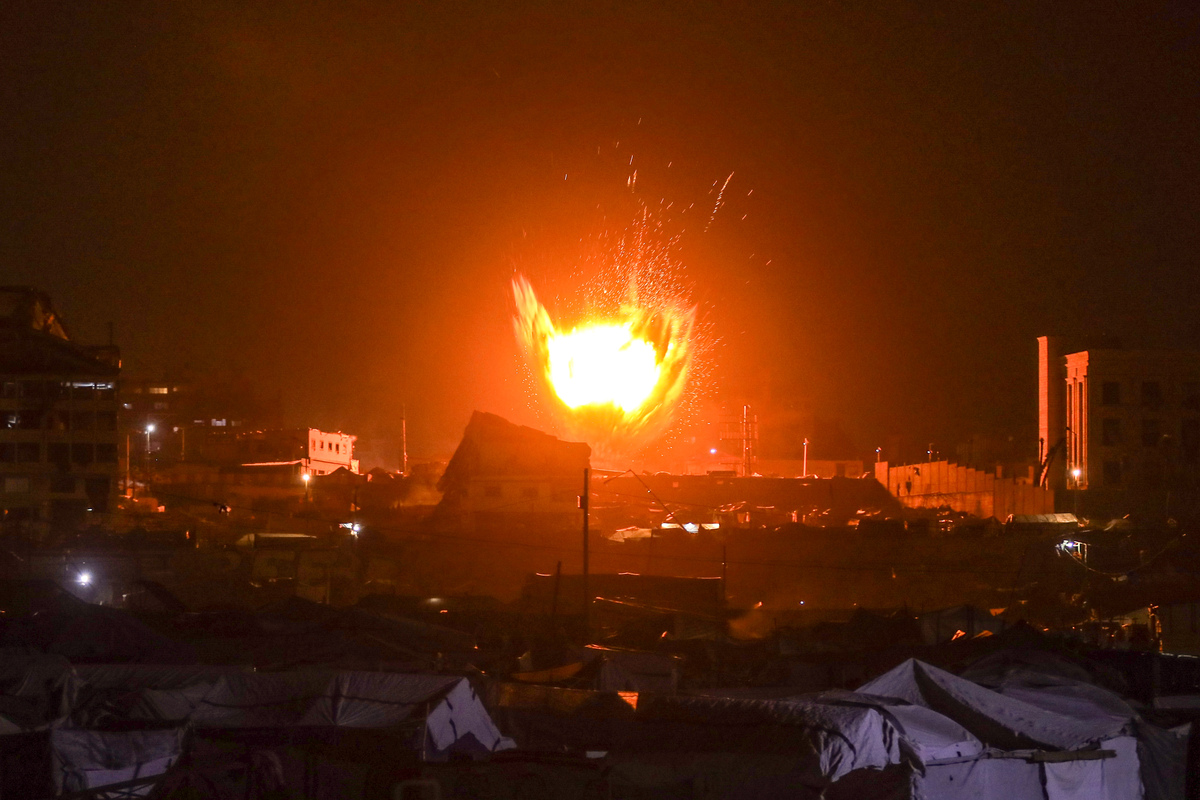
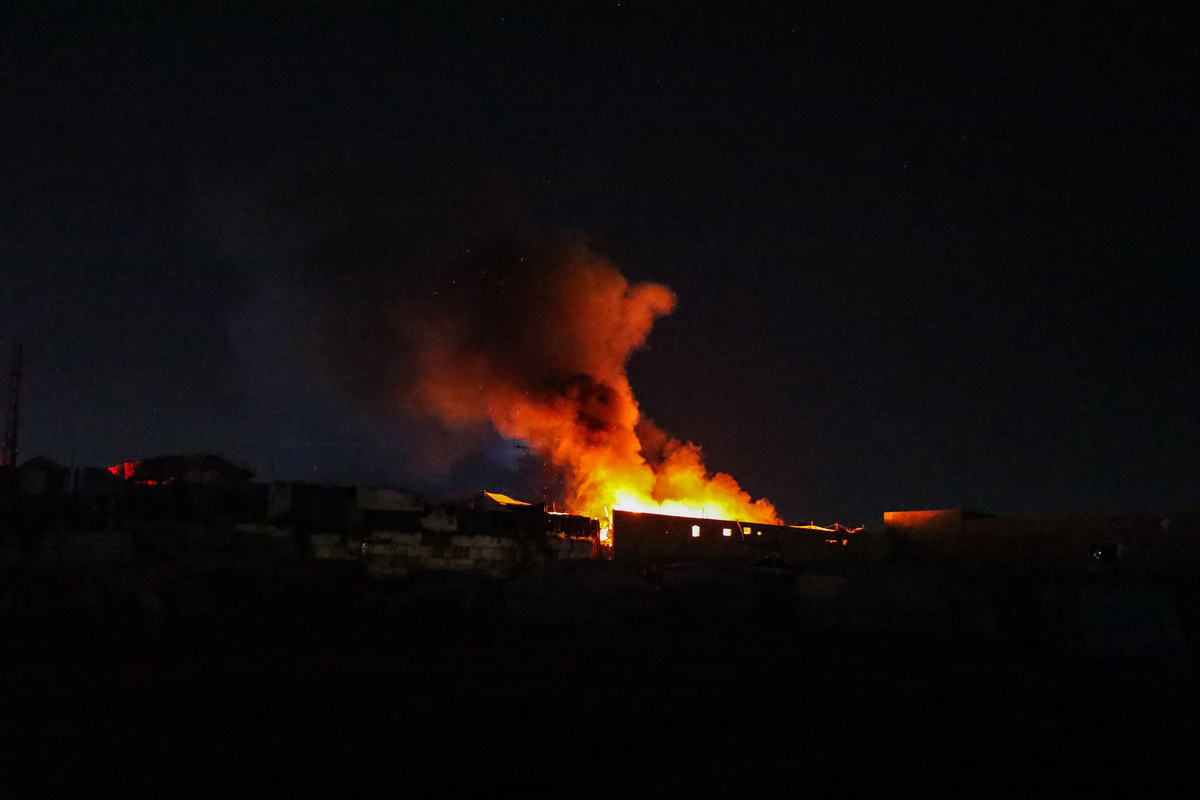
While most international analysis remains focused on the implications of the U.S.-Israeli escalation against Iran —from deterrence to the risk of a wider confrontation— Gaza reveals another dimension of this war. A new regional front does not simply add another battlefield. It reshapes those already burning. Gaza offers a clear example: an existing front, already under sustained war, now affected by the reprioritisation of security and political calculations produced by the broader escalation. This has been visible on the ground. The UN Office for the Coordination of Humanitarian Affairs noted that the “escalation across the Middle East” had an “immediate impact” on the occupied Palestinian territory, including Gaza.
This is one reason Gaza matters for understanding the current war. The U.S.-Israeli confrontation with Iran is not just being added to an already crowded regional landscape. It is reshaping attention, resources, and security calculations across the region, including in arenas that were already active. In Gaza, this appears in the tightening or reinterpretation of restrictions, and in the way decisions around movement, supply, and essential services are affected by a more volatile regional environment. The new front has altered the terms on which the existing one is managed: what is allowed in, what is delayed, which priorities take precedence, and which forms of access become even more fragile.
That shift became particularly clear when, according to OCHA’s 6 March report, all crossings into Gaza were closed on 28 February, suspending the entry of aid, fuel, and goods, as well as humanitarian movement coordination and medical evacuations.
The significance of that move becomes clearer once one shifts from political analysis to practical consequences. In Gaza, decisions about crossings and humanitarian coordination do not remain narrow administrative matters. They quickly become a chain of daily effects. When fuel entry is interrupted or slowed, the consequences spread from transport and generators to water production, municipalities’ ability to collect solid waste, the functioning of hospitals and primary care facilities, and eventually the prices of basic goods themselves. What may appear from the outside as just another restriction becomes, inside Gaza, a reordering of survival priorities: which services can continue, which must be rationed, and which needs are deferred despite their human cost. UN reporting mapped this chain clearly, linking the closure of crossings to rising prices of essential goods, fuel rationing, the suspension of vehicle-based waste collection, reduced water production, and emergency contingency plans in hospitals and primary health centres. Early Reuters reporting republished by Al-Monitor on 2 March captured the same trajectory, warning that fuel stocks might last only a few days and that a prolonged closure threatened hospitals, water and sanitation services, and food access across the Strip.
Although Kerem Shalom was partially reopened on 3 March for fuel and some aid, that does not support any serious talk of relief. According to OCHA, around 989,000 litres of diesel entered Gaza after the partial reopening through 28 trucks, but that remained below the minimum required to sustain critical humanitarian operations. Some transfers from the West Bank and Jordan also remained suspended until 5 March. The partial reopening eased some immediate bottlenecks, but it did not change the broader condition of fragility. Essential services remained under rationing, and the wider sense of precarity remained intact.
READ: Israeli officials say overthrowing Iran’s regime could take a year
This dynamic is especially stark in the health sector, where the relationship between logistical decisions and humanitarian outcomes is exposed with particular speed. Delays in fuel entry or disruptions to coordination do not simply strain medical institutions. They can lead to reduced services, postponed interventions, and the disruption of referrals and treatments that are unavailable inside Gaza to begin with. At that point, the issue is not only scarcity of resources. It is a shrinking of time itself: the time available for a patient awaiting transfer, or for a medical facility trying to continue operating on minimal fuel and supplies. According to OCHA, medical evacuations through Rafah have remained suspended since 28 February, while more than 18,000 patients in Gaza still urgently require treatment unavailable locally. The World Health Organization, in remarks reported by Reuters, said medical stocks had reached a critically low level, that incoming aid represented only around one-third of estimated daily need, and that half of Gaza’s hospitals remained closed while those still functioning struggled to maintain life-saving services such as surgery, dialysis, and intensive care.
But the impact of the regional war does not stop at the tightening of restrictions inside Gaza. As the confrontation expands, pressure is also spreading to the wider logistical environment on which humanitarian response depends.
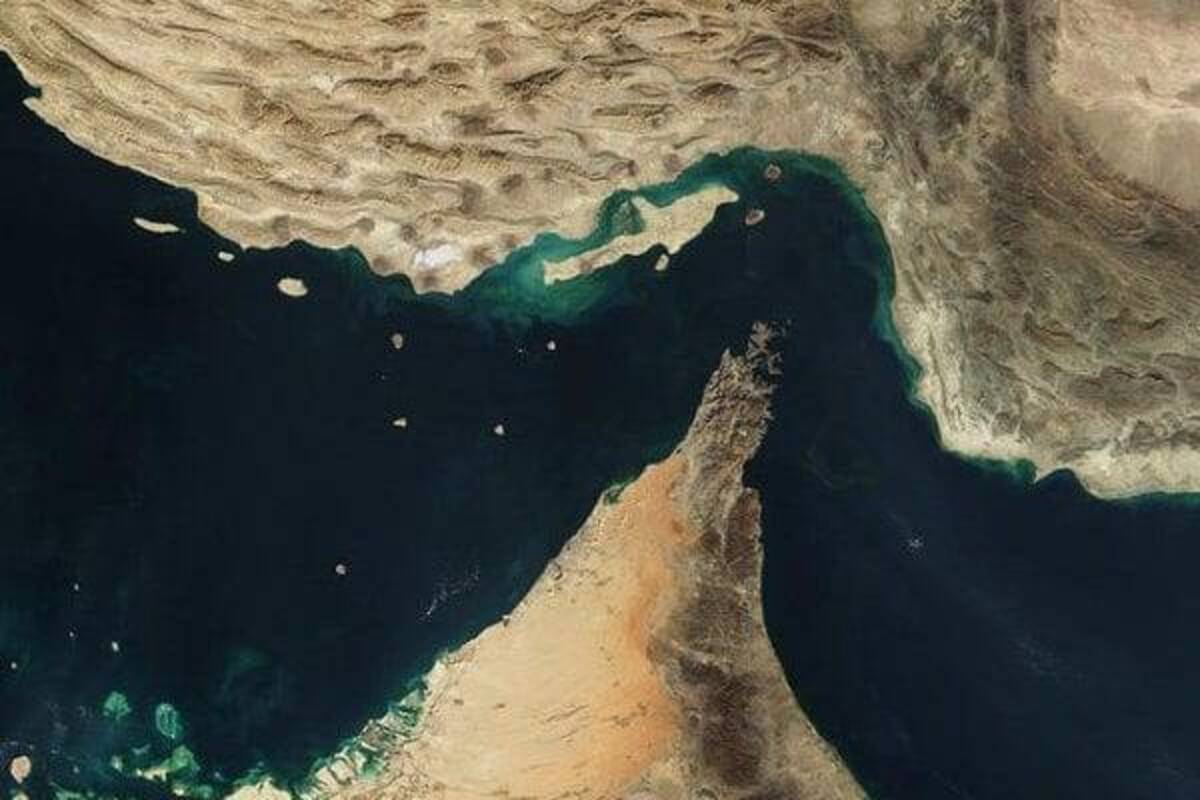
In comments to Reuters, UN relief chief Tom Fletcher warned that the widening conflict across the Middle East was disrupting humanitarian supply chains through airspace closures and shipping disruption via the Strait of Hormuz, reducing the movement of supplies while raising the cost of air and sea transport, as well as regional energy and food prices. A WHO statement issued on 11 March sharpened that point further, noting that temporary airspace restrictions had disrupted the movement of medical supplies from the organisation’s global logistics hub in Dubai, affecting more than 50 emergency supply requests for 25 countries, including shipments planned for Al-Arish in support of the Gaza response. In other words, the new front is not only hardening the conditions of access inside Gaza. It is also constricting the wider infrastructure that makes humanitarian response possible in the first place.
That is what makes Gaza analytically important here. It is not only a site of ongoing devastation. It also reveals a broader pattern in how conflict is managed across the region: when a new front opens, risk is not distributed evenly. It accumulates most heavily in arenas that are already exhausted. Existing fronts do not simply become secondary files to be revisited once the larger escalation is contained. They become spaces where civilians pay an added cost because the systems sustaining everyday survival were already operating at their limit.
If the U.S.-Israeli war on Iran has revealed something beyond deterrence and escalation calculations, it is this: in a region where wars overlap and fronts are entangled, one of the most dangerous consequences of escalation lies in its power to reshape existing fronts while simultaneously shrinking the humanitarian space available within and around them. The question, then, is not only how far this war might spread. It is also what it is already doing to fronts where war never disappeared, and where even the minimum conditions for survival are now narrowing further.
OPINION: The war on Iran started with missiles, but oil price can end it
The views expressed in this article belong to the author and do not necessarily reflect the editorial policy of Middle East Monitor.