
Remember me
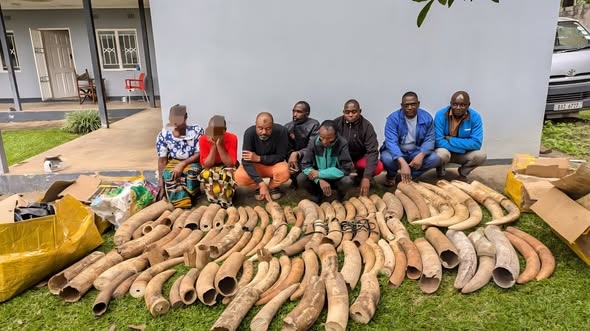
On March 9, wildlife authorities in Zambia arrested 10 people in possession of 550 kilograms (1,212 pounds) of ivory, according to the U.K.-based Environmental Investigation Agency (EIA), which provided intelligence that led to the arrests. EIA said the case highlights the impact that international cooperation can have in the fight against the illegal trade of wildlife.
In a Mar. 19 statement, the Zambian Department of National Parks and Wildlife (DNPW) said police raided several locations in the capital, Lusaka, leading to the arrest of members of a cross-border wildlife crime syndicate, including a foreign national, who is believed to be the buyer of the ivory.
“Notably, some of the apprehended suspects are repeat offenders who have previously been convicted for wildlife-related crimes, highlighting the persistent challenge posed by illegal wildlife trafficking networks,” DNPW said in a statement.
The suspects have been charged with unlawful possession of a prescribed trophy but have not yet appeared before a court.
In an email, the EIA’s executive director, Mary Rice, told Mongabay that governments are becoming more receptive to collaborating closely with nongovernmental agencies such as EIA. “There are more examples of embedded partnerships where NGOs work directly with a mandated authority to tackle illegal wildlife trade.”
These growing partnerships, which in some cases include financial support, have helped disrupt trafficking networks and secure convictions, she said. She highlighted a three-year collaboration involving EIA, Interpol, China Customs, Tanzania, Mozambique and Nigeria. In May 2017, the group busted the Shuidong ivory smuggling network, one of the key players in trafficking illegal ivory between Africa and China.
Rice also said a global network of NGOs and government agencies is building a global database of environmental crimes and their perpetrators.
She noted that while recent data from the Monitoring the Illegal Killing of Elephants project suggest that poaching is on the decline in Southern Africa, continued seizures linked to the region suggest that criminal networks are still actively trafficking ivory in that part of the continent.
She also pointed to instances in which convictions have been weakened or undermined by corruption or political interference. In Malawi, for example, wildlife trafficker Yunhua Lin was sentenced to 14 years in prison in 2021, but was granted a presidential pardon in 2025. He remains in prison, however, pending charges of attempting to bribe a judge and a prison official.
Banner image: Ivory seized by Zambian authorities in March 2026. Image courtesy of Zambia Ministry of Tourism.

Comments (0)