‘I will, yeah’: How a very Irish phrase presented a challenge for an immigrant doctor
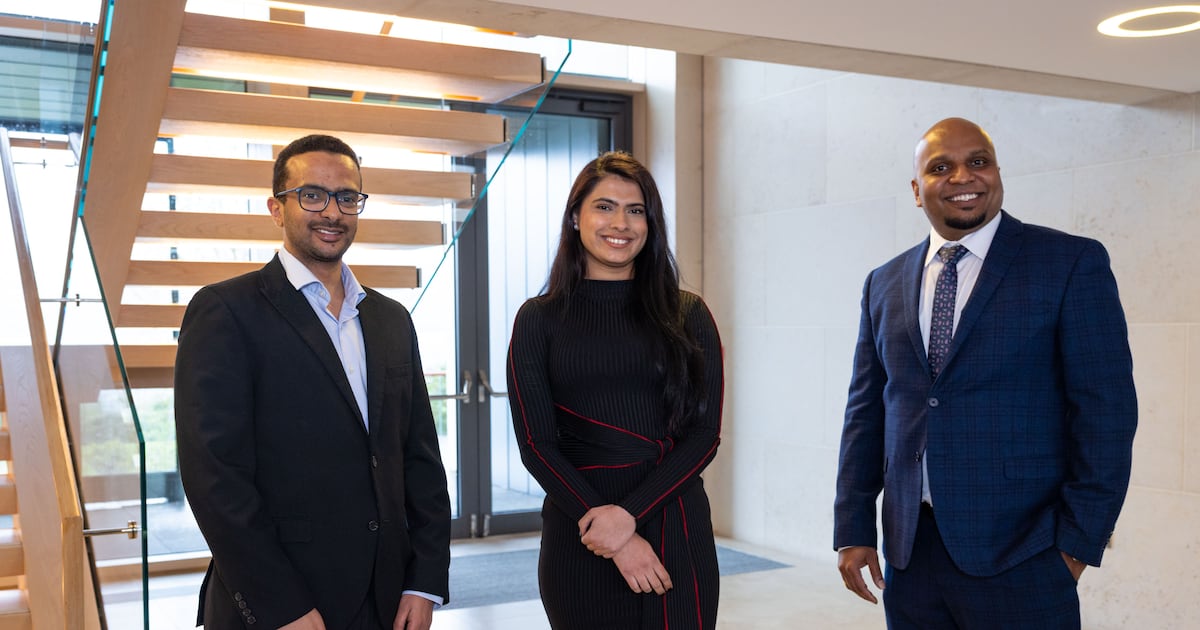
“I had a patient who was a smoker,” recalled Cork-based GP Dr Mohamed Elbadri, “and I just asked the first question: ‘Are you willing to quit smoking?’ He said: ‘I will, yeah’.“So I was happy he was really determined to quit smoking and I didn’t offer any nicotine replacement or psychological therapy because he didn‘t need it. “But when he came back three months later for a follow-up, I asked him: ‘How was your journey with smoking cessation?’ And he said: ‘I told you I would never stop smoking.’ ‘But,’ I said, ‘you were very enthusiastic’. He explained to me then what ‘I will, yeah’ means in Ireland.”Elbadri’s story got a laugh from those at the Irish Medical Organisation’s conference in Killarney at the weekend. Originally from Sudan, he was one of three migrant doctors who addressed the event, with his point being a serious one. READ MOREFuel protests: Some motorway blockages remain as protesters say €505m package ‘not enough’Rory McIlroy overcomes demons to retain Masters title after another dramatic final dayAn Post customer finds his parcel in green bin after second attempt to send it to FranceThe Irish building contractor who ‘fleeced’ US homeowners of €1.3 millionDr Mohamed Elbadri is a GP in Cork city. Photograph: Shane O'Neill/Coalesce He felt he had not offered the necessary support to this patient because he had not understood the very Irish phrase used by the man. Elbadri said when there is a lack of understanding, “you lose the confidence between patient and the doctor”.He moved to Ireland in 2023 to develop his career and access educational opportunities for his children. The experience, he said, has been hugely positive for the family but, like his colleagues on the podium, he acknowledged there had been challenges.Dr Nallasegarampillai Muthalvan, from Sri Lanka, said he had been here for a while before landing a job in Co Mayo more than a decade ago. When driving there for the first time, he said, he was slightly perplexed by all the “Mayo for Sam” signs along the road. The Prudential Building in Chicago lit up with the slogan 'Mayo For Sam' before the 2020 All-Ireland football final between Mayo and Dublin. Photograph: Bob Reiter via Twitter Maybe, he thought, Sam was a team captain. It was two years before somebody explained it was a reference to the Sam Maguire, the trophy awarded to the All-Ireland senior football champions.It was another of the kind of minor cultural barriers that made connecting with Irish colleagues a little harder, but Muthalvan said he kept on trying. “I used to drink with everybody,” he said with a grin. “When they lost, we drank more. And that happened again. It was heartbreaking but I was more trying to blend in and still, I wasn’t fitting in completely. That cultural bonding will more naturally occur between Irish guys.”Dr Alina Fatima, from Pakistan, who works in an acute hospital in Dublin, echoed the sentiment, but also spoke of a colleague whose family came to call her their adopted daughter after the pair became friends. She was regularly invited over for meals for Christmas, Easter and other occasions. “I don’t think I’d have got that anywhere else,” she said.Dr Alina Fatima. Photograph: Shane O'Neill/Coalesce All three spoke warmly of the welcome they received in Ireland and said they were happy in their work and wanted to make their lives here. However, it was suggested there might be room to do a little more to reach out and help new arrivals acclimatise. There was also concern expressed about the length of time it takes, as qualified doctors, to achieve Irish registration in some areas and to access consultant training positions. Much of what was being suggested, said moderator Ingrid Miley, seemed like “an open goal” for the HSE or the IMO, whose president, Prof Matthew Sadlier, told members “the Irish health services, and the people of this country, are utterly dependent on the contribution of international doctors, nurses and support staff”. Elbadri said “international doctors aren’t coming to Ireland trying to take someone else’s spot”. “We wouldn’t like that in Sudan if someone was coming from abroad and taking our jobs. We’re just looking for our chance to develop as professionals and the Irish health system needs more doctors.”Yet, there were inevitable incidents of racism, with Fatima saying she has been abused at and outside work and also assaulted. She said things have become worse recently.“You’re a person of colour,” she said when asked about her experience, “but you’re also a woman. So the abuse that’s directed at you can be a bit more strongly worded, it can have themes of a sexual nature that are not pleasant to hear. “And when you’re hit, I think they’re aware they have more physical strength than you so it will be hard for you to protect yourself. So it can be extra, I would say, for a woman but obviously I cannot speak for another gender in terms of their experience.”Elbadri said he had not been subjected to racism but knew other doctors who had. “I can only speak from the perspective of GP doctors working in private settings. If you have a friendly, supportive superior or employer, you’ll have the support needed. But I do know doctors, female doctors, who had experienced racial abuse and their employers told them ‘this is part of the job’,” he said.All were reluctant to raise the issue and were mainly responding to questions about it, with Elbadri saying he has seen videos on YouTube with doctors talking about similar cultural issues and then looked at the comments, which he found “sickening”. In his experience, he said, “everybody’s friendly, whether it’s at work, my neighbourhood, my kids’ school, I’ve never faced anything like this but I do wish it could be stopped”.



Comments (0)