Fuel protests: Coalition’s worst week shows Ireland unprepared for economic deterioration
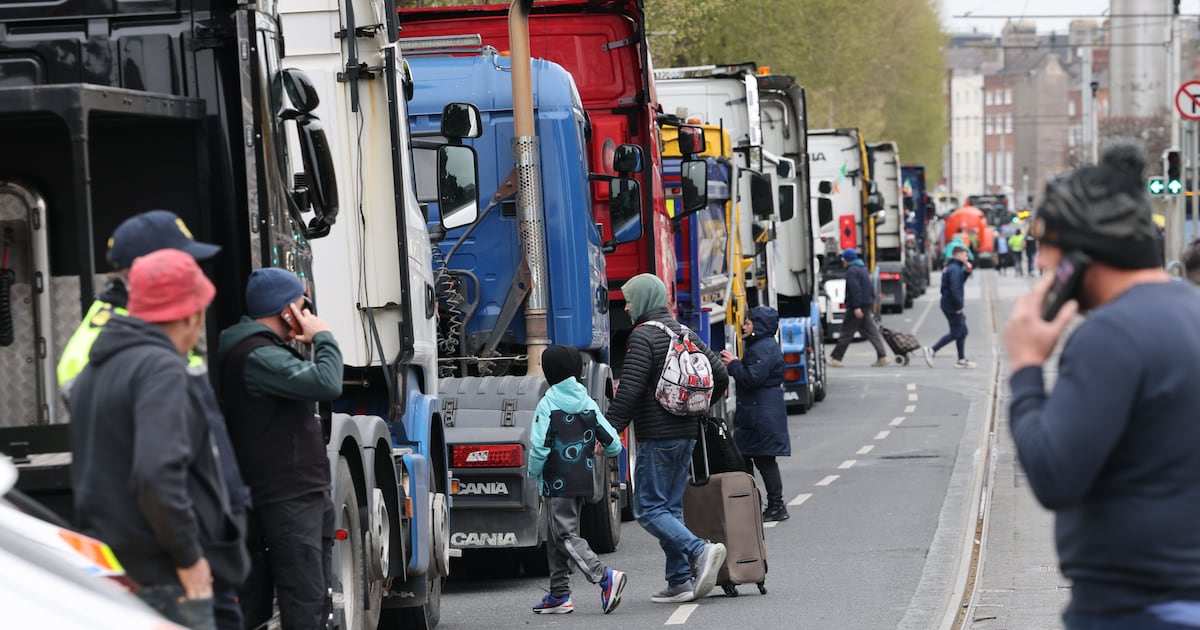
The clearing of blockades by gardaí and the announcement of a €500 million package to reduce the pressure of high fuel prices has – for now anyway – brought to an end a period of genuine crisis for the Government.Often when a government is said to be in crisis, it really isn’t. But this past week, it was. Critical parts of the country and the commerce upon which it depended for revenues were brought to a near standstill by a wave of protests and blockades that Ministers neither expected nor understood, and which they seemed – for much of the week – utterly unable to deal with. It was the most serious challenge the Government has faced since it was formed last year and for much of the week it floundered.Whether this weekend’s twin-track course of action – announcing a package of supports while reasserting the authority of the State on the streets – turns out to be a permanent resolution remains to be seen. The Government certainly hopes so, but hope is a poor substitute for strategy. The protesters themselves do not seem to know, insofar as they can be said to have one mind on anything. READ MOREFuel protests: Government to raid exchequer surplus for €505m support packageGovernment announces further cuts to fuel prices and defers carbon tax increaseCould we be looking at the future of protests in Ireland?Why the failure of Noël Browne’s mother and child scheme still matters 75 years later Ultimately, a lasting resolution may depend on something over which neither protesters nor Government have any control: the price of oil. If that remains high, or gets even higher, further turbulence surely lies ahead. [ Government announces further cuts to fuel prices and defers carbon tax increase ]For all the uncertainties of the current position, two things are surely true: first, the Government cannot continue to spray money around indefinitely and, second, many businesses and farms cannot operate with permanently high diesel prices. The postmortem examination in Government is unlikely to be flattering. The online organising of the protests and blockades seems to have gone entirely under the radar to an extent that when the tractors and lorries began parking across roads on Tuesday there was no sense of alarm bells going off – only a mixture of irritation and complacency.By the time the Government announced it was calling in the Army on Wednesday, the protesters and blockaders were too well ensconced to be easily moved. And, anyway, the Army didn’t arrive until days later. There was a failure to appreciate the differences between protests and blockades. There was a farcical attempt to involve the protesters in talks and then to shut them out as the character of the events on the streets began to be more obviously coloured by contributions from far-right and anti-immigrant agitators. Ordinary people squeezed by the cost of living were there in their droves, for sure. But the far right was seizing on the protests and nobody on the barricades was stopping them. On Sunday, the Government sought to solve the problem by – of course – throwing money at it. But it has been a very bad few days for Micheál Martin’s administration.The only consolation for the Government was that the Opposition seemed equally wrong-footed. Initially attracted by the protests, presumably on the basis that my enemy’s enemy is my friend, left-wing Opposition parties were soon alarmed by demands from the protesters to shut centres for asylum seekers, begin drilling for oil off the Co Cork coast and for the Taoiseach to resign.The dilemma was especially acute for Sinn Féin, hardly averse to a bit of populism itself. Mary Lou McDonald found herself unable to say whether the protests should continue. The party’s response this weekend – putting down a no-confidence motion in the Government – will enable the Coalition to rally its troops, just at a time when old divisions in Fianna Fáil were beginning to resurface.The week also provided another clear example of something that we have seen signposts to repeatedly in recent years – a new political energy on the right that is driven by cost-of-living concerns but supported by anxieties in some quarters about migration and, to a lesser extent, the perceived adoption by Government and agencies of a woke agenda.That energy was again evident last week – even if it is clear that it has not formed itself or become attached to any political vehicle. The Independent Ireland party seems ready to audition for the role, though. If so, they will have a decision to make sooner or later about their relations with the far right.The past week has also been – perhaps above all else – a demonstration of how ill-equipped the Government, and politics more broadly, is for a deterioration in the State’s economic fortunes. Given what is happening elsewhere in the world, that should be a pressing concern for everyone involved.



Comments (0)