China courts America’s allies as US-dominated world order recedes
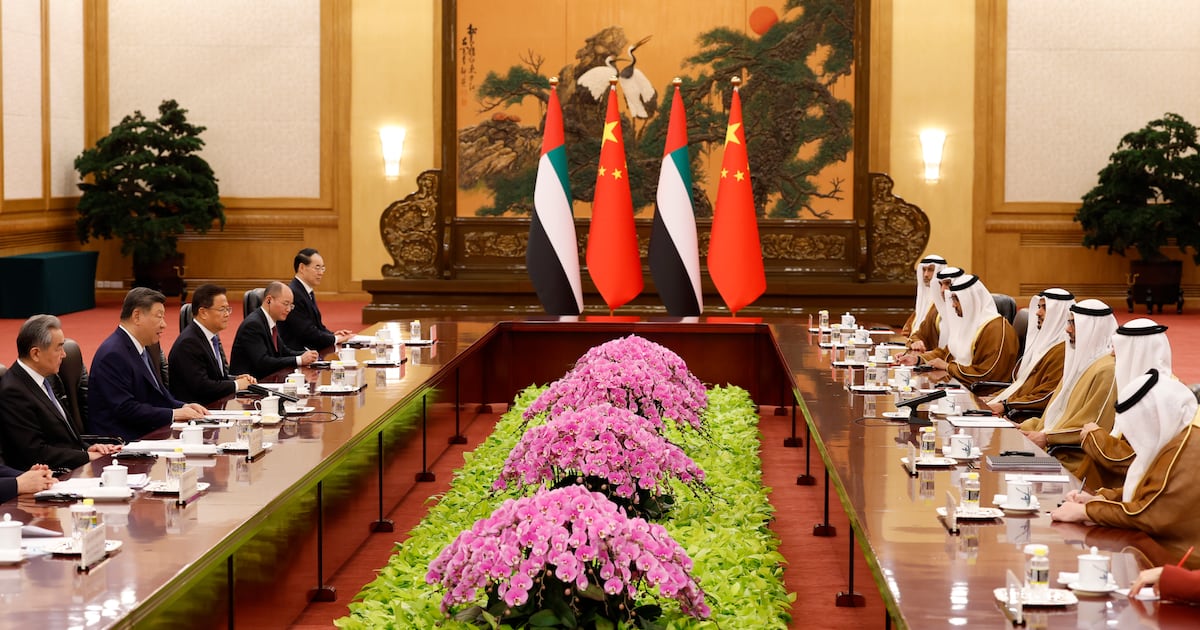
Xi Jinping has been meeting leaders from Europe, Asia and the Middle East this week. Some are America’s fed-up friends hedging their bets.Beijing rolls out the welcome matWhile the US Navy was enforcing its blockade of the Strait of Hormuz yesterday, Xi Jinping was meeting leaders from two of Washington’s most important allies in Europe and the Middle East. The Chinese leader delivered similar messages to Spain’s Pedro Sánchez and to sheikh Khaled bin Mohamed bin Zayed Al Nahyan, crown prince of Abu Dhabi in the United Arab Emirates (UAE).“The authority of the international rule of law should be upheld and cannot be used when convenient and discarded when not. We must not allow the world to revert to the law of the jungle,” he told Khaled, in an apparent swipe at the United States.This would have been music to the ears of the Spanish prime minister, who has been in open conflict with Donald Trump over his refusal to allow the US to use bases in Spain for an unlawful war against Iran. Sanchez has also been among the most emphatic European critics of Israel’s war in Gaza and its conduct towards the Palestinians in general.READ MOREWelcome to the new Global Briefing newsletter Once a friend of Israel, Keir Starmer now faces open hostility from JerusalemNo rest for JD Vance as Trump gets cross with the pope againMelania brings Epstein back into focus as Iran war hastens Maga mutiny against Trump The UAE, on the other hand, remains a linchpin of American interests in the Gulf and elements within its leadership have business links with the Trump family. The Emiratis are also Israel’s closest partner among the Gulf states and currently one of the most hawkish towards Iran.Khaled’s visit reflects the strength of the UAE’s economic relationship with China, which is its biggest trading partner, but is also part of a pattern of hedging by Washington’s friends since Trump’s return to the White House. This has seen governments from South Korea and Australia to Canada and a number of European Union member states mend fences with Beijing in recent months.Beijing has responded in kind, dropping the harsh, provocative rhetoric of its “Wolf Warrior” diplomacy and highlighting shared interests, including the need to defend multilateral institutions such as the United Nations. As the world order dominated by the US starts to make way for an emerging system that may see authority diffused among great powers and middle powers, China is presenting itself as a responsible actor and a reluctant hegemon.Sanchez has been positioning Spain as a favoured destination in Europe for Chinese investment, particularly in new technology and clean energy sectors. In Beijing this week, he described Spain as “a profoundly pro-European country” and called for a better relationship between the EU and China.“What is happening today is not a transfer of hegemony, but an increase in multipolarity – not only in power, but also in prosperity,” he told students at Tsinghua University.“There are those who insist on interpreting reality through a zero-sum lens, portraying the growth of some as a loss for others, or arguing that deepening certain relationships means abandoning others. But I believe this view is not only mistaken, but also dangerous, because it is immobilising. It turns us into prisoners of the past and limits the possibilities the future offers us.”Soon after Xi bade farewell to Sanchez and Khaled, a flight touched down in Beijing carrying To Lam, the newly inaugurated president of Vietnam, an important security partner for the US in Asia. And later that day, an old friend arrived in the person of Russian foreign minister Sergey Lavrov, at the start of a two-day visit to the Chinese capital for an exchange of “in-depth views on international and regional issues of common concern”. Please let me know what you think and send your comments, thoughts or suggestions for topics you would like to see covered to denis.globalbriefing@irishtimes.com





Comments (0)