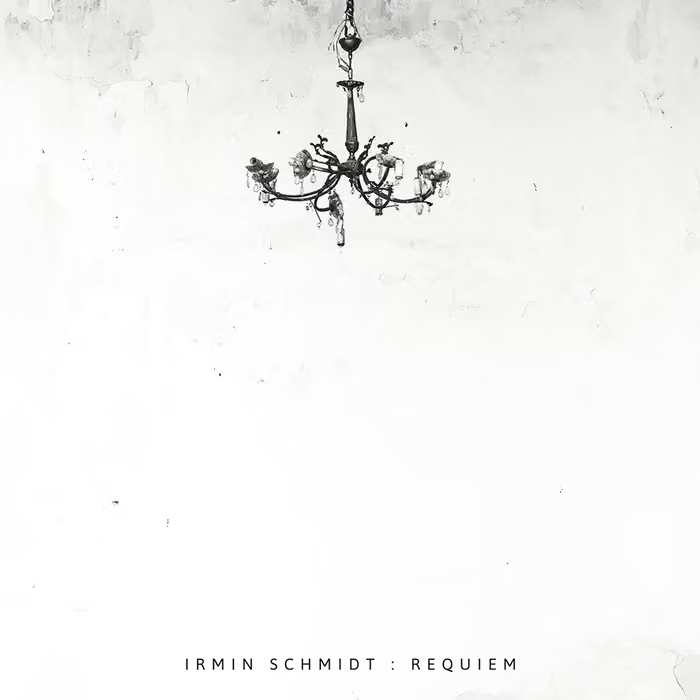
Irmin Schmidt turns 89 next month. He’s the last surviving founding member of the quasi-deified experimental rock outfit Can. It’s therefore little surprise that Requiem is a kind of threnody for both Schmidt’s own career, and for the collaborators he’s outlived.
It’s an album that leaves plenty of blank space for the listener’s imagination to flow into. Some of the sounds evoke the churning of hospital respirators, at other moments like a faulty grandfather clock. At times the record sounds like how I can only imagine purgatory might feel. In my mind, I was on a camping holiday with Schmidt, Stockhausen and Cage. None of us were having a particularly pleasant time. Everyone else was dead.
The album consists of two movements, coming in at just over and under the twenty minute mark, respectively. They’re contemplative, liminal and at times, challenging. If you’ve just heard Can’s ‘I’m So Green’ and ‘Vitamin C’ and were thinking of giving the keyboardist’s new solo album a go, there may be better places to begin digging.
Part One begins with field recordings from around Schmidt’s home in Southern France: croaking frogs, trickling water and various garden birds lead you into a false sense of idyllic security. It doesn’t take long for these to be punctuated by haunting, unresolved piano passages – the kind that in a horror film indicates a character’s imminent demise. Schmidt has, after all, composed over forty film and TV scores. From there you’re taken on an unsettling ride through springtime in the uncanny valley. The album sounds how Francis Bacon’s take on Monet’s Giverny gardens would look.
For such a relentlessly innovative artist, Schmidt has spent the last few years in reflection. He’s been closely involved with archival work around Can and has co-authored a two-part book about his former group. Requiem gazes even further back, primarily channeling Schmidt’s earliest mentors, Karlheinz Stockhausen and John Cage.
Like Requiem’s predecessor, 2018’s 5 Klavierstücke, the album features both unprepared and prepared piano, à la Cage, recorded spontaneously and edited in collaboration with long-time engineer René Tinner. The piano and environmental recordings work in dialogue both with each other and the listener. As soon as you begin to feel comfortable, to almost relax into the soundscape, some dissonant clang from the prepared piano jolts you awake. There’s an oneiric quality to Requiem, but you’re never more than a minute away from the inevitable hypnic jerk.
Almost 60 years after the first Can sessions, and on an album that borrows so heavily from Schmidt’s distant memories, he remains astonishingly close to the cutting edge. Requiem is unlikely to be an album that creates a new legion of converts, but for devotees of this true innovator it’s an incredibly rewarding one.




Comments (0)