There’s a moment near the end of ‘Insight’, perhaps one of the most overlooked Joy Division songs, where music prevails against all odds. The song’s trundling rhythm section, and Ian Curtis’ lines about apathy towards living, are lost in a monsoon of space age synth. ‘Insight’ surges towards some kind of combustion; some kind of revelatory crescendo, which is never fully realised. All instruments but a solo guitar stop. It’s unclear whether ‘Insight’ chooses life or death. Rather, even in the darkest moments, time will not stop. With it too, art.
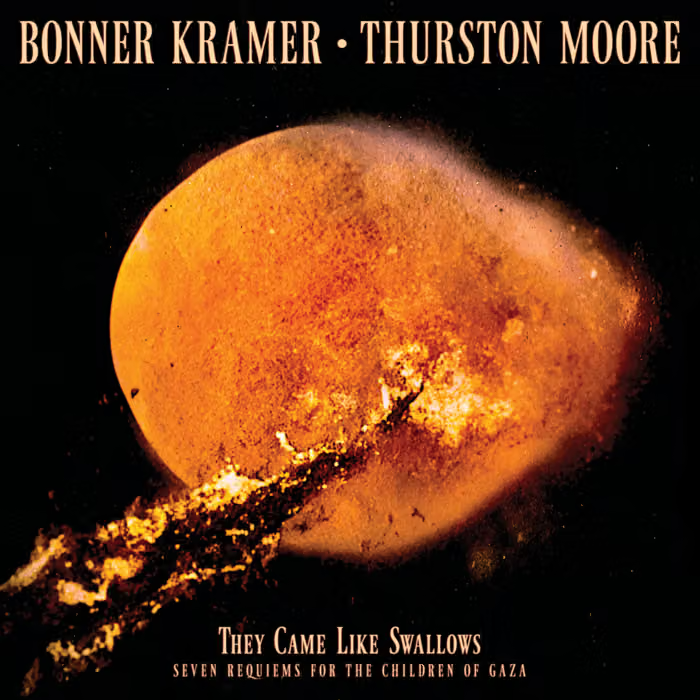
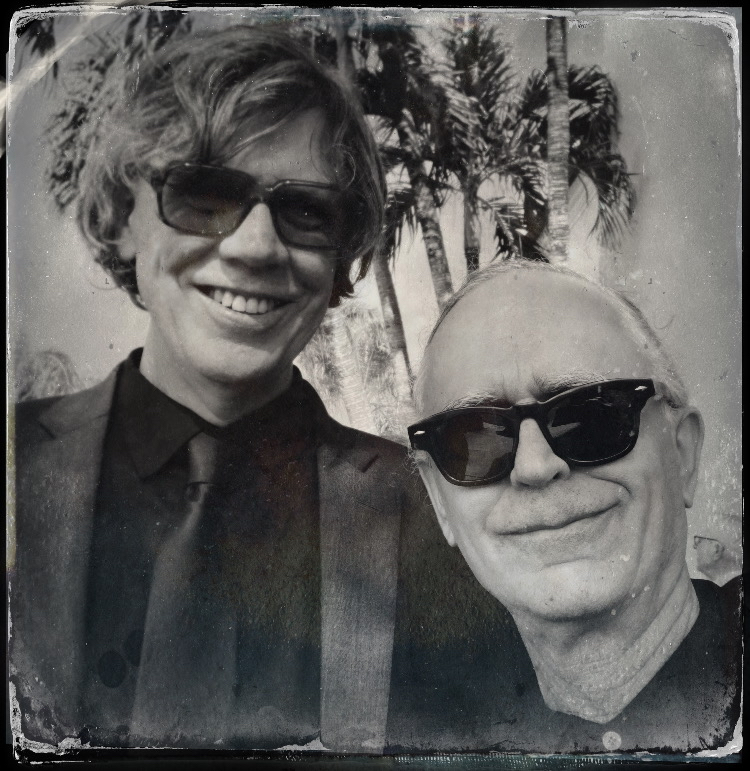
‘Insight’ is also the track that backends They Came Like Swallows, the latest project from ex-Sonic Youth frontman Thurston Moore and experimental everyman Bonner Kramer. They Came Like Swallows is both artists’ first full-length release as a unit and is dedicated to the children in Gaza subjected to the genocide being committed by the state of Israel.
As well as being New York’s busiest indie producer for a while (Urge Overkill, Low), Kramer has performed with John Zorn, and runs his own record label, Shimmy Disc (Daniel Johnston, Ween). Moore and Kramer have been friends for 45 years, which means collaboration is central to They Came Like Swallows. The duo’s setup is that Thurston Moore would do his weird Thurston Moore thing, providing thick, spidery chords, unexpectedly beautiful arpeggios, and baleful guitar noise. After Moore had improvised material at an amateur recording setup in Miami, Kramer took the files and added his parts: everything from doleful bowed strings, flashes of synth to ambient hums, but also cleaner production.
Kramer’s re-imaginings of Moore’s guitarwork explore the effects of improvisation that is later interpreted by another musician and close friend. On ‘Urn Burial’ martial drums and minutely evolving, high-pitched synth lines dart between haunted guitars that inflate and deflate, heat up then cool down. ‘They Came Like Swallows’ is built around a driving guitar riff, which slowly congeals into ambience; then doomy, dissonant chords. And ‘The Living Theatre’ undercuts whammy-barred harmonics and distant guitar noise with roving, filmic piano chords.
Here, Moore’s playing style retains the idiosyncratic features that rendered it a totemic and canonical part of experimental and alternative music. Kramer’s additions, however, reveal layers of emotion to Moore’s improvisation, which becomes a form of unconscious emotional expression. This dynamic works the same way as the album-as-requiem process. While Moore and Kramer say they didn’t discuss Palestine in the recording process, the genocide was apparently on both their minds throughout it. This horrific, unsettling gravity runs under the project. It’s yet another reminder that brutal violence and despotic, unchecked power must be felt, thought about, and acted upon.





Comments (0)