
Remember me




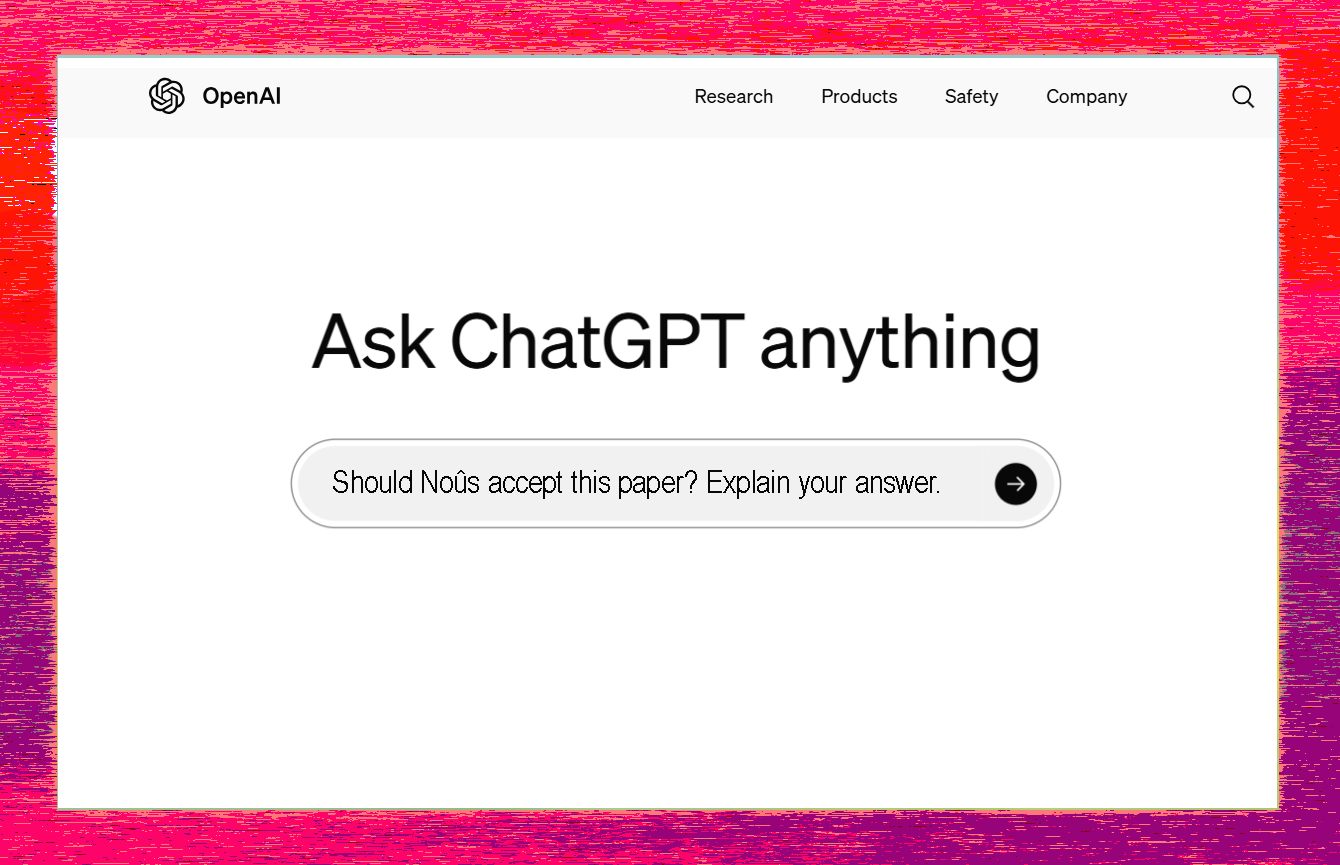




In 2024, a study found that “7–17% of the sentences in the reviews [of computer science manuscripts] were written by LLMs”. It was only a matter of time before this spread, and now it appears to have reached philosophy.
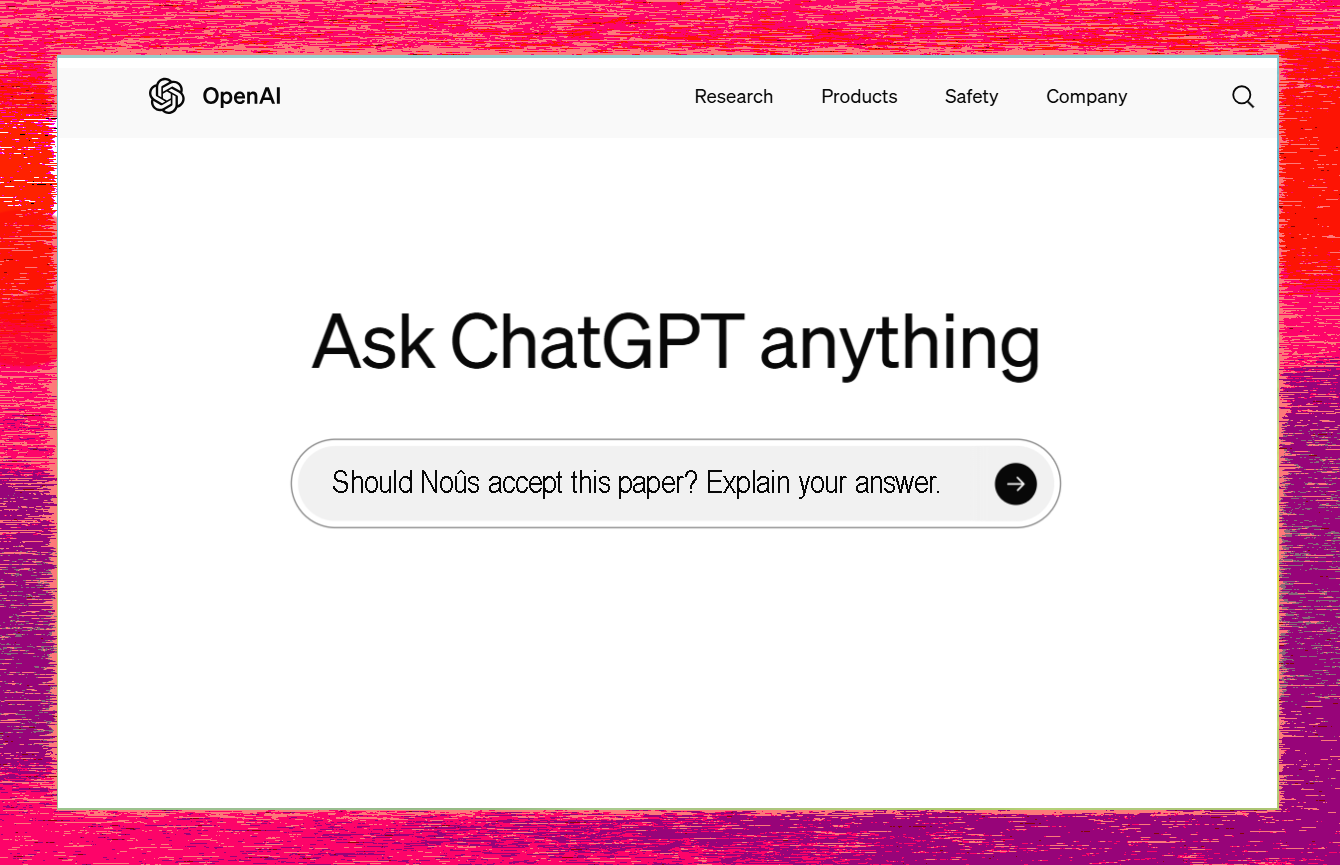
Last year, a philosophy PhD student in the US submitted a paper to a well-known philosophy journal.
They write:
The paper was rejected a few months ago; the first reviewer left very detailed feedback and suggested substantial R&R while seeming generally positive about the paper, the second reviewer suggested rejection. At first, I appreciated both of their feedback, and this was sort of my first go at submitting for publication anyway.
However, I recently showed this feedback to someone else who thought the first reviewer (the more positive reviewer!) sounded like AI. [This] hadn’t occurred to me when I first received it, but it now seems very clear that it was AI-written. Although I know they aren’t the most reliable tools, I also checked with a couple of AI detectors and they come back as highly confident the text is 100% AI generated.
I believe this is the first time someone has written to me about this happening in philosophy, which means it is almost certainly not the first time it has happened.
Has it happened to you? (This is philosophy, so start by checking the reports that seemed relatively nice.)
It’s worth discussing. We can start with why, as things stand now, if you are asked to referee a submission for a journal, it would probably be wrong for you to use AI’s like ChatGPT, Claude, Gemini, etc., in doing so (except, sometimes, in a very limited capacity). Here is why:
1. Let’s start with you feeding the manuscript into an AI. One problem here is that you have no reason to believe that the author of the manuscript agreed to the manuscript becoming training data for an AI, or for whichever AI you happen to use. Given that there is well-known controversy over this, you shouldn’t assume the people you are working with would agree it’s okay.
When you agree to referee for a journal, you agree to abide by the publisher’s review policies, and various academic publishers explicitly prohibit in their reviewer guidelines uploading a manuscript under review into an AI. For example, Oxford Academic’s policy for reviewers states:
It is prohibited to upload project proposals and manuscripts, in part or in whole, into a Gen AI tool for any purpose. Doing so may violate copyright, confidentiality, privacy, and data security obligations.
2. Now let’s turn to the assessment of the submission and the writing of the report. The journal editor asked a specific person to review a manuscript: you. If you accept their invitation to review the paper, you agree to review it. If you were then to give the manuscript to one of your colleagues or graduate students to review, you would not be doing what you agreed to do. If you did this and then didn’t tell the editor of the journal for which you’re reviewing, then you’re fraudulently submitting another’s work under your own name. The fraud is still there when it’s not a colleague or student but an AI to which you’ve handed over the task.
Again, when you agree to referee for a journal, you agree to abide by the publisher’s review policies, and some publishers outright prohibit the use of AI-written referee reports. Elsevier’s policy, for example, states:
Generative AI or AI-assisted technologies should not be used by reviewers to assist in the scientific review of a paper.
An additional concern is that authors typically submit their work for peer review under the reasonable expectation that, if the work is of sufficient quality, they may receive constructive feedback on it from fellow experts. The use of AIs to write referee reports not only fails to meet this expectation, but does so at a cost. As the graduate student who wrote to me put it, “I find it very frustrating because if I wanted feedback from an LLM I would just ask it, instead of waiting months for feedback from a journal just to send me AI-written feedback.”
3. Even more limited use of AI that doesn’t involve uploading the submission into an AI or having the AI generate comments on it can be problematic. It might be acceptable for a referee who has read a manuscript and written up their report to then feed the report into an AI for rewriting (say, for tone, clarity, grammar, translation), check the rewritten version for accuracy, and then submit that AI-written version. But even the permissibility of this varies across publishers. Elsevier, for example, prohibits it:
This confidentiality requirement [restricting the uploading of the submission to an AI] extends to the peer review report, as it may contain confidential information about the manuscript and/or the authors. For this reason, reviewers should not upload their peer review report into an AI tool, even if it is just for the purpose of improving language and readability.
Taylor & Francis, meanwhile, states in their policy that it may be permissible:
Generative AI may only be utilised to assist with improving review language, but peer reviewers will at all times remain responsible for ensuring the accuracy and integrity of their reviews.
Note that individual journals may have more restrictive policies.
At some point, as the technology improves, our norms, policies, practices, and expectations may change. And some changes may be welcome, as our current academic publishing system certainly has its problems. But for now, if you’ve agreed to referee a paper, don’t try handing off that work to an AI.
Discussion is welcome. One thing to keep in mind, philosofriends, is that this is largely a matter of policy. So while we might imagine various “in principle” examples of the permissible use of AI in refereeing, these may be of limited value in figuring out which institutional rules we should adopt for imperfectly influencing the behavior of many people who differ in many ways.
Comments (0)