
Remember me







William J. Prior, Professor Emeritus of Philosophy at Santa Clara University, has died.
The following obituary is by Elizabeth Radcliffe.
 William J. Prior (1946-2026)
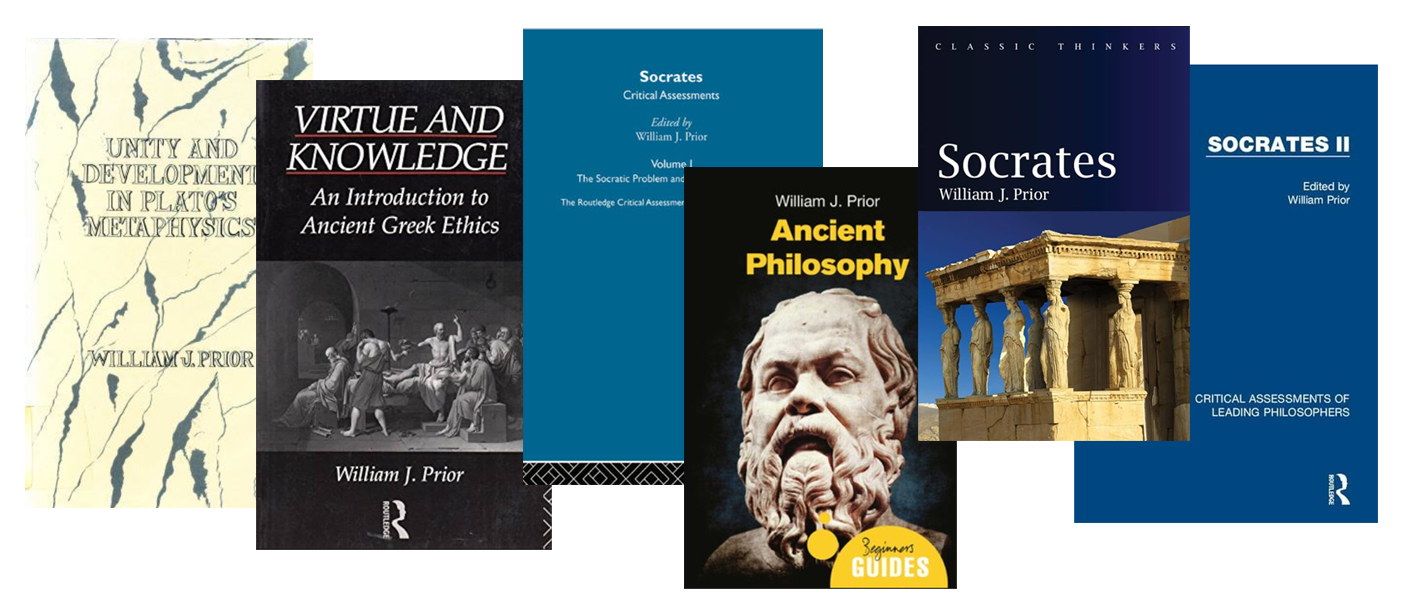
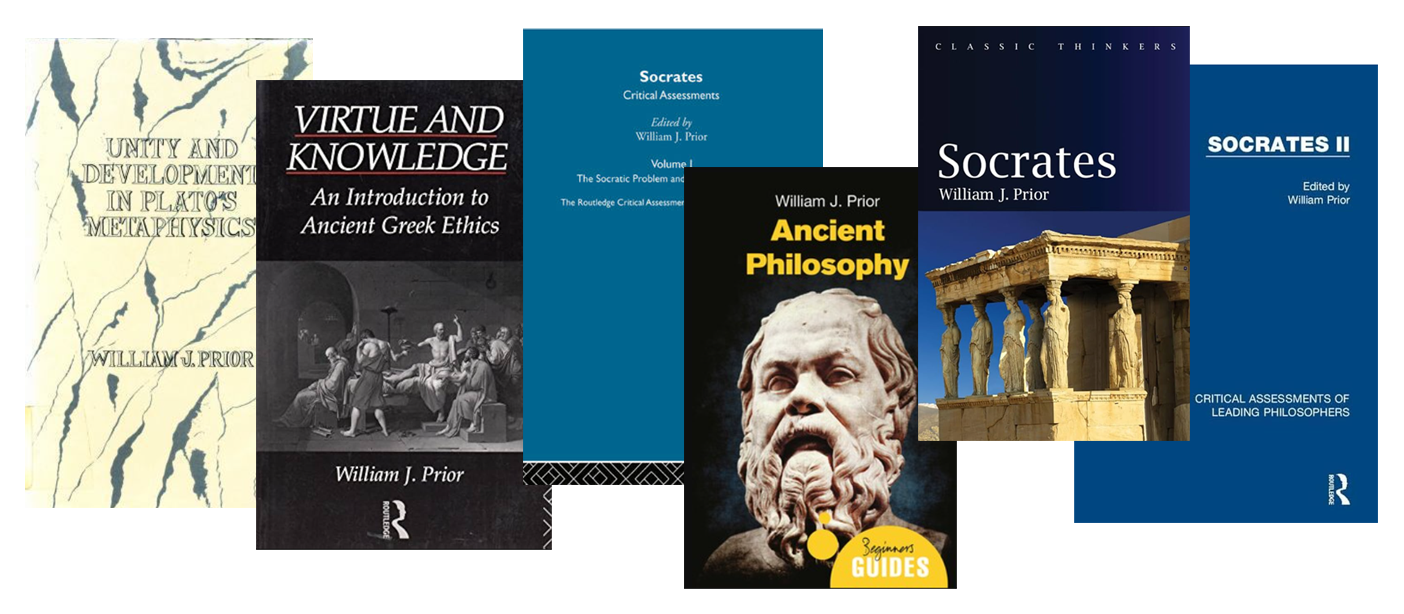
William J. Prior, Professor Emeritus of Philosophy at Santa Clara University, died on April 23rd, 2026, a few weeks short of his 80th birthday. Professor Prior is best known for his work on Socrates and Plato. Over the course of his career, Professor Prior published many articles and reviews, mainly in ancient Greek philosophy. He authored four books: Unity and Development in Plato’s Metaphysics (1985), Virtue and Knowledge (1991), Ancient Philosophy: A Beginner’s Guide (2016) and Socrates (2019). He edited two four-volume collections of articles on the philosophy of Socrates, Socrates: Critical Assessments, published in 1996 and 2018 by Routledge. The publisher calls these volumes “a collection of some of the most significant scholarship published on the philosophy of Socrates in the last half century.”
Professor Prior, known as “Bill” by friends and colleagues, received his Ph.D. in Philosophy at the University of Texas, Austin. He started his career in 1976 at the University of Colorado, Boulder, where he was tenured and taught for eleven years. During this time, he was a visiting fellow at the Institute for Research in the Humanities in Madison, Wisconsin, and a visiting professor at the University of Virginia and at UCLA in different terms. Bill took a position at Santa Clara University in 1986 and taught there for twenty-seven years until his retirement in 2013. He believed strongly in the value of a liberal arts education, and his contributions to the university and the department at Santa Clara were significant. In those years, he served as Chair of the Philosophy Department, Director of the Honors Program, and the first Director of the University’s Residential Learning Communities program.
On campus, Bill was an influential and gifted undergraduate teacher and mentor, with many of his students bound for professional schools and now in successful careers. He regarded philosophy, not as an academic discipline, but as a way of life, and the reflective manner with which he interacted with colleagues, students, and friends showed this. At SCU, he received awards for excellence in curriculum innovation, in advising, and in teaching, in addition to the President’s Special Recognition Award. The Philosophy Department now has an annual “William J. Prior Conference,” which is named for its founder, in which faculty share their scholarship in progress. In 2003-04 Bill was also a visiting fellow at Clare Hall, Cambridge, which he enjoyed immensely in the company of his wife, Peg.
Bill loved professional baseball and classical music. After his retirement, he continued to do philosophy, participate in campus reading groups, and teach occasional adult classes at the Presbyterian Church to which he belonged. Among such classes were “Can War Be Just?” and “Martin Luther King, Jr. and the Civil Rights Movement.” He was a life-long pacifist, although he grew up as the son of a career Army officer. While a committed Christian, he was not a proselytizer, and denominations meant little to him. Bill brought his experience of reading ancient texts and of the study of philosophy to his understanding of Christian texts. He was interested in the practical moral dimensions of Christianity, and he and Peg were engaged in many charitable endeavors.
Bill’s research on Socrates lasted until the end of his life. He finished his final paper, “Searching for Socrates in the Dialogues of Plato” just a few days before his death. Bill was convinced that philosophical ideas could not be separated from the person who professes them. Thus, he disagreed with scholars who thought Socrates could and should be treated in Plato’s Dialogues as a character only.
Bill had many health problems, especially later in life, but he said he was grateful for each day he lived. He wrote that “death was not something to be feared but something to be accepted as an inevitable part of life.” He said he also hoped, “as had Socrates, that death might be a ‘transfer to another place,’ where life might continue in another form.” He leaves behind his wife of 55 years, Peg, and three grown children, plus three grandchildren. A fourth child preceded him in death. All who knew Bill will miss his wisdom, his wry sense of humor, and his kindness.
Comments (0)