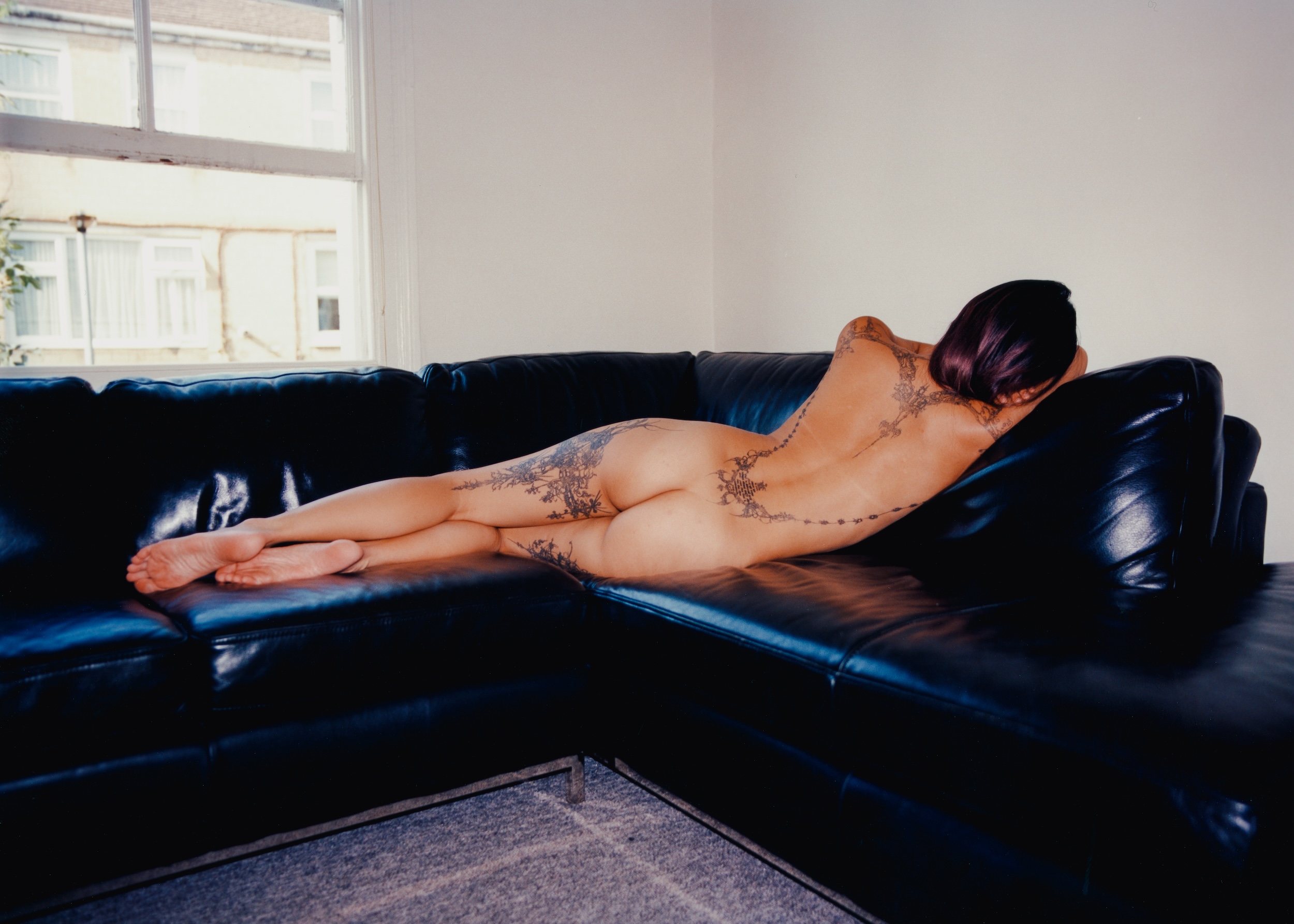
Showing our bodies online does not have to be public, or exist within these transactional spaces – but even if not, can end up interpreted as such. Marie Déhé’s project Distant Intimacy emerged out of a desire to connect with other women during the Covid-19 lockdown, for example, when she asked to photograph friends, acquaintances and strangers remotely through FaceTime or Zoom. To create a closer connection, Déhé asked her models to be nude – or as nude as they were comfortable to be – and promised to mirror their presentation.
“For me nudity offers access to vulnerability and trust, for both the subjects and myself. It brings a slight discomfort that heightens awareness and presence, which I believe is essential to intimacy,” says Déhé, who photographed 28 women across France, Germany, UK, USA and Japan. “It felt powerful, we were deciding how we wanted to be represented… My goal was to create a safe space where we could explore our bodies and representations outside of the male gaze.”
Before the project became a book, Déhé created a password-protected website to show the work, like an extension of the digital space she briefly shared with those she photographed. “It wasn’t necessarily tangible, but there was an exchange – a shared experience,” she says. “I wasn’t aiming for a specific visual style, I was trying to reflect on the relationship between the photographer and the photographed, and how that bond could translate visually.” However, some (“to be honest, only white men”) likened Déhé’s work to cam-girl iconography, even calling the images erotic or sexy. “I felt disarmed by these remarks, because they were so far from my intentions, and in fact the opposite of what I was trying to create in the moments shared with the women,” she says.
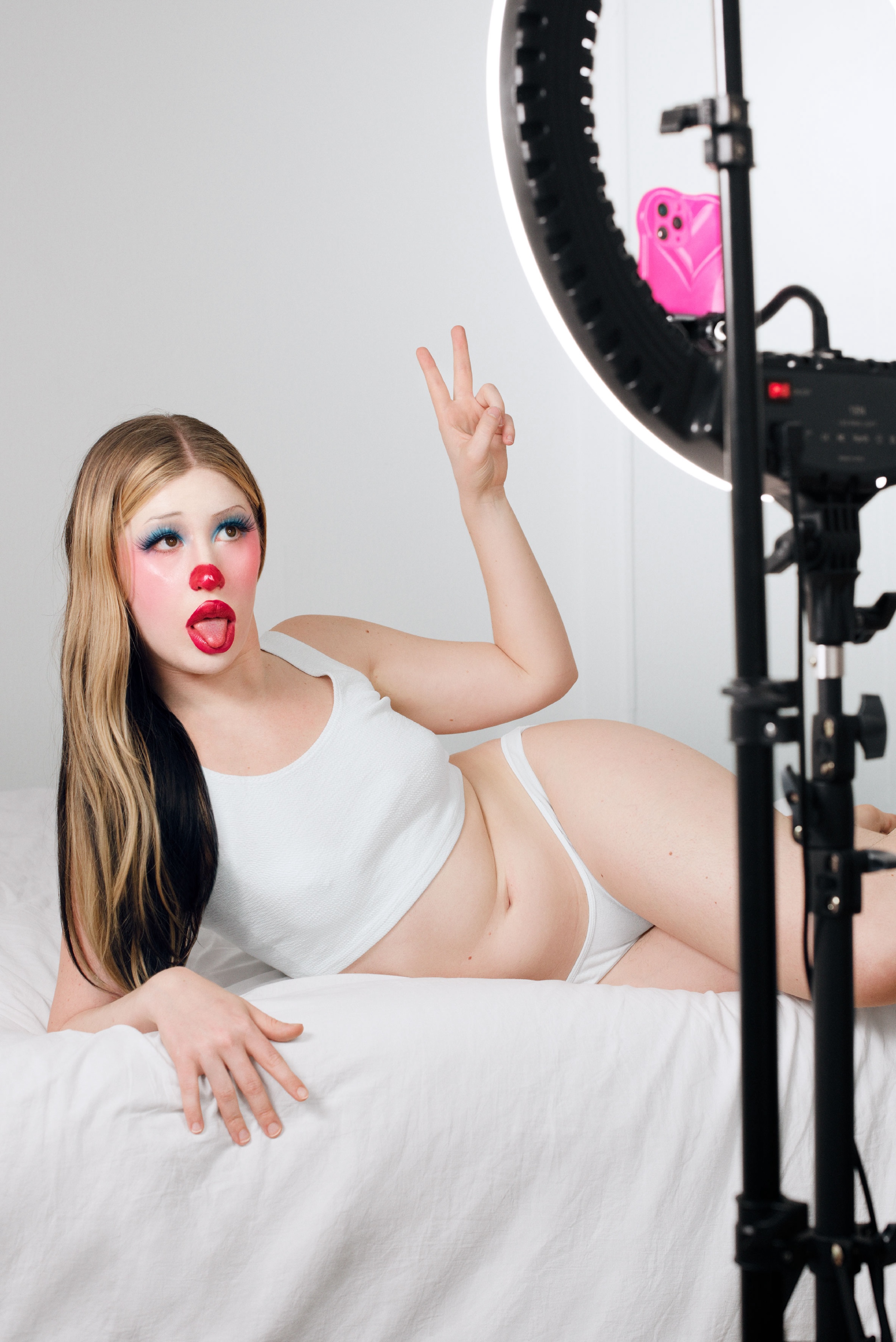
This experience underscores the dilemma of sharing images of bodies online, and the potential for the language to be misconstrued. “What enrages me in this debate is that the question is so often framed from a moral standpoint, and it always ends up in judgment of the behaviour of those who expose themselves,” Déhé comments. “I would like to create spaces for conversation instead. Safe places to question our need to represent ourselves, to lift the pressure.”
This comment makes me think back to that first selfie I posted – awkward and unfiltered, but safe. Today’s online spaces feel too vast, too restless, too critical and, while none of the artists I spoke with offer easy answers, all reveal just how entrenched these systems are. In the days following our conversations, something in me shifted too. I scroll with the same compulsion, in my now personally-allotted hour of daily screen time, but I see differently. We cannot control how the algorithms see us, but we can control how we see them.

Comments (0)