DA: I loved the curation and design of the show in Paris – can you tell me how the design aspects were developed? Why did you go in this direction for the curation? For example, the light box in the second room, and the ID photos stuck to the wall individually.
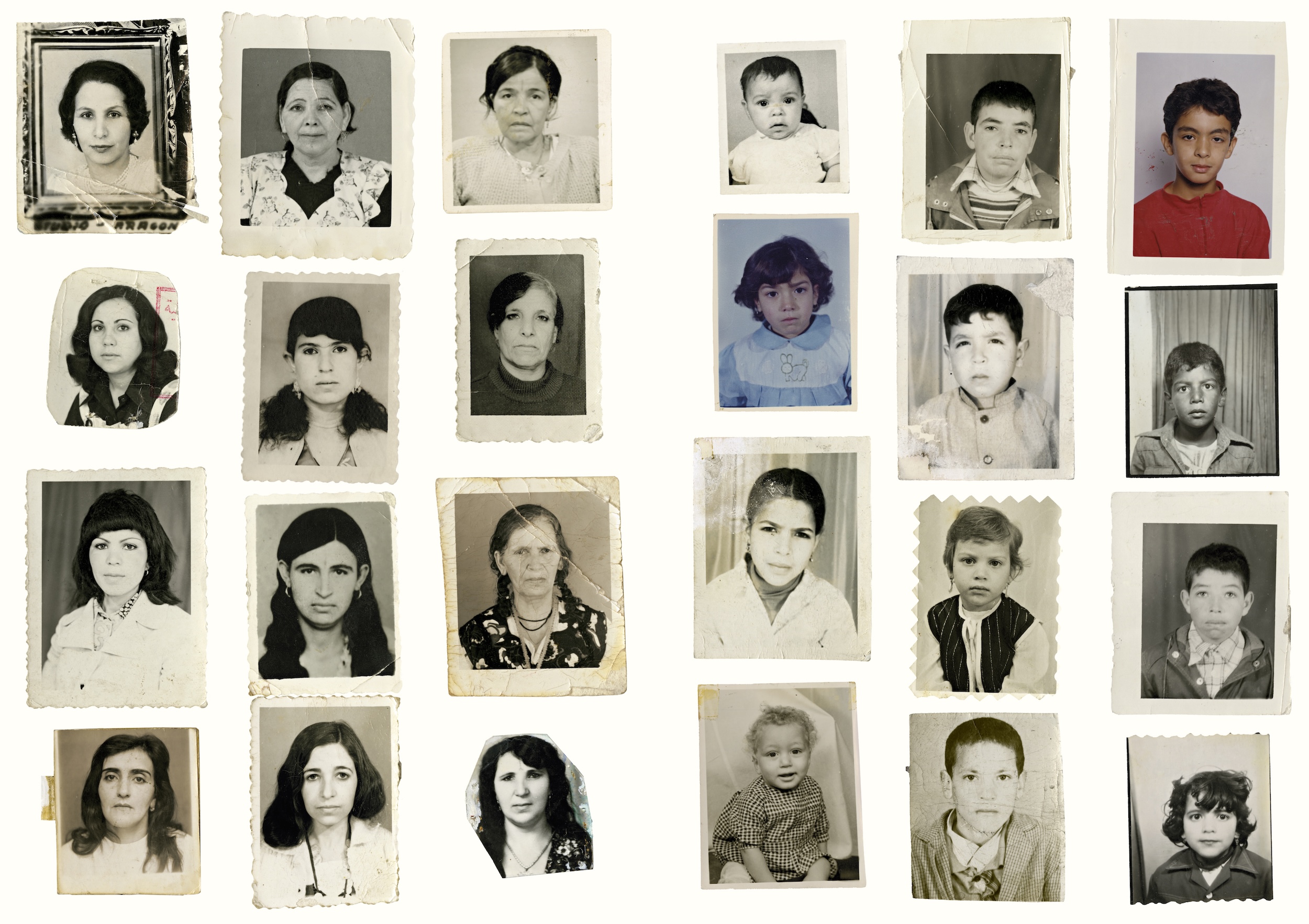
JMD: Not being a photographer myself, I use the photographic medium, and mainly vernacular photographs, as material for my creations. The book, the performance, the exhibition is the work itself. For this exhibition, the scenography is fundamental. Putting more than a thousand documents – “wallet” photographs, photomontages and colourisations, administrative photographs, and studio photographs – “to music” is above all a work of reflection. The multitude of photos that make up the archive (more than 400,000 prints and negatives) must serve to demonstrate the point.
The three monumental frames composed of more than a thousand “wallet” photos (souvenir photos of loved ones who remained in the country) complement the light boxes displaying the negatives of more than a thousand portrait photos taken in France for administrative purposes. The enlargements of 16 portraits made from two 13/18 negatives were not chosen for their aesthetic appeal. These 16 portraits (one woman and fifteen men) explicitly show the male majority that made up the immigration of the 1970s.
The film Les fantômes de Belsunce [The Ghosts of Belsunce] consists of 30 portraits assembled in a morphing sequence lasting over 20 minutes. Thanks to the imperceptible transition from one character to another, this film demonstrates in a very simple way that we see but do not look at these men who are part of our daily lives.
The photos in the display case are framed with boxes of photographic paper (Ilford, Kodak, Agfa). Grégoire, the photographer at Studio Rex, kept the negatives of administrative portraits in these boxes for over 40 years.
DA: Finally, what do you hope the audience will take away from this show?
JMD: Showing people what they need to see to understand, revealing the humanity that emanates from these photographs from the past, will, I hope, serve to change the way we see things today. That is what I have tried to do with this exhibition.