The MoMA considers “The Idea of Africa” in an expansive new show
Noting that “the stakes of narrating histories of photography in Africa are unquestionably political”, Onabanjo explores how the political imagination has been reflected and shaped through photographic portraiture. Expanding the portrait beyond an index of individual identity, she locates images – and sitters and photographers – within “the ephemeral, aesthetically rangy, culturally plural sense of ‘continental unity’”. She points to the wave of independence which swept Africa in the 1950s and 60s, alongside the Civil Rights Movement in the US, and argues that the potential these shifts engendered allowed image-makers to create “dazzling modes of pan-African possibility”.
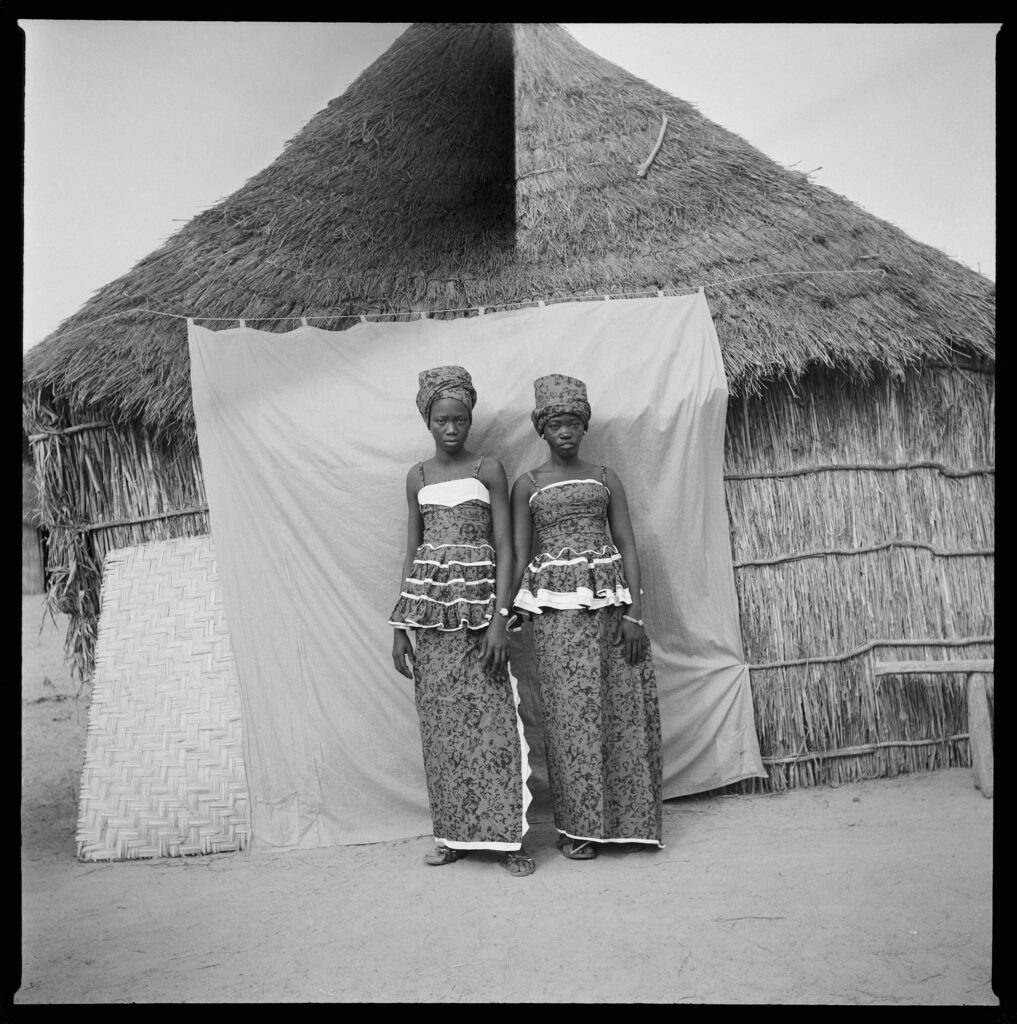
By way of an example, she cites Jean Depara, an image-maker who set up his studio in Kinshasa (then Léopoldville) in 1954, when the city was home to nightclubs and a thriving music scene; in documenting it, she argues, Depara showed an imaginary created by those freed from the everyday. Sanlé Sory did similar in Bobo-Dioulasso in recently independent Burkina Faso, in nightclubs, the streets, and his studio, Volta Photo. Seydou Keïta opened his studio in Bamako in 1948, meanwhile, creating what Onabanjo describes as “sublime compositions that rendered Bamakois citizenry in the process of becoming”.
To this rich mix, Ideas of Africa also adds contributions such as Oumar Ka’s less-known images from Senegal, which push beyond glamorous urban centres and into the countryside, and JD ‘Okhai Ojeikere’s documentation of Nigerian culture – plus images such as Untitled (Photo Shoot at a School for One of the Many Modelling Groups Who Had Begun to Embrace Natural Hairstyles in the 1960s) by Kwame Brathwaite, who lived and worked in the US. Contemporary artists such as Fosso and Rosi both continue and deconstruct these approaches, with Fosso creating intricate self-portraits reinhabiting icons of Black history in his 2008 series African Spirits.

Comments (0)