
Remember me










Not all Oscar winners make history and stand the test of time, but the big winner from seven years ago keeps getting better, and its legacy is remarkable. The entertainment industry is in constant evolution, with different trends taking over all the time, more attention to certain themes impacting screenwriting and critical analysis, and more.
All this and more has also changed awards, most notably the Academy Awards, so much so that predicting the winners every year has become more and more challenging but also interesting. There are times when an Oscar-winning movie is not only great but also highly influential and impactful, as is the case for Parasite, which won Best Picture seven years ago.
Parasite Will Never Not Be Relevant Ki-kung and Ki-woo on their phones in Parasite
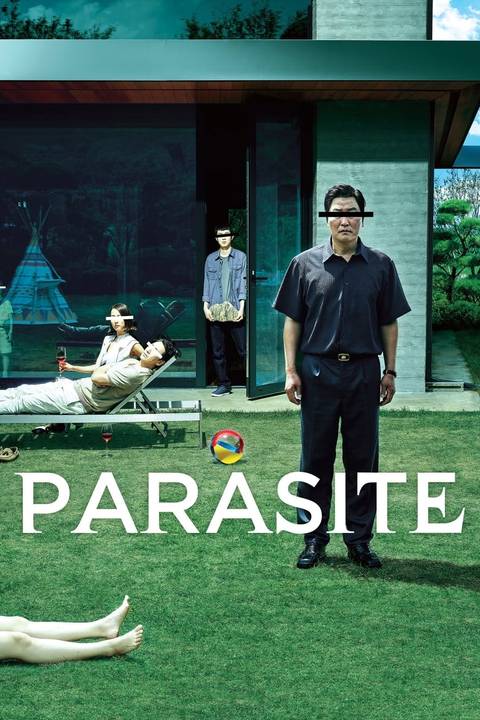
Parasite is a South Korean black comedy thriller directed and co-written by Bong Joon Ho. Parasite introduces viewers to the Kims, a family of four who live in a semi-basement flat and are struggling financially, with low-income jobs and barely making enough to keep going.
However, their lives take a turn when a family friend suggests that the son, Ki-woo, take over his role as an English tutor for the wealthy Park family. With the help of his sister, Ki-jung, Ki-woo forges a certificate and is hired by the Parks.
This is the beginning of a complex (yet fascinating) scheme by the Kims, who, one by one, are hired by the Parks while concealing their true identities. Parasite was a critical and commercial success, with praise for its story, direction, performances, tone, and, most of all, its timely social themes.
Parasite addresses themes like classism, wealth disparity, social inequality, capitalism, and empathy, among others. Through the struggles of the Kims, Parasite shows the reality of millions of people around the world who go through the struggles of unemployment, the demands of higher education, home affordability, and more.
Through the Parks, Parasite shows how disconnected from reality and human emotion (like empathy and compassion) wealthy people can be, thus perpetuating social inequality and everything that comes with it. Parasite is quite complex, and it will continue to be relevant no matter how many years pass.
How Parasite's Oscar Win Changed Awards Forever The Park family party in Parasite
Parasite was such a huge success that it won various awards, most notably the Oscar for Best Picture, Best Director, Best Original Screenplay, and Best International Feature Film. Parasite made history with its Best Picture win as the first non-English-language movie to win in this category.
Parasite not only broke the language barrier imposed in Hollywood awards but also proved that stories that touch on current worldwide social issues can not only succeed at the box office but also be high-quality and thus worthy of awards.
Parasite’s structure also broke the mold of Oscar winners, as did its mix of genres while addressing serious topics. Parasite’s win also invited broader diversity and acceptance of international, non-English-language movies, inviting the audience to take a look at what’s being made outside of Hollywood.
Is Parasite Bong Joon Ho's Best Movie? Mrs Park looking shocked at the top of the stairs in Parasite
Whether Parasite is Bong Joon Ho’s best movie or not will depend on the experience and taste of every viewer, but it’s definitely one of its strongest works to date. Bong Joon Ho is also the man behind Snowpiercer, Okja, and Mickey 17, all of them with different stories and styles, and praised for different reasons, though always for his vision and direction.
Parasite is, however, Bong Joon Ho’s most critically acclaimed movie to date and the one that has earned the most awards. I would definitely say that Parasite is Bong Joon Ho’s best movie so far, especially because it’s guaranteed to age well and continue to be relevant (though the same could be said of Snowpiercer, but Parasite has more strengths), but to others, it might not be his best.
Release Date May 30, 2019
Runtime 133 minutes
Producers Jang Young-hwan, Kwak Sin-ae, Moon Yang-kwon


Lee Sun-kyun
Park Dong-ik