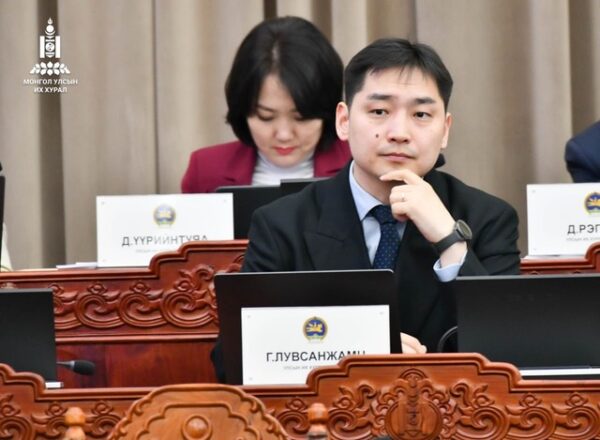
Dr. Luvsanjamts Ganzorig is a newly elected member of Mongolia’s parliament, the State Great Khural. He has been vocal about Mongolia’s air pollution, corruption, political stability, and the need to relocate its capital.
The Diplomat spoke with Luvsanjamts about how the government of Mongolia is tackling these issues under the enlarged legislative branch.
In the last decade, Mongolia’s capital, Ulaanbaatar, continues to rank among the world’s worst cities for air pollution. This protracted issue has now become a public health concern. As someone who has been taking the initiative to tackle air pollution, what do you think do the root cause of the problem? What actions have the legislative and executive branch taken this year?
Some researchers explain the root cause of air pollution as poverty. However, I believe the core problem lies in the state’s failure to clearly identify root causes through policy and to implement projects that deliver effective results.
During the Spring Parliamentary Session last year, the Parliament organized a public hearing on air pollution. The hearing revealed that since 2009, the government has spent a total of 5.6 trillion tugrik on reducing air pollution, yet pollution levels have not declined sufficiently. This shows that a lack of financial resources itself is not the main issue. Instead, past policies focused on supporting consumption, such as subsidizing coal and stoves, rather than promoting long-term solutions. As a result, we have failed to resolve air pollution comprehensively.
Since becoming a Member of Parliament, one of the three key agendas I set out to address has been air pollution. After conducting extensive research together with professional scientists and researchers, we concluded that effective solutions require policies that promote energy efficiency and conservation rather than consumption. Based on this conclusion, we developed a clear roadmap for action and worked to refine state and local government policies toward home insulation and renewable energy technologies, thereby supporting energy efficiency.
On June 19, 2025, Parliament adopted Resolution No. 57 as a result of the parliamentary working group I established and led. This resolution directs the government and the Bank of Mongolia to optimize the green financing system and improve the legal and regulatory framework to reduce air pollution.
Later, in December 2025, under the initiative of the Speaker of Parliament, an additional resolution was adopted to accelerate the implementation of this policy. Within the framework of implementing these resolutions, the executive branch has begun promoting non-polluting technologies such as home insulation and electric heating, as well as expanding distributed renewable energy sources.
At Ulaanbaatar’s municipal level, in 2025, a project to insulate 5,000 households with citizen participation is being implemented. In addition, under the leadership of the Chingeltei District Governor’s Office, projects involving the private sector and international organizations aim to convert approximately 700 households and school buildings to non-polluting systems. I believe these are well-targeted and effective initiatives. Moving forward, such projects should be expanded nationwide, not only in Ulaanbaatar.
To achieve meaningful reductions in air pollution, we need participation not only from the state, but also from local governments, the private sector, civil society organizations, and citizens themselves. We must build an ecosystem that enables a transition from conventional “brown” technologies to green solutions. In this context, our team launched the “Dulaanbaatar” campaign. In 2025, we organized a series of meetings that provided professional guidance to more than 2,000 households in ger districts. We plan to expand this campaign further.
Based on your education and architectural background, what are some of the structural changes Ulaanbaatar needs to implement in order to reduce traffic congestion, ease overcrowding of the ger district, and create a more spacious, healthier environment for the residents?
Traffic congestion stems primarily from the limited accessibility of social infrastructure such as schools, kindergartens, healthcare facilities, and green spaces. In addition, inadequate public transportation forces residents to rely on private vehicles, particularly in terms of reliability, cleanliness, and convenience.
The fundamental solution is to increase access to social infrastructure, create a diversified public transportation network, and establish a pedestrian- and bicycle-friendly environment. In this context, I led a working group to develop the “20-Minute City” concept and submitted it to the relevant ministry.
From a professional standpoint, I also provided some recommendations to the municipality’s public transportation authority to improve services. Some of these, such as allowing bank card payments on buses and optimizing route maps, have already begun to be implemented. Going forward, the capital administration has informed us that preparations are underway for data-driven bus route optimization and the development of large-scale public transportation networks such as metro and light rail systems. Additionally, the first cable car line is scheduled to become operational this year. As an urban planner, I support the aforementioned projects.
Finally, I am participating in the working group preparing the “Ulaanbaatar City Master Plan 2040” for parliamentary discussion, where we are working to incorporate principles aimed at creating a people-centered, rather than car-centered, city.
Mongolia is considering moving its capital, Ulaanbaatar, to a deeply historic site, Kharkhorum. What are the prospects of this becoming a reality? How would this move help improve the livelihood of the Mongolian people and the country’s economy?
Currently, Mongolia is developing as a highly centralized country with Ulaanbaatar as its sole core. Going forward, policies must focus on improving livelihoods in rural areas, increasing nationwide access to social infrastructure, and creating jobs.
The government has defined a policy of regional development, and within this framework, preparations for relocating the capital are underway. From a policy perspective, this approach is sound. Initially, it would be appropriate to develop the area as the central city of the Khangai region.
To realize this in practice, private sector participation is essential, as it is the private sector that creates jobs in a new capital city. Therefore, the state must establish infrastructure that is attractive and feasible for private sector investment. In addition, the centers of the other five regions should be identified as soon as possible, and state budget investments should be directed toward these cities.
Personally, I believe that by 2030, if infrastructure projects are implemented with the goal of increasing the populations of Darkhan and Erdenet to 200,000 each, and Choibalsan, Khovd, Ulgii, and Sainshand to 100,000 each, the policy of regional development will begin to yield tangible results.
In addition, I previously worked in the parliamentary working group on the draft law concerning New Kharkhorum City. As a professional, I regularly receive updates on the master planning process. In my view, the core development principle of the new capital, – rooted in nomadic culture, environmentally friendly, compact, and green – is appropriate and well-conceived.
Today, when visiting cities around the world, one often sees glass-facade skyscrapers and car-centered development. Urban planners note that there are relatively few cities that truly reflect a country’s history, culture, economy, and way of life.
Therefore, I hope that New Kharkhorum City will avoid repeating the mistakes of other countries and instead develop as a people-centered city that showcases Mongolia’s history, nomadic culture, and heritage.
2025 was a tumultuous year for Mongolia’s political environment. We saw several major protests, one of which ousted the Oyun-Erdene Luvsannamsrai government. The new Zandanshatar Gombojav government was pushed out, then quickly reinstated. All of this happened against the backdrop of Mongolia’s adjustment to its newly enlarged parliament.
At this point, what is your view on Mongolia’s political stability? I feel like the new parliament had wasted so much time dealing with the political instability. What are some of the root causes for such an unstable political environment?
Instability in the executive branch has existed since the establishment of Mongolia’s democratic system, but this year events unfolded at a particularly rapid pace. I see the root cause as the lack of fully developed ideological foundations and clear policy orientations within political parties. Internal party democracy must be strengthened so that parties engage in discussion, research, policy development, and open debate regarding leadership selection and governance.
When parties come to power, they must remain committed to the policies they proposed and strive to fully implement them, including aligning budget allocations accordingly.
At the same time, citizen participation in politics appears to be largely limited to voting in elections and participating in protests. The core purpose of political parties is to reflect citizens’ voices in public policy. Therefore, citizens, especially young people, should actively participate in local civic assemblies, clearly define pressing issues along with proposed solutions, incorporate these into party platforms, and demand accountability in implementation. Only then will democracy be substantively strengthened. This challenge, however, is not unique to Mongolia but common across many democratic countries.
Ultimately, when the public clearly understands the roles of the executive, legislative, and judicial branches, and consistently evaluates whether these institutions are achieving their intended outcomes and demands accountability, many of society’s underlying problems can be resolved.
Mongolia continues to seek foreign investment from its partners. But several major foreign assessments indicate that Mongolia’s corruption is a major hindrance for the country’s ability to attract long-term quality investments. What is preventing Mongolia from reducing corruption? What needs to happen to achieve this?
Corruption exists in every country at varying levels. Mongolian governments, the parliament, the judiciary, and the Independent Authority Against Corruption have all worked to address this issue over time. Unfortunately, tangible progress has been limited so far.
To attract long-term, stable investment, policy continuity is essential. We must clearly define our short-, medium-, and long-term policies and improve the legal and policy framework to ensure their consistent implementation. While the ruling party determines policy direction, political parties must align on national interests in critical areas.
To successfully implement projects that have a real positive impact on the national economy, transparency and clarity of information are crucial. Public trust is built when information about what projects will be implemented, where, under what conditions, and what policies the government is pursuing is openly available. In this regard, policy documents such as the Five-Year National Development Direction and annual development plans should clearly specify projects financed by domestic and foreign investment, and the Ministry of Economy and Development should pay particular attention to their implementation.
I also strongly believe that we must move away from systems that require numerous permits and discretionary approvals by individual officials. Decisions dependent on specific individuals create uncertainty for businesses and investors and increase the risk of favoritism and corruption.
Instead, both the public and private sectors should adopt systems based on clear plans and measurable outcomes, rather than subjective decisions. Accordingly, I believe it is more effective to transition from a “permission-based” system to one in which activities may commence upon notification, provided that predefined standards and criteria are met. We are currently working to establish the legal framework for this reform.
Finally, the need for transparency in political party financing is an undeniable reality. When political parties openly and fairly disclose their sources of funding, corruption is widely believed to decrease.