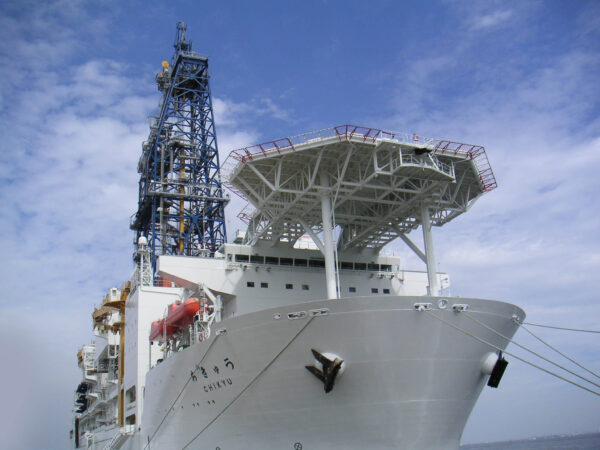
On February 1, Japan’s deep-sea drilling vessel Chikyu retrieved rare-earth-rich sediment from roughly 6,000 meters below the Pacific near Minamitorishima. It was a world first. Prime Minister Takaichi Sanae called it “a first step toward industrialization of domestically produced rare earth in Japan.”
The timing seems like a miracle. China had banned dual-use exports to Japan on January 6, expanding restrictions to civilian-use rare earth products, including permanent magnets for EVs and electronics, by January 9. Western headlines framed the deep-sea breakthrough as Japan scrambling to respond.
But the Chikyu mission was no scramble. The test operation had been publicly announced on December 23, under a deep-sea mining program funded since 2018. Takaichi’s December 17 press conference had already called supply chain resilience “a matter of great urgency” three weeks before the rare earth ban was announced.
What happened in January 2026 was not a rapid response. It was the latest turn of a ratchet that has been clicking forward for decades.
In fact, the story starts all the way back in 1963. That year, Tokyo established the Metallic Minerals Exploration Financing Agency to secure stable metal supplies for its postwar industrial boom. Two decades later, in 1983, the Ministry of International Trade and Industry formalized the Rare Metal Stockpiling System, a state-backed buffer for strategic materials.
The machinery consolidated in 2004 with the creation of JOGMEC (Japan Oil, Gas and Metals National Corporation). The new agency merged the state’s mining and oil financing arms into a single institution for exploration, equity investment, debt guarantees, technical assistance, and stockpiling. Between 2004 and 2020, JOGMEC backed more than 100 overseas projects with over $600 million in combined financial support.
By July 2009, 14 months before the very first Chinese embargo on rare earth exports to Japan, the Ministry of Economy, Trade and Industry (METI) had codified these efforts into a formal Rare Metal Security Strategy. The strategy had four pillars: securing overseas resources, promoting recycling of rare metals from end-of-life products, developing substitute materials to reduce dependence, and maintaining strategic stockpiles. By May 2010, the Diet was already debating its implementation. Each pillar would be activated in the years ahead.
The framework was not a reaction to a crisis, but rather a preparation for one. Japan’s response capacity did not emerge from foresight about Chinese coercion specifically. It was the institutional capacity of a resource-poor island nation that methodically attempted to manage any potential supply chain vulnerability.
The first real test came in September 2010. Amid a diplomatic dispute over the Senkaku Islands, claimed by Beijing as the Diaoyu Islands, China, then supplying roughly 85 percent of Japan’s rare earth imports, effectively halted shipments.
When the crisis arrived, the financial instruments, technical expertise, and legal frameworks were already ready and waiting. Tokyo simply activated the machinery. In 2011, JOGMEC and trading house Sojitz invested $250 million in Australia’s Lynas Rare Earths, securing a major non-Chinese source of light rare earths. This was the first major deployment of the ratchet.
China lifted its embargo within months. Yet Japan kept building.
In 2012, JOGMEC established the Japan-Vietnam Rare Earth Research and Technology Transfer Center, creating a processing foothold outside China. In 2013, researchers identified rare-earth-rich mud deposits near Minamitorishima, initiating the R&D program that would launch the Chikyu a decade later. The 2020 International Resource Strategy raised national stockpiling targets to 60 days for standard minerals and up to 180 days for high-risk ones. In 2023, with no acute crisis in sight, JOGMEC invested an additional AU$200 million into Lynas to secure heavy rare earths. JOGMEC and Iwatani committed up to 110 million euro to France’s Caremag rare earth refining project. By 2024, JOGMEC maintained offices in 15 countries and was running more than 30 active projects.
This resilience was not cheap. JOGMEC’s portfolio includes costly failures and projects that spent years in the red, risks the private sector has historically been reluctant to bear alone. But the preparations were having the desired effect.
According to Japanese trade statistics, China’s share of Japan’s rare earth imports fell from 85 percent in 2009 to 58 percent by 2020. Then the pressure eased. By 2024, dependency had crept back to 63 percent. The infrastructure was in place, but without a forcing function, momentum slowed.
Then the next shock hit, from a far higher baseline.
The United States and Japan signed a Critical Minerals Framework in October 2025, including joint project financing, stockpiling coordination and a Rapid Response Group. When China’s export ban dropped on January 6, Japan’s response was already in motion. The Chikyu program was funded and announced, Lynas offtake agreements were in place, Vietnam processing capacity was operational, and the U.S. partnership had been signed months earlier.
China’s latest export ban accelerated a machine that had been running for decades. It did not create one, as it did not need to.
The United States is now also committing significant capital to diversifying its rare earths supplies. On February 2, U.S. President Donald Trump announced Project Vault, a critical minerals stockpile backed by a $10 billion loan from the Export-Import Bank and additional private capital. Venture capital flowed into U.S. rare earth startups at a record $628 million in 2025. The investment signals a shift in American attention.
Yet China still controls roughly 60 percent of global rare earth mining and more than 90 percent of refining. The U.S. has built much of its domestic capacity around a single large-scale project, MP Materials. Domestic suppliers provided only 10 percent of the graphite the country needed in 2025.
Money is moving fast. The U.S. has existing tools like the Defense Production Act and Department of Energy loan programs but lacks the centralized institutional memory that turns ad hoc interventions into compounding capability. Project Vault is a first step, but he Japan-U.S. critical minerals framework signed last October may matter more. It gives Washington direct access to Japan’s ratchet – decades of institutional know-how and a functioning global network – rather than having to build the mechanism from zero.
Japan’s advantage is not measured in dollars. It possesses institutional capacity built over six decades. That means expertise distilled from more than 100 overseas projects, hard lessons from failures as well as wins, and the policy, legal and financial toolkit to deploy a response at speed. That capacity has generated strategic infrastructure, including processing capacity in Australia and Vietnam, investments in Namibia and France, priority offtake agreements, and relationships across 15 resource-rich countries.
Mineral security is a compounding asset. It behaves less like a purchase and more like an investment portfolio. Early contributions, maintained consistently over decades, can generate compounding returns in resilience. Each shock the system survives without breaking allows it to further enhance itself. Layers are added, such as a new partnership, a new processing node, or a new technology, which makes the next shock absorbable.
The point is not that the United States should copy Japan’s specific tools. JOGMEC’s equity financing and stockpiling targets are tailored to the constraints of a resource-poor island nation. The lesson is that countries entering this space now are not just behind on dollars. They are behind on the institutional learning curve that makes spending effective. Building that curve takes time — and time is the one resource that cannot easily be purchased.
The Japan-U.S. framework is especially promising because it allows Washington to draw on Tokyo’s accumulated institutional capacity. If the United States only treats this partnership as a way to acquire Japanese processing technology, it will have gained a tool but missed the strategy. Yet if Washington uses the framework to build its own capacity for long-term, state-backed investment in supply chain resilience, it might close the gap that money alone cannot.