Next week, as Bangladeshis go to the polls for the first time since the 2024 ouster of Prime Minister Sheikh Hasina, the outcome will have far-reaching consequences for the future of press freedom and democracy in the country. With a voting population of more than 100 million, Bangladesh’s election will be the biggest democratic process of 2026. The country’s departing interim government, led by Nobel laureate Muhammad Yunus, has promised a free and fair contest that election officials say will be the “best of the century.”
As the February 12 vote nears, how members of the press are treated before, during, and after election day will be an important signal of Bangladesh’s democratic trajectory. A free and independent press can play a key role in supporting a smooth transition of power that respects the will of the people. However, a concerning rise in attacks on the press in recent months could portend a different outcome.
Three days after Hasina fled Bangladesh on the heels of her government’s bloody crackdown on student-led protests, Yunus took power as head of a transitional government, promising stability and political reform. Instead, he has largely perpetuated the Hasina government’s policies of suppressing press freedom in the country.
Under Yunus, hundreds of journalists have been arbitrarily arrested on politically motivated charges, often for their perceived support of the Hasina government. Physical and online attacks on journalists are also on the rise, largely due to a lack of governmental willingness to investigate violations of press freedom and hold perpetrators of crimes against journalists accountable.
As election day nears, the pattern of attacks has escalated even further. In August 2025, Asaduzzaman Tuhin, a local journalist who worked for Dainik Pratidiner Kagoj was brutally hacked to death for filming a gang assault. Weeks later, a journalist was arrested and charged under the country’s anti-terrorism law after participating in a roundtable discussion about Bangladesh’s War of Independence.
In December, the Dhaka offices of the Daily Star and Prothom Alo – two of Bangladesh’s leading newspapers – were vandalized and set on fire by a violent mob, trapping journalists inside for hours. At a conference organized after the arson attacks, Bangladesh’s top editors blamed the interim government for “systematically targeting” the press and perpetuating a cycle of impunity, which has put the entire industry in a “fight for survival.”
Irene Khan, the U.N. Special Rapporteur on freedom of expression and opinion, warned the government’s failure to address crimes against journalists may have a chilling effect on media freedom in the runup to the February 12 vote.
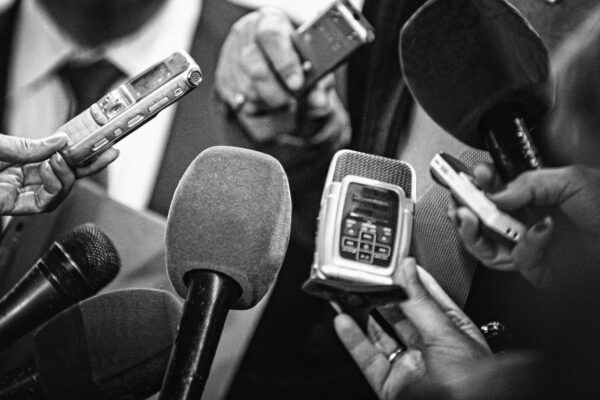
Journalists play an indispensable watchdog role during elections, monitoring electoral processes and documenting irregularities. They also contribute to a well-informed citizenry: as AI-fueled disinformation makes the rounds online, Bangladeshi voters will rely on journalists to provide reliable, timely and trustworthy reporting to make informed choices about their political future.
Yet, as the U.N. has documented, elections are also times of increased risk for journalists. Next week, the world will not only be watching the outcome of Bangladesh’s vote, but how it is conducted. A recent Digitally Right survey found that nearly nine in ten journalists fear they will be the victim of a physical assault while covering next week’s election. At least 16 journalists have already been physically attacked or otherwise obstructed from carrying out their work, according to a local rights group.
If Yunus is indeed committed to ensuring a free and fair election, he must also ensure Bangladesh’s independent journalists are free and safe to do their jobs. The treatment of journalists during major political events, unrest, and conflict is often a reliable indication of what direction a country is heading. Attacks on press freedom typically precede wider human rights crackdowns in countries experiencing democratic backsliding.
A free press forms the foundation of all robust, democratic systems and serves as a critical bulwark against rising authoritarianism. Together with other independent institutions, the media are indispensable to the system of checks and balances at the heart of functioning democracies and of free societies.
Next week, both the outgoing government and the new government will have an opportunity to demonstrate their commitment to the value of a free and independent press as a cornerstone of Bangladesh’s political system. Whether or not they seize this chance to chart a new path forward will have serious consequences for Bangladesh’s democratic future.