
Remember me




 If you spend any significant time in SF fandom, eventually you’ll stumble into people debating the boundary lines between its various genres (and indeed, the terms to use when referring to them). It’s a perennial touchstone of this particular branch of nerdery. And, on the face of it, I can see the appeal—there’s a pleasant camaraderie to the bickering and to these types of questions (or arguments) that have no solution, but which return and return in new forms and on a regular basis to be endlessly relitigated. There’s also an allure to definition, to trying to pin down the essence of a thing for the pure, theoretical joy of it. And, if you spend that time in fandom, you will probably come to believe that some of the existing definitions are pretty bad—either intellectually, ideologically, or morally—with downstream implications that are distinctly unfun. And there will be some others which feel more palatable.
But I am increasingly convinced that this urge—regardless of the answers one reaches at the end of the process—is itself a poisoned chalice, and the act of ever-tightening categorisation is one that haunts and harms the genre and all who sail in it.
Before I get into that, I will admit that there are some perfectly practical reasons why one might want to find a definition of SF that one could declare to be final and complete—maybe when writing about the history of the genre, for which defining the texts to include/exclude is a critical part of the exercise, or when creating a new award, when eligibility must be considered. But, even with these two examples, there’s already a crack showing: The definition is in both cases contextual, and what works for one may not suit the purposes of the other.
I would also argue that these are not actually definitions of SF at all, but instead thresholds. They ask: is a given work SF enough? There’s a sense of a minimum viability to meet, rather than an ideal to embody.
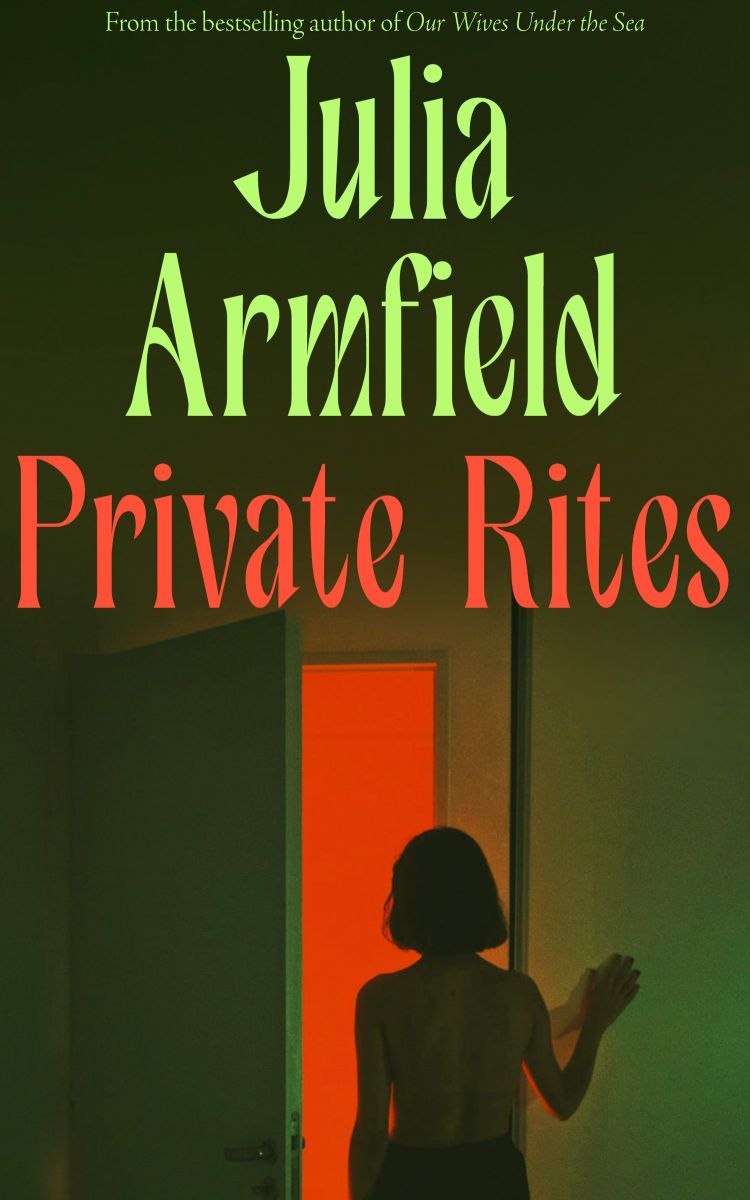
To choose an example from my own experience, we might discuss Private Rites by Julia Armfield. This was on the 2025 Clarke Award shortlist, and I think quite rightly so. It’s a great novel, and, moreover, entirely science fictional enough for the Clarke. Collectively, the jury certainly seemed to think so. And yet, I in … at least moderate seriousness … was willing to engage in an argument on Bluesky that while it is climate fiction, I’m not sure it’s science fiction (or not fully, or not only). In my view, any SFness the book holds exists at the very least alongside its litficness. This gives rise to at least two implications: SFness isn’t a binary status that can be characterised by yes/no; and it exists in interaction with both other genres (here, litfic) and subgenres (climate fiction).
So there are circumstances in which there is a genuine purpose for a definition, a need to hash this all out in a way that suits; but they are particular, with specific contexts that drive their definitional needs.
Does this account for the majority of the discussions in fandom, however? Does it heck. Those are simply for love of the game. In these contexts, and if we leave aside the specific offshoots of histories and awards, I think there are two approximate camps of definitions that I see come up colloquially.
The first I’ll call an ideological definition. These involve a more abstract idea of what genre is, or indeed “should be” (when we crack out the “should,” it’s all already going sideways, lads). This is where we find “all literature that does/contains x belongs in genre y,” for sometimes wildly generalising values of x. This is the argument of theoretical categorisation.
The second form is what I think of as the functional definition, what a person might practically seek out as being within their chosen genre. Here, people seek out what they wish actually to read and hold candidates in conversation with a mental map of the megatext which they use to navigate and describe the fiction they want to consume and discuss.
In my experience, for a lot of people, there is a distinct dissonance between these two definitions.
To take an example: in 2023 and 2024, the Booker Prize was awarded to books which I saw widely categorised as science fictional. Paul Lynch’s Prophet Song (2023) is set in a near-future dystopian vision of Ireland and Orbital by Samantha Harvey (2023) has astronauts witness a moon landing attempt that has not happened in reality. Many in SF fandom were thus drawn to say: The Booker Prize has been won by a science fictional novel. How many of those same fans picked those books up (or would consider doing so)? How many might consider them for a Hugo Award? For books that won a major literary prize, they were not so widely a part of the conversation within the genre fandom space. Where it occurred at all, discussion tended far more to the negative: it highlighted in Orbital the lack of action, the lingering focus on character conversation, the limited scope, the stylised language; and in Prophet Song the extended use of metaphor or the unoriginality of the premise when held in comparison to the existing corpus of dystopian novels. And to whether they were good SFF. Or, accepting that they were SFF, that they were not written sufficiently from within the SFF tent, or sufficiently in conversation with the existing works within the genre.
This disjoint is where the functional and the ideological versions of generic definition clash for many. Having read The Seven Moons of Maali Almeida and Orbital, I would consider both to be good books. They certainly met my functional definition of SFF enough to read them. But both books heavily employ the tools more commonly associated with literary fiction (most obviously those allowing a greater focus on interiority and character experience as a lens on the matter of the story, rather than those that develop an interest in the world, or the functionality and mechanisms of the science fictional conceits presented), as well as or instead of or alongside the ideas of SFF. They’re SFF enough to win points in an argument, but not SFF enough to actually be welcomed into the genre tent. Or, to summarise accusations levelled by many at Kazuo Ishiguro (whether Le Guin accusing him of “despising” fantasy, or Gautam Bhatia suspecting him of “trying to reinvent the six decades of the robot novel in Klara and the Sun while clearly having read nothing of what came before”), they are novels that use the ideas of SFF but are by authors who are not coming from within the genre; and so they cannot possibly do it right, or understand it properly. They are, in some way, insufficient in their SFFness, neither sufficiently pure for the ideological definition, nor sufficiently familiar for the functional.
This dissonance leaves us with definitions that, at best, feel incomplete, and at worst as though the driving purpose behind the definitional activity is that of delimitation—it doesn’t matter what people do or don’t read, but the arguments are about what is, or is not, allowed in the tent. And both inclusion and exclusion can be as troublesome as each other. Saying “x isn’t proper SFF because it doesn’t fit my narrow definition” is an obvious issue, but “I am choosing to believe x is SFF rather than approach how it differs from current reality on the terms laid out within the work” is a problem endemic to genre fandom, and one that limits our openness to new and different things. Establishing SFF as a literature of the unreal, but one in which reality is set to a fixed viewpoint, is just as problematic a position as opting aggressively to keep things out of the party. Moreover, it limits our ability to flex our definitions as reality and our understandings of it change over time.
*
 I’ve come over a thousand words and still not offered you my own attempt at a definition. Instead, I’ve alluded vaguely to those employed by others, rather against the spirit of the thousands of essays that begin with a quote from the dictionary. In part, that’s because I don’t have one that I am truly happy with, or which I coherently use in daily life. The best I can approach it, at least recently, is that SFF does not exist as a singular entity—here I echo Paul Kincaid in his collection Colourfields: Writing About Writing About Science Fiction (2025)—but instead a thing that can be discussed descriptively—and here I echo Samuel Delany—at a given moment; but that, if we do so, the object under the lens proves a shifting target, something more usefully described by its relevance to the literary now, and within the current context as reflected in that literature. And so, SF is an umbrella term that unites across time, subgenres, and geographies some very disparate modes and affects, via a readership that is not necessarily shared exactly, but contiguous, and via aesthetic preferences, tendencies, and motifs that are adopted and reflected in different ways within the subgenres that form this web of connections.
On subgenres: these are sufficiently finite as concepts that we can probably define them enough to reach consensus. But they also come and go, ebb and flow in popularity, and give way to something new over time. Paranormal romance came and then drifted out of notability, and yet sits quite near to the modern darling that is romantasy. Dark academia is presently on the rise, but with connections to magical school stories and increasingly to romantasy, and also to campus novels outside of the umbrella. The changing relationships between the subgenres, their shifting vitality, seems to me more interesting than any definitional identity. SF today might be an agglomeration of subgenres that in ten years will have no relevance at all, displaced instead by new modes we haven’t dreamt up yet.
So mono-definition may be doomed to failure. As a specific example, we might look at the “literature of the future” approach to defining SF. For me, this doesn’t work at all, not least because the future being evoked in the literature is all too often one as viewed from approximately the 1950s. The focus is on specific technologies and aesthetics, per this “the future if” meme: flying cars and glass skyscrapers, an expansionist view of space that is relatively uncritical of the colonialist underpinnings it perpetuates, and even assumptions about future geopolitics that imagine a single world government (see, for example, Star Trek right up into the 90s at the very least). The projected view of the world created by this particular vision of the future—tied up in the concerns specific to those years, not least of which the Cold War—no longer represents a reflection of the anxieties of now. The future, after all, is a moving target. Even in terms of dates, many of the futures of the Golden Age SF books have been and gone, and their responses on page and screen to the future as they perceived it holds little in common with the future as perceived from this moment, or even ten years ago. The anxieties, the aesthetics, the present being projected into that future are all so different … what commonalities can we draw? Can the characteristics of a given future even be used functionally for whether a given person will want to read the book? However much I might enjoy When There Are Wolves Again by E. J. Swift for its haruspicial approach to divining the future, for how it peers into the entrails of the now and interprets them, futurology has little bearing on how I feel about the work of Arthur C. Clarke. Time moves on.
A truism: Whatever window into the future a work offers, it does instead reflect the anxieties of the time in which it is written. The future, the unknown that marches incessantly towards us, cannot be a unifying factor across the ages because its characterisation is, necessarily, disparate. To read Cold War anxiety futures is a wholly different experience, arriving at wildly disparate ends, from climate fiction anxiety futures. What do they truly have in common at all?
Climate fiction, in fact, epitomises this problem. Is climate fiction inherently speculative in nature? Is it inherently SFnal? It may have been definitively so ten, twenty years ago, but perhaps the march of time into the daily fact of anthropogenic climate change has rendered it simply “reality,” and thus easy fodder for any novel (like Private Rites) concerned with the current fate of humanity? Climate change feels real and present enough that it has thoroughly crept into all types of literature, and so cannot, to my mind, now be used as a marker for SF on its own. It’s a part of current material reality; what about that is inherently science fictional? There are recent novels that use climate fiction as a theme or central problem but explore it using the tools of other genres entirely, which centre their climate anxiety on the present day and on experiences that are not speculative at all. To continue with Private Rites, for instance: While the novel’s unending, drowning rain is absolutely a climate-fiction problem affecting the protagonists, the tools employed to face it are focused around the psychological impacts of that rain on the characters, and draw heavily from horror as well as modes of realism (as highlighted in Abigail Nussbaum’s review here). Or, if we look at Eva Meijer’s Sea Now (2025, translated by Anne Thompson Melo), while the rising sea is the central catastrophe that propels the plot, there’s very little examination of it as a scientific phenomenon. Again, its impact on the characters is primarily limited to the psychological and experiential, drilling down into relationships rather than the world being crafted: The world in which it is set is functionally indistinguishable from the present, save for that disaster. At best, then, climate fiction as a marker of speculativity is ambiguous and at worst entirely irrelevant, and has been rendered so by the shift of the lens of the “now.”
One characteristic of the now we presently inhabit to that which SF once belonged involves who is interested in it. As Ursula Le Guin put it in her preface to Dreams Must Explain Themselves (2018), once upon a time “critics and academics generally refused to consider fantasy or science fiction as literature at all.” As we have seen, today by contrast works of SF can win one of the most prestigious literary awards. SF is also extremely big business, from cinema to video games. The mainstreaming of particularly those non-literary examples of SF, and the proliferation of larger online communities devoted to them, has I think intensified the way in which definition of SF is not about the works at all, but instead a desire to delimit a community whose shape has changed drastically in the last decade or so.
SF multimedia has enormously popularised SFnal ideas and aesthetics, and a burgeoning fanbase breeds a widening pool of definitional categories—but also a bigger argument. There are more people than ever who form part of the community interested in SF ideas and aesthetics, and—as ever happens with this sort of popularisation—a pushback to this new influx from some who have been inside the tent all along. This in turn only increases the desire to delimit, to prescribe the boundaries of what is inside—and out.
In the time I have been an SF fan, it has felt decreasingly possible for things to be fuzzy, to be fluid and mutable, to be multiple, even as works that are exactly all of those and more are published, only often with less marketing push and community impact than that enjoyed by their more generically classifiable cousins. Indeed, to my mind, some of the best work that exists—and has existed long into the history of the genre—occupies those fuzzy spaces between. Works have always existed that combine those ideas and aesthetics of SF with the tools, structures, or tropes of another genre entirely. We need only to look at the 2025 Hugo Best Novel, The Tainted Cup by Robert Jackson Bennett, to see the fantastical sitting alongside the solving of a crime. To go back to the Booker, can a work not be both literary fiction and science fiction simultaneously? I don’t see why not. And yet, when making arguments about categorisation, much seems to be flattened, and the decision is portrayed as distinctly binary. This, of course, comes back to that urge towards delimitation. It’s ours, not theirs. It belongs to us, not to whichever group we perceive as being outside, other, as having more prestige or not enough, who care about the wrong things. Delimitation like this only works if one assumes a work cannot belong to many things at once, or be beholden to none.
We need a more expansive approach to any attempt at definition today. If, though, we see SF as a process—as a grammar of ideas and themes, as a set of motifs, however you want to classify it—the genre can and plainly does sit alongside other genres which operate on different axes, both on a work-by-work basis and in a more macro view of shifting subgeneric traditions. This attempt at a definition—insufficient as all such things are, useful to me only by virtue of being mine—posits SF not as a clearly taxonomised, singular thing, but as a series of questions we keep asking both ourselves and the texts we read. Today it might be “what does the future look like?”, but tomorrow it might be “what even is magic?”, or “what does it mean to be human?”. These are questions that don’t necessarily have fixed or correct answers, but the asking of them forms a community of subgenres, readers, and modes of interest—one that overspills any boundaries we might wish to impose and mingles with the wider sea of literature.
*
 What is SF? Idk, vibes. That is the answer I yearn to give, if ever I am asked, and I think it is the truest one that underpins all attempts at more specific classification.
Realistically, vibes are my actual definition, at least in the day-to-day. I’d argue this matches most people’s functional definitions—they may select different books for their functional category of SF than I do, but I do strongly suspect we both get there by the same, predominantly intuitive path. This sense of formlessness, taken alongside the desire to ask questions of our texts, feels to me the best approach to tackle an ever-shifting now, the works we have, and the ones that will continuously add to the vast and varied body of SF. It is also best for the community that forms around them. Any definitional approach should be used to ensure we are appreciating the wider variety of all that is, rather than being bound by what was. And it is here I come at last to one of the other mainstays of genre definitions: “genre as a body of works in conversation with each other.” This one I don’t refute, or not precisely.
I think the approach exists in a snapshot, a photo whose ink immediately begins to fade, and which is rendered increasingly incomprehensible by the passage of time. There was, once, a point at which someone could be sufficiently familiar with a large enough proportion of the body of work that was, by consensus, science fiction that they could have some sort of overarching view of that genre and of its conversation with itself. That time has long, long passed. Books written now are multiple generations removed from the antecedents of yore, and while there may be inherited iterations of connection that stretch back and back through book after book, is that first distant relative truly relevant to the book now? Is it more relevant than that book’s conversation with the current time, with the TV shows the author grew up with, the mystery novels they loved, the art they saw last week in a gallery? What is it really about that great-great-great grandmother book that prioritises its vitality to the definition of a genre over all the other core inspirations that led to its creation?
As time goes on, each new text’s connections to the earliest iterations of a tradition become weaker and weaker. The now moves—does that mean that those books fall out of the genre as the conversation moves with it?
The yet more fundamental issue here is that the “genre in conversation with itself” definition requires that science fiction be bounded primarily by the past, and by what already exists. And even then, often only by a specific view of the past, within a specific literary geography. If works must be in conversation, there can never be anything from outside the tent, from completely new angles or with wholly new perspectives. Where, in this schema, do works from non-Anglophone traditions fit? Works in conversation with wholly different genre traditions? Who determines the “itself” with which a given genre-text is in conversation? The snake eats its own tail.
I would, at best, like to subordinate this approach to something rather more utilitarian, an approach that does not imply a requirement to delve into the backlists before one can fully appreciate what SF as a genre looks like, but allows one to exist in one’s current context and appreciate breadth instead.
How much of SF is, ultimately, in conversation with travel writing, with satire, with romance, with thriller, and with mystery? How many bear the legacy of a text like The Count of Monte Cristo? We might return to that idea of a web of subgenres—connected, perhaps in something approaching conversation, jostling under and outside of a wider SFnal umbrella. These are conversations never strictly bounded within a single genre. By this logic, you follow a text’s threads and find the whole of literature. In many ways, I almost prefer that. Blow it wide open, refuse boundaries at all. SF is meaningless except in the specific and the personal. Does it quack like SF? Are the vibes right? Good enough.
Because more than anything, I want to crack open that idea of “us,” that boundary on the fandom, and on the things that are of interest to this community. SF is not corrupted by the imported ideas and motifs of other genres, nor is it diluted, cheapened or weakened. The greatest strength of a genre is surely that its tools are so vital, so interesting, and so beloved that they find their uses in many places and to many people. That is the future I want for SF, and the present I increasingly see: a wider and more open market, full of things that operate in ambiguous, complex spaces and enrich and are enriched by their differences in turn. The urge to define clinically is the antithesis of this, serving only to delimit the variety of approaches we can take to an amorphous, ever-changing thing.
Like Loading...
Comments (0)