
Remember me
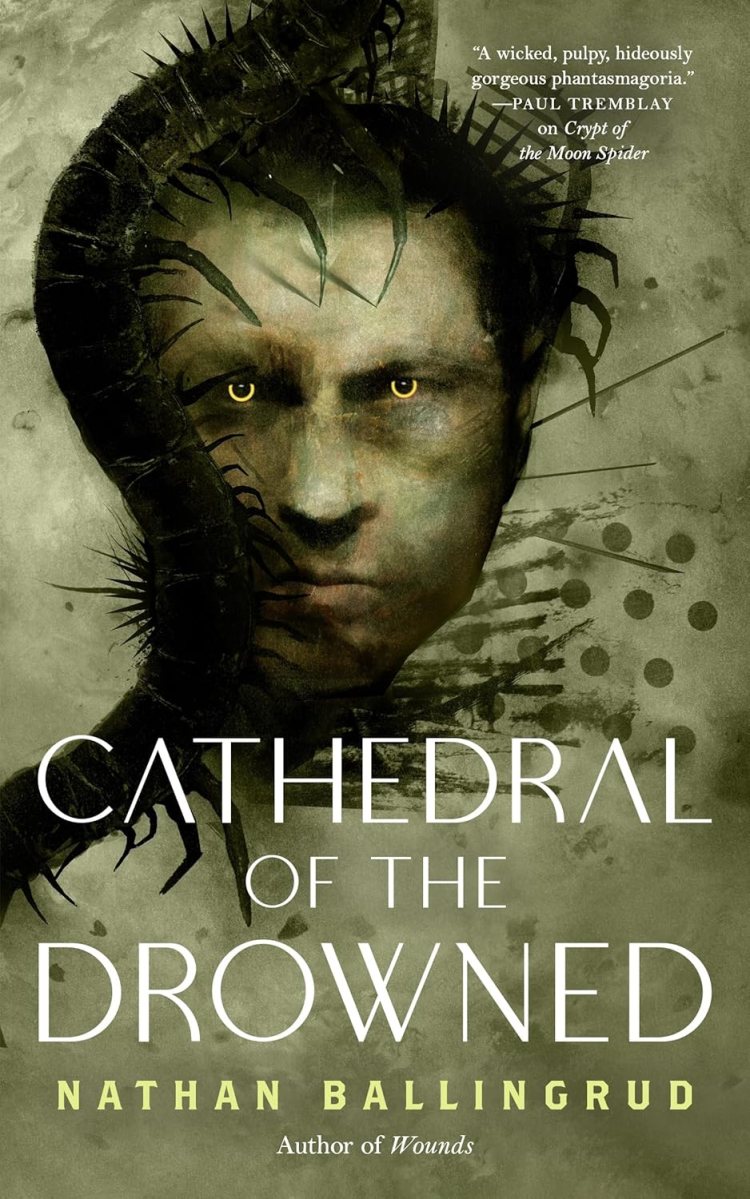


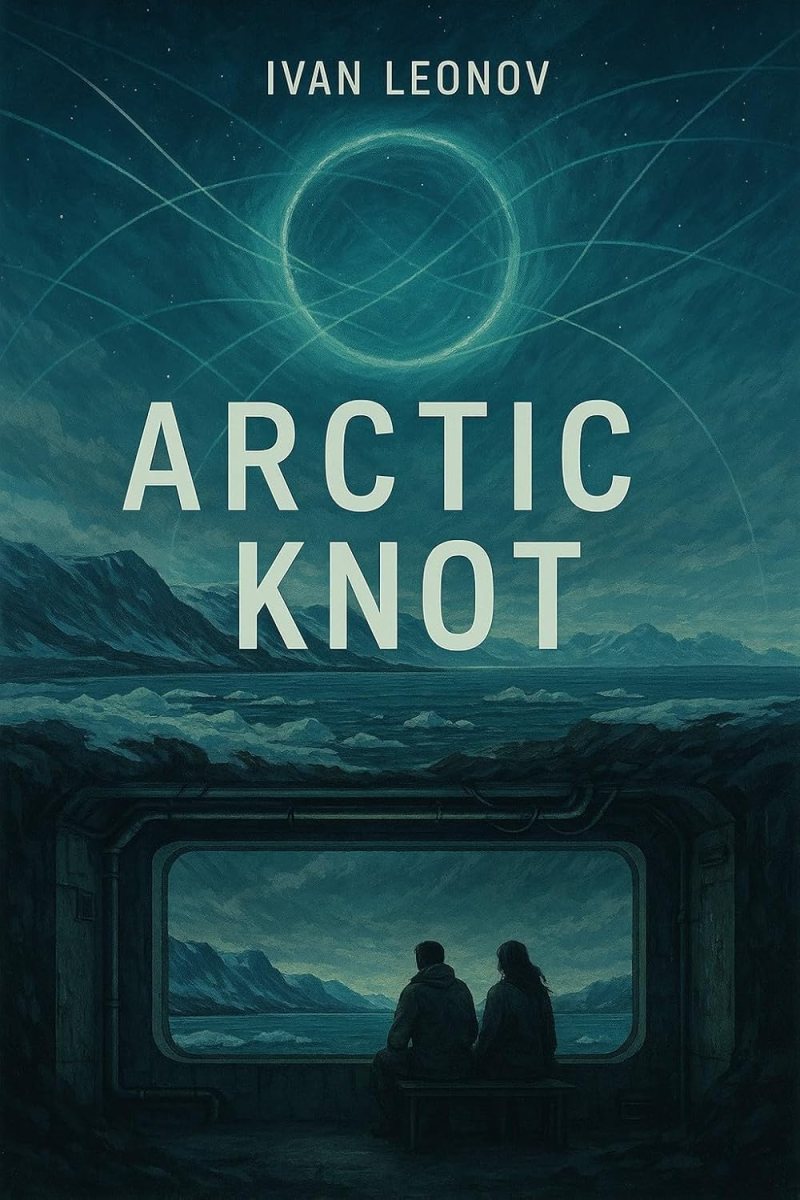


 Speculative fiction has a long history of association with “the idea.” High-concept, premise-driven, and philosophical fiction can be found in a wide variety of contexts across the genre. I’m a huge fan of many of these kinds of books: Nightfall (Isaac Asimov and Robert Silverberg, 1941/1990), On a Pale Horse (Piers Anthony, 1983), The Left Hand of Darkness and Always Coming Home (Ursula K. Le Guin, 1969 and 1985), The Starless Sea (Erin Morgenstern, 2019), Piranesi (Susanna Clarke, 2020), The Spear Cuts Through Water (Simon Jimenez, 2022), Rakesfall (Vajra Chandrasekera, 2024); the list could go on. [1] This type of fiction is an opportunity: It allows writers to ask big questions about society, knowledge, being, and meaning; to propose bold answers in the realms of politics, culture, and metaphysics; and to explore possibility at the edges of the real.
Ivan Leonov’s Arctic Knot wants to be one of these sorts of books. Unfortunately, it is, instead, disappointingly unsuccessful at essentially every turn. However, Arctic Knot’s failures serve as a really excellent window into what makes idea-driven fiction work—and does so in a moment when the SFF community is embroiled in fraught discussions about generative AI, the relationship between the writer’s mind and the writer’s work, and many people’s apparent belief that a concept or “idea” is the same thing as (or the real, true, and essential work of) a book. More specifically, a reading of Arctic Knot helps reveal that not only does a book, a story, or a fiction of any kind live in its execution, but actually the ideas and thinking inhere there, too.
One hallmark of the “high-concept” is a catchy premise: “a planet that is always winter where the people are unsexed most of the time and can take either role in reproduction,” “a world where it never gets dark,” “death is a position you assume by killing the previous officeholder,” etc. At first glance, Arctic Knot is aiming for such an idea, building its plot around the fracturing of time on the remote Russian shores of the Bering Strait. What causes these ruptures? What do they mean? What is the metaphysical significance of the slippage the characters experience between times and worlds, seeing different versions of themselves and their homes, of a world where “if you stared long enough into the snow—it would show you your own footprint, left tomorrow”? Yet the novel is unable to sustain the interest that the experience might produce, despite Leonov’s attempts to reinvoke it with each movement between alternate Chukotkas.
The most obvious failure of execution as it relates to the matter of ideas is in the answer the novel provides to these questions:
Chukotka stands upon a border. Men call it the East of the East, but it is in truth the West of the West. The world tangled words, and so the rivers of time run crooked [. . .] You think it is coordinates that rule the world. But it is not numbers that guide it—it is faith, and names. When the spirits hear a lie the earth answers with a crack.
That is, the diegetic explanation for the temporal anomalies that make up the plot and texture of the novel and its world is that the Russian (and Soviet) codification of Chukotka as the easternmost part of the Russian (Soviet) Far East is a metaphysical affront to land that is “really” the westernmost portion of the Western Hemisphere. This answer is unsatisfying at best, and at worst seems to partake of all of SFF’s worst habits: It ontologizes epistemology (if we grant the precise boundaries of the Prime Meridian even the dignity of qualifying as an epistemology), offers a pat rationalist answer for a phenomenon built up as a beautiful mystery, and establishes an opaque relationship between all this and the processes of exploration and discovery.
But a catalogue of dissatisfactions does not an explanation of what is missing make. After all, Leonov’s frustratingly unconvincing explanation is far from the first time that an uncharitable summary could seem implausible or unconvincing. Asimov and Silverberg’s claim—that, if a planet never got dark, then a total solar eclipse occurring about every two thousand years would introduce the population to the stars and cause them to all lose it and burn their whole society to the ground—shares some of Arctic Knot’s flaws when expressed this way. So, too, might the revelation that Clarke’s House is essentially a pocket dimension in which Piranesi was imprisoned by an occult ritual by the Other. It’s possible that, the less science is an essential part of a work’s aesthetics, the more ambitiously explanations can stand by narrative fiat. But beyond this, what actually works against the assertion of cartographic metaphysics that makes up the final resolution of Arctic Knot?
First, it might be my own instinctive rejection of the truth of cartography as metaphysical reality. I was not “convinced” that the question of whether Chukotka is “the East of the East” or “the West of the West” is of the great social, political, or metaphysical importance that its spiritual and ontological centrality to the novel would imply. But a novelistic idea need not convince me of its “truth” in order to be worth exploring. So what could have transformed Leonov’s novum from a half-baked premise into an interesting idea, even if in the end I didn’t “like” the novel’s conclusions?
To answer this question, I want to start with the issue of characterization. One thing that can get a reader invested in a high-concept idea is a connection with the characters to whom it matters and who experience it. Take, for example, Genly Ai and Estraven’s relationship, which forms the central organizing logic of The Left Hand of Darkness: It is through getting to know the people of Gethen, in particular coming to understand Estraven, that Genly and the reader learn how to think with and about the ambisexuality that characterizes Le Guin’s “concept.” In Nightfall, meanwhile, the psychological believability of the characters is absolutely essential to accepting the idea that seeing stars when no one in a society had ever conceived of their existence would be burn-the-city-to-the-ground levels of frightening. Arctic Knot, by contrast, fails to deliver characters who feel real and believable, and in the process reveals the vital importance of fleshed-out characterization for the ideas of fiction.
The novel centers around a group of five young adults who are investigating the temporal anomalies, but they all blend together, motivated by an unexplained burning desire to understand—and little else. In particular, the protagonist, Olga, fails to do anything with her distinctive characteristics—including the visions of the future she receives and which seem to have startlingly little impact on her subjectivity. Why, you might ask, would a young divorcée be attracted to the absolute remoteness of the far northern village of Lavrentiya? What makes her need so badly to understand and solve the time anomalies? Why is she so invested in her own rationality? How do all of these aspects of her personality shape her reaction not only to time travel (which all five of the protagonists experience) but clairvoyance (which only she does)? The novel does not answer any of these questions.
Olga’s internality is stubbornly inaccessible even as the novel appears to be trying to reveal it, with details like “[w]ith each passing day, Olga dreamed more often of other people’s dreams” and “Olga trembled inside. And in that trembling was not only fear—but recognition.” These details seem like they would contribute to a sense of Olga as a person, but they ultimately slide off any sense of her as a complete self, in part because all the characters in the novel seem to respond to things in essentially the same way through essentially the same language. All of them fear and resolve and tremble and doubt and so on in tandem and the result is that they feel a bit more like wooden dolls or puppets than like people. The generally stilted dialogue contributes to this impression as well, even (and especially) in moments that should be tense, like a futuristic prison break facilitated by Olga’s clairvoyance, during which she is told to “[h]old onto the ones where we survive” only immediately also to be told “[f]ocus on the good outcome. Try to hold it.” This sort of artificiality (perhaps the artificiality of trying too hard to sound like real conversation, which meanders, repeats itself, and generally doesn’t read well) deflates scenes of energy and makes the characters feel even harder to distinguish as individuals.
The effect of this is to reduce the characters to props for the ideas of the novel, but that, in turn, vitiates the novel’s thinking. Unlike other idea-driven fiction—in which the living enactment of the idea in developed characters allows the reader to really sit with all the implications of the thinking as it is performed—this sort of reduction here punctures ideas. It prevents the metaphysics from feeling grounded in the human, and thus from feeling like a serious consideration which can move beyond an initial instinctive response to a basic statement of concept or explanation.
The other contributing factor to the way in which this failure of execution leads to a failure of thinking is more distributed. Arctic Knot is, at the level of the sentence and the paragraph, awkward and uneven. Its em-dashes are persistently slightly off, signaling breaks that aren’t really there, like the one between the staring and the showing above or between Olga’s fear and recognition. These minor infelicities are everywhere. They are coupled with what seem like attempts to recreate the tone of a writer like Le Guin: “Life in Lavrentiya did not begin with dawn—it began with the wind. Not with birdsong, but with the screech of metal sheets covering old sheds.” But the various stumbles reveal this voice as false, even before it is abandoned for something more like reportage: “The debate raged on—Alexi and Olga for Naukan, Georgy for Anadyr, Natalia torn between”; or “They exchanged a quick glance: the place was the same, the time entirely different”; or even a call to the pulps (“Immortality activated”).
All of which is to say that a charitable read on the novel’s voice would be to identify it as a shifting tissue of pastiche; but the attempts at imitation feel too disjointed, as if the surfacing and dropping of echoes happens not for effect but because Leonov couldn’t maintain it any longer. As a result, I think the book is also missing the cognitive presence that narratorial voice (including deliberately shifting and fragmentary narration—like Rakesfall, like The Starless Sea, like Always Coming Home) usually provides. I don’t know how Arctic Knot thinks because I don’t feel like I have a sense of the voice or perspective of the novel or of Leonov as a writer. The production of a narratorial whole—through either consistent voice or a plethora of trackable voices with distinct effects, through fluid (or perhaps carefully alienating, rather than merely disjointed) prose, through all the stylistic effects that produce the suite of aesthetic experiences known vaguely and idiosyncratically as “good writing”—seems, in light of this, to be an essential part of a book’s thinking. That is, the failure to provide a compelling voice and the sentence-level infelicities actively prevent Arctic Knot from thinking through its ideas about the relationship between time, culture, meaning, and place, reducing them to mere concepts or proposals.
Ideas need to be thought rather than merely posited. And that active thinking happens, Arctic Knot inadvertently shows, in the execution of the novel, in the sentences and words, in the characters, in the playing-out of plot as a written experience, rather than as an outline or a premise or a “concept.” In failing to live up to its ambitions, then, Arctic Knot demonstrates what makes idea-driven speculative fiction work, the essential transformation that makes an idea into something that can animate a story, that needs to be explored in narrative. Through this revelation, the novel offers a sort of object lesson which answers anxieties about what resistance to the equation of idea and story might do to the long tradition of idea-driven SFF. If the idea lives in the particular execution of fiction, then not only can we continue to read and write idea-forward work and simultaneously insist on the centrality of the book as a work created with intention (whether or not we believe the author themselves is discernable within it); we must.
Endnotes
[1] There are also non-SFFnal examples of this form of literature, ones which locate their intellectual or philosophical work within realism, such as a novel like Jean-Paul Sartre’s Nausea (1938); we often rely on conceptual ambition and speculative imagination to mark the distinction between this sort of ideas-driven fiction and SFF. [return]
Like Loading...
Comments (0)