
Remember me




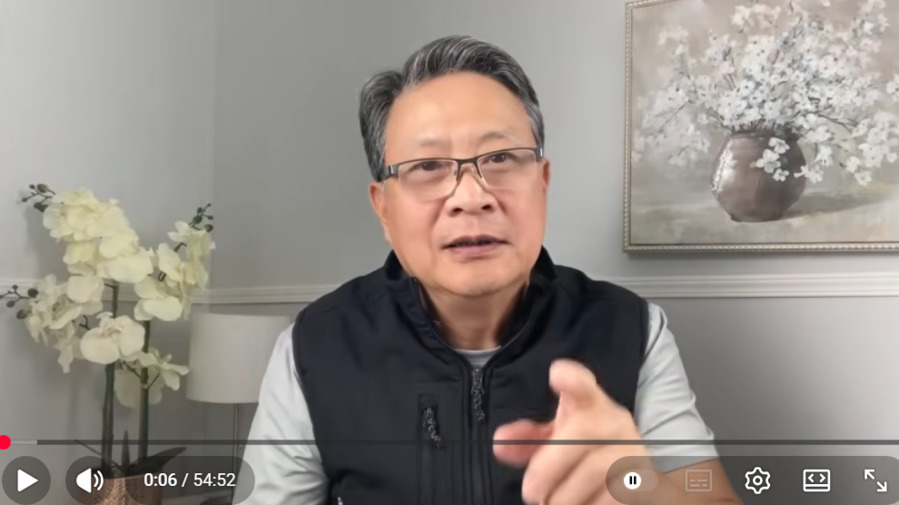



The Chinese Communist Party has harvested organs from Falun Gong practitioners on an industrial scale since launching its persecution of the spiritual group in 1999. Hu Liren, a former Shanghai entrepreneur who ran internet and investment companies for decades, witnessed parts of this system firsthand. In interviews published in February 2026 on his online program Real China and with the program Weiyu Sees the World, Hu described seeing organ transport cases delivered daily to the surgical wing of Zhongshan Hospital, one of Shanghai’s most prominent medical institutions.
He also recounted a direct conversation in which a Shanghai prison official confirmed that organs were being taken from Falun Gong practitioners held in custody. His testimony spans more than two decades of direct encounters with practitioners, their families, and the CCP apparatus built to persecute them, beginning with the nationwide crackdown launched in 1999 by then-CCP general secretary Jiang Zemin.
 An anonymous whistleblower alleges China’s true pandemic death toll is vastly higher than official figures, accusing authorities of census manipulation and state-backed organ harvesting during and after the zero-COVID era. (Image: Adobe Stock)
Organ transport cases were carried into Zhongshan Hospital’s surgical wing every day
An anonymous whistleblower alleges China’s true pandemic death toll is vastly higher than official figures, accusing authorities of census manipulation and state-backed organ harvesting during and after the zero-COVID era. (Image: Adobe Stock)
Organ transport cases were carried into Zhongshan Hospital’s surgical wing every day
Hu Liren’s most important testimony concerns Zhongshan Hospital, a major Shanghai medical institution where forced organ harvesting from Falun Gong practitioners was taking place. During a visit to the hospital while his elderly father was admitted for surgery to remove an abdominal cyst, Hu encountered a fellow patient, a man in his forties from the city of Qidong in Jiangsu province, who was waiting for a liver transplant.
The man told Hu he was waiting for “an organ source,” a term Hu had never encountered. When Hu asked where a replacement liver could possibly come from, the man described an organized system: a QQ group, an early Chinese messaging platform predating WeChat, where patients across Shanghai who needed organ transplants coordinated with one another. They had formed a network of people waiting for organs.
The man said Zhongshan Hospital was performing roughly two to three organ transplant surgeries every day. When Hu asked about the source of the organs, the man’s answer was direct: “Don’t you know? They’re from practitioners.” Hu confirmed that the man was referring specifically to Falun Gong practitioners.
SuccessYou are now signed up for our newsletter
SuccessCheck your email to complete sign up
During the remainder of his father’s hospital stay, Hu began watching closely. He saw staff carrying insulated transport cases into the operating rooms on a daily basis. “I saw it with my own eyes,” he said. “Every day, someone was delivering organs to the surgical wing. The patients all lived in the hospital, just waiting. Once a match was confirmed, they were notified immediately and the transplant surgery began.” He described the scene as terrifying.
 Cheng Peiming, a Falun Gong practitioner and survivor of the Chinese Communist Party’s (CCP) forced organ harvesting practices, speaks at a press conference in Washington D.C. on July 3, 2024. (Image: Madalina Vasiliu via The Epoch Times)
A Shanghai prison official confirmed organ harvesting from Falun Gong practitioners
Cheng Peiming, a Falun Gong practitioner and survivor of the Chinese Communist Party’s (CCP) forced organ harvesting practices, speaks at a press conference in Washington D.C. on July 3, 2024. (Image: Madalina Vasiliu via The Epoch Times)
A Shanghai prison official confirmed organ harvesting from Falun Gong practitioners
At a later dinner gathering, Hu Liren met a management-level official from Shanghai’s prison system and asked him directly whether the prisons held large numbers of Falun Gong practitioners. The official confirmed it immediately: “Yes, Falun Gong. We have a lot of them.”
Hu then asked whether authorities were harvesting their organs. The official’s response was startled recognition: “How do you know about that?” He said he worked at Qingpu Prison in Shanghai, a facility where large numbers of Falun Gong practitioners have been detained.
The two pieces of testimony formed a single picture. The hospital roommate had identified Falun Gong practitioners as the organ source. The prison official confirmed, through his own surprised reaction, that harvesting was happening inside the detention system. “It all lined up,” Hu said. “The hospital confirmed where the organs came from. He confirmed the rest.”
 In July 2025, Falun Gong practitioners marched in Washington, D.C., calling for an end to persecution and the CCP’s transnational repression. (Image: Vision Times)
How the CCP’s persecution of Falun Gong destroyed families of educated professionals
In July 2025, Falun Gong practitioners marched in Washington, D.C., calling for an end to persecution and the CCP’s transnational repression. (Image: Vision Times)
How the CCP’s persecution of Falun Gong destroyed families of educated professionals
The Chinese Communist Party’s persecution of Falun Gong, launched in 1999 by then-CCP general secretary Jiang Zemin, targeted millions of practitioners across China, including large numbers of highly educated professionals. Hu Liren described multiple cases he witnessed personally.
A friend Hu identified as Zhao Jun (phonetic) was a well-educated professional whose parents were both doctors and professors receiving stipends from the Party-controlled cabinet known as the State Council. Zhao suffered from severe chronic asthma. After taking up Falun Gong at his aunt’s suggestion in Beijing, his symptoms disappeared entirely within months.
When the crackdown came, Zhao was arrested. He appeared on state television the next day and told reporters that Falun Gong had improved his health and that he would never renounce it. His wife, who headed a hospital laboratory department, and their daughter, a recent graduate of Fudan University, were arrested afterward. All three disappeared.
“The whole family vanished,” Hu said. “Think about how evil the Communist Party is.”
Zhao’s elderly parents spent years searching for their children. Local police refused to help, claiming the case belonged to a special task force. The task force stonewalled them. Hu noted that the task force overseeing Falun Gong persecution in Shanghai at that time was controlled by Wu Zhiming, the city’s police chief, who was a nephew of Jiang Zemin, the CCP general secretary who personally ordered the campaign to eradicate Falun Gong. “Jiang Zemin was a devil,” Hu said. “A true devil.”
 Falun Gong adherents take part in an annual candlelight vigil event in Washington, DC to commemorate and raise awareness about the Chinese Communist Party’s persecution of their faith on July 17, 2025. (Image: Lisa Fan/Vision Times)
Hu’s first encounter with a practitioner revealed how many educated professionals followed the practice
Falun Gong adherents take part in an annual candlelight vigil event in Washington, DC to commemorate and raise awareness about the Chinese Communist Party’s persecution of their faith on July 17, 2025. (Image: Lisa Fan/Vision Times)
Hu’s first encounter with a practitioner revealed how many educated professionals followed the practice
Hu Liren’s earliest contact with the Falun Gong community came in 1999, during the first year of the CCP’s crackdown, when he was general manager of Meiya Online, a Shanghai internet company. A young woman interviewing for an editorial position told him that her entire family practiced Falun Gong. She had just completed a doctorate in literature at Shanghai Jiao Tong University. Both her parents were professors there.
Because her family practiced Falun Gong, they had lost everything. Her father had been arrested. She and her mother had no income. Hu hired her.
The encounter changed his understanding of the group entirely. “I had thought Falun Gong was just a form of exercise,” he said. “I had no idea it attracted so many people from the highest levels of China’s educated class, that so many intellectuals and professionals were part of this community.”
His company later received regular phone calls from Falun Gong practitioners overseas, with recorded messages describing the CCP’s persecution. Hu said the calls confirmed what he already believed. “I already knew the Communist Party was evil,” he said.
 Falun Gong adherents take part in an annual parade in Washington, DC to commemorate and raise awareness about the Chinese Communist Party’s persecution of their faith on July 17, 2025. (Image: Lisa Fan/Vision Times)
A party-appointed censor inadvertently taught Hu how to see through CCP propaganda
Falun Gong adherents take part in an annual parade in Washington, DC to commemorate and raise awareness about the Chinese Communist Party’s persecution of their faith on July 17, 2025. (Image: Lisa Fan/Vision Times)
A party-appointed censor inadvertently taught Hu how to see through CCP propaganda
During the 1990s, CCP censorship rules required Hu Liren’s internet company to employ a Party-appointed editorial censor to review all published content. That censor gave Hu a piece of advice he never forgot: whenever the CCP is promoting something aggressively in the news, read it in reverse. “Flip it around,” the censor said, “and you’ll see the truth.”
When every state-controlled media outlet in China began calling Falun Gong a dangerous cult, Hu applied the principle. “I read the propaganda in reverse, and I understood exactly what Falun Gong was really about,” he said. “The Communist Party could never contaminate someone like me.”
“I believe Falun Gong is truly great,” Hu said. “I admire them completely.”
 Since its publication in November 2004, the book “Nine Commentaries on the Communist Party” has sparked the largest spiritual awakening movement in Chinese history. To date, more than 450 million Chinese people have chosen to withdraw from the Chinese Communist Party (CCP), its affiliated organizations (the Communist Youth League, the Young Pioneers, and all other organizations), completely severing ties with the CCP. (Image: Global Service Center for Quitting the CCP website)
A banned text exposing CCP history transformed Hu’s employees
Since its publication in November 2004, the book “Nine Commentaries on the Communist Party” has sparked the largest spiritual awakening movement in Chinese history. To date, more than 450 million Chinese people have chosen to withdraw from the Chinese Communist Party (CCP), its affiliated organizations (the Communist Youth League, the Young Pioneers, and all other organizations), completely severing ties with the CCP. (Image: Global Service Center for Quitting the CCP website)
A banned text exposing CCP history transformed Hu’s employees
In the early 2000s, the Nine Commentaries on the Communist Party, a series of editorials published by The Epoch Times, began circulating underground in China. The text, which was banned by the CCP, systematically dismantled the Party’s official version of its own history, documenting decades of political campaigns, engineered famines, and mass repression that the regime had concealed or distorted.
One of Hu’s employees at his Shanghai investment firm, a Peking University graduate and former top science student from Yunnan province, discovered the text online and stayed up all night reading it. He told Hu it laid out the Communist Party’s entire history with a clarity nothing else had provided.
The Nine Commentaries circulated through Hu’s office between roughly 2003 and 2005. Even a Wuhan University graduate who had been a committed Communist Party member and a nationalist reversed his views entirely after reading it. “He never spoke favorably of the Communist Party again,” Hu recalled.
“The Nine Commentaries made an enormous contribution to the awakening of the Chinese people,” Hu said. “This is why I respect Falun Gong so deeply. They didn’t just endure persecution. They fought back by telling the truth about the regime that was persecuting them.”
 Falun Gong practitioners attend a parade to call for the end of the persecution in China and support the 440 million who have quit the Chinese Communist Party. (Image: Larry Dye/The Epoch Times)
International investigators have documented the CCP’s organ harvesting on a massive scale
Falun Gong practitioners attend a parade to call for the end of the persecution in China and support the 440 million who have quit the Chinese Communist Party. (Image: Larry Dye/The Epoch Times)
International investigators have documented the CCP’s organ harvesting on a massive scale
The World Organization to Investigate the Persecution of Falun Gong, an international investigative body, has spent years documenting organ transplant operations across China. The organization’s findings confirm that since the CCP began persecuting Falun Gong in 1999, organ transplant volumes in China exploded, far outpacing any possible supply from voluntary donors. It has identified large numbers of hospitals and doctors involved in harvesting organs from living Falun Gong practitioners and has tracked the relentless expansion of China’s state-run transplant industry.
In a recent interview with Vision Times, the organization’s director, Wang Zhiyuan, warned that the forced organ harvesting has now expanded beyond Falun Gong practitioners to the broader Chinese population. “When the organs from Falun Gong practitioners can no longer satisfy their demand, they will inevitably extend their reach to the rest of society,” he said. He urged the public to remain vigilant and to help stop what he called a crime against humanity.
Hu Liren’s eyewitness testimony from inside Shanghai’s medical and prison systems confirms what international investigators have documented for more than two decades. The Chinese Communist Party built a system to persecute, imprison, and harvest organs from Falun Gong practitioners, and that system continues to operate and expand today.
By Li Muzi
Comments (0)