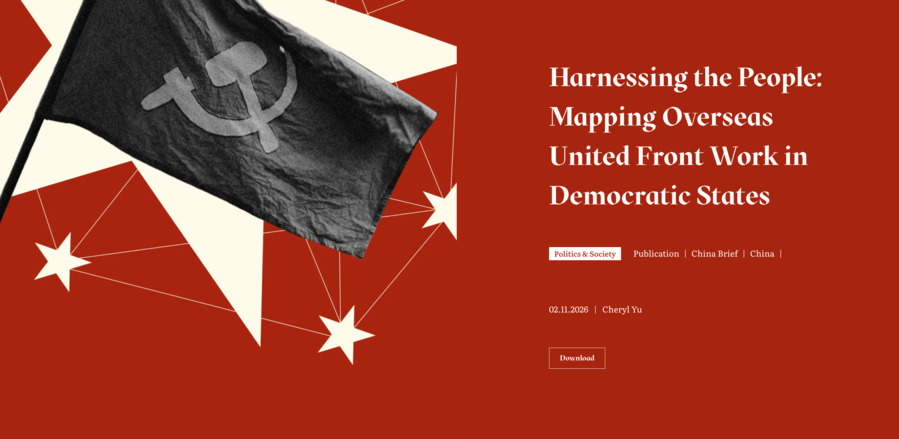
A quiet struggle is unfolding inside democratic societies. It is playing out not on battlefields but in neighborhoods, university campuses, and legislative chambers. On Feb. 11, the Jamestown Foundation published a report examining what it described as the Chinese Communist Party’s (CCP) overseas United Front network. Canadian investigative journalist Sam Cooper warned that the CCP, through a network of 2,294 overseas organizations, is pursuing a global “mass mobilization” strategy in Canada, the United States, and beyond. He described the effort as a systematic form of political warfare aimed at weakening democratic resilience from within.
The findings were presented at Canada’s Parliament in Ottawa. Representatives from the Jamestown Foundation outlined their research into United Front-linked groups operating in Canada and other Western countries. Speakers included Peter Mattis and Cheryl Yu of the Jamestown Foundation, former Lieutenant General Christopher Coates, and former Member of Parliament Kevin Vuong.
2,294—the scale behind the numbers
Writing on The Bureau platform, Cooper said the Jamestown data suggested that the number of organizations directly or indirectly guided by the CCP’s United Front Work Department (UFWD) far exceeds previous public estimates by Western intelligence agencies. The 2,294 groups span politics, business, academia, media, and community services. Together, they form what the report characterizes as an extensive network of social influence.
These organizations do not operate in isolation. In Canada and the United States, many present themselves under moderate or community-oriented names such as “Chinese Associations,” “Hometown Associations,” “Chambers of Commerce,” or “Anti-Discrimination Alliances.” Cooper’s reporting found that their core leadership often maintains close ties with Chinese embassies and consulates, with funding channels and strategic direction linked to Beijing.
Canada: a testing ground for ‘mass work’
Canada is described as a major arena for the CCP’s overseas United Front activities. Drawing on classified documents from the Canadian Security Intelligence Service (CSIS) and extensive community reporting, Cooper outlined what he called systematic interference.
Election interference and political influence
Success
You are now signed up for our newsletter
Success
Check your email to complete sign up
Cooper identified election interference as one of the most significant concerns. Controversies surrounding the 2019 and 2021 federal elections indicated that United Front-linked groups sought to support candidates viewed as favorable to Beijing. According to his reporting, tactics included mobilizing volunteers, influencing voter blocs, and channeling improper political donations. Chinese-language media outlets and WeChat platforms allegedly under United Front influence were used to attack critics of Beijing through disinformation and personal smears, affecting outcomes in certain constituencies.
‘Overseas police stations’ and community pressure
Cooper also reported on so-called “overseas police stations” discovered in Toronto and Vancouver. These offices, described as affiliated with United Front organizations, were characterized as part of transnational repression efforts. According to the reporting, they monitored dissidents, intimidated members of the Chinese diaspora, and pressured individuals accused of crimes to return to China. The result, Cooper wrote, is a climate of fear among some Chinese Canadians who feel constrained in exercising free expression.
Structural influence within communities
The report described how United Front groups leverage ethnic identity to embed themselves in local communities. By sponsoring Lunar New Year celebrations, funding senior services, and organizing youth programs, such organizations have become prominent fixtures in public life. When community networks and resources are concentrated within these groups, immigrants may feel compelled to participate in their political activities, effectively reinforcing Beijing’s influence.
United States: technology and state-level engagement
In the United States, the strategy appears more specialized, focusing on technology acquisition and state-level political engagement.
Technology and talent programs
Cooper cited research indicating that United Front-linked entities have established numerous “talent exchange stations” and academic associations in the United States. These organizations have been associated with facilitating participation in China’s “Thousand Talents Plan.” Operating in major research hubs such as Silicon Valley and Boston, they have allegedly encouraged scientists to transfer research funded by U.S. taxpayers to China without relinquishing their positions in the United States. The report characterized this as both academic misconduct and a challenge to U.S. competitiveness.
Local engagement strategy
With heightened scrutiny at the federal level, the report stated that United Front networks have focused on governors, mayors, and local officials. By promoting investment opportunities and sister-city agreements, they have cultivated relationships at the state and municipal levels. According to Cooper, these ties may influence local leaders’ positions when federal policymakers debate tougher measures toward China.
Media and the ‘information cocoon’
Cooper emphasized the influence exerted over overseas Chinese-language media. Through the network of 2,294 organizations, the report argued that much of North America’s Chinese-language press, radio, and social media ecosystem has come under varying degrees of influence.
The effect, he wrote, is the creation of an “information cocoon” in which millions of Chinese immigrants receive news framed in alignment with Beijing’s narratives. Within this environment, criticism of the CCP may be portrayed as hostility toward China or the Chinese people. Such framing can limit pluralistic debate and reinforce political mobilization narratives.
Links to transnational crime
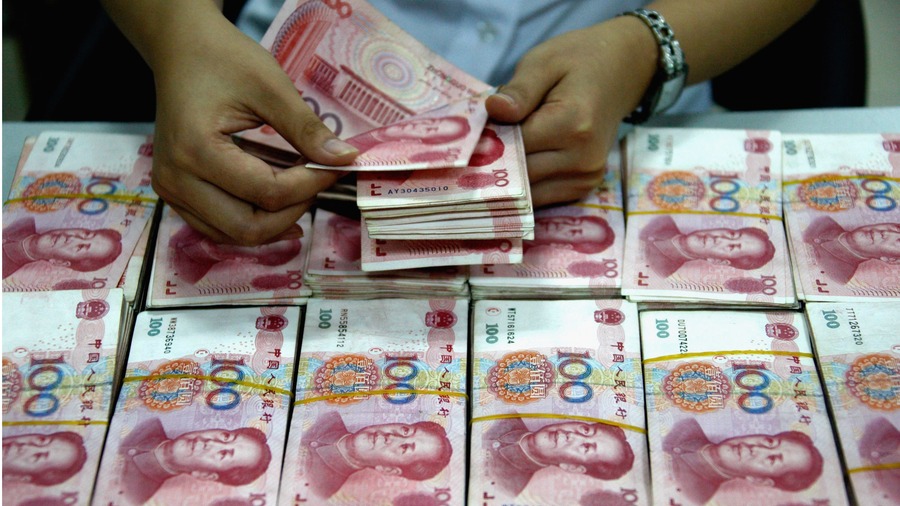
Cooper’s previous investigations have also examined alleged overlaps between United Front-linked figures and illicit financial networks, including underground banking and money laundering.
In Vancouver and Toronto, he reported that certain individuals connected to large-scale money laundering operations simultaneously held leadership roles in United Front-affiliated organizations and maintained contact with Chinese consular officials. He described this convergence of political and criminal networks as creating additional national security concerns.
Why democracies struggle to respond
The Jamestown report and Cooper’s analysis raised questions about why democratic institutions have found it difficult to counter such influence.
United Front activities often operate within the boundaries of free speech, freedom of association, and multicultural engagement. Authorities face challenges in distinguishing legitimate cultural exchange from coordinated foreign interference.
Elected officials may hesitate to confront the issue for fear of being accused of anti-China sentiment or racial bias. Cooper argued that such sensitivities can complicate public debate.
For decades, Western policymakers assumed that economic development would lead China toward political liberalization. According to the report, this assumption contributed to underestimating the role of the United Front Work Department as a strategic political instrument.
Proposed responses
Cooper suggested that democratic governments adopt comprehensive countermeasures.
He called for stronger foreign agent registration requirements to ensure transparency regarding funding sources and political ties. He urged support for diaspora voices that operate independently of United Front influence. He advocated financial enforcement to disrupt money laundering channels and recommended broader public education to increase awareness of influence tactics.
In concluding remarks, Cooper wrote: “What we face is not a traditional state, but a highly organized political system capable of mobilizing society as an instrument.”
The 2,294 organizations identified in the Jamestown report were described as part of a broader global network. For Canada, the United States, and other democratic countries, the challenge lies in strengthening legal, intelligence, media, and community resilience. The contest, as framed in the report, is likely to be prolonged.
By Xiao Ran




Comments (0)