
Remember me


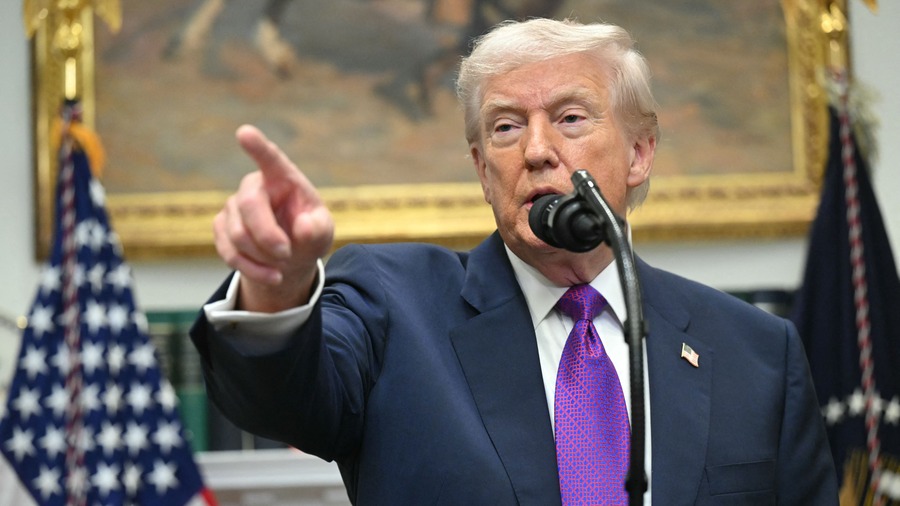


According to reports from the Associated Press and Bloomberg, on Feb. 20, U.S. President Donald Trump held a press conference at the White House briefing room in response to a U.S. Supreme Court ruling that found his global tariffs, implemented under the 1977 International Emergency Economic Powers Act (IEEPA), exceeded his authority, and announced the subsequent direction of U.S. trade policy.
Trump stated that the Supreme Court did not “overturn the tariffs themselves,” but rather invalidated the specific use of IEEPA for imposing those tariffs. As a result, he said he would “take another path,” issuing an executive order to impose a 10 percent baseline tariff on global goods and launching a series of investigations to pave the way for potentially higher import taxes in the future.
The Supreme Court ruled 6-3 that the Trump administration’s use of emergency powers to impose “reciprocal tariffs” globally, and to levy tariffs on certain imports to combat fentanyl trafficking, exceeded presidential authority. The ruling’s majority opinion included two justices appointed by Trump during his first term — Neil Gorsuch and Amy Coney Barrett. The Court did not decide whether importers are entitled to refunds, leaving that issue to lower courts. If full refunds were approved, the scale could reach approximately $170 billion, more than half of existing tariff revenue.
At the press conference, Trump expressed strong dissatisfaction with the ruling, calling some justices’ positions “shameful,” and said the decision weakened the executive branch’s policy tools on trade and national security. He also criticized the Court’s logic in allowing the president to issue licenses but not collect related fees, calling it “puzzling.”
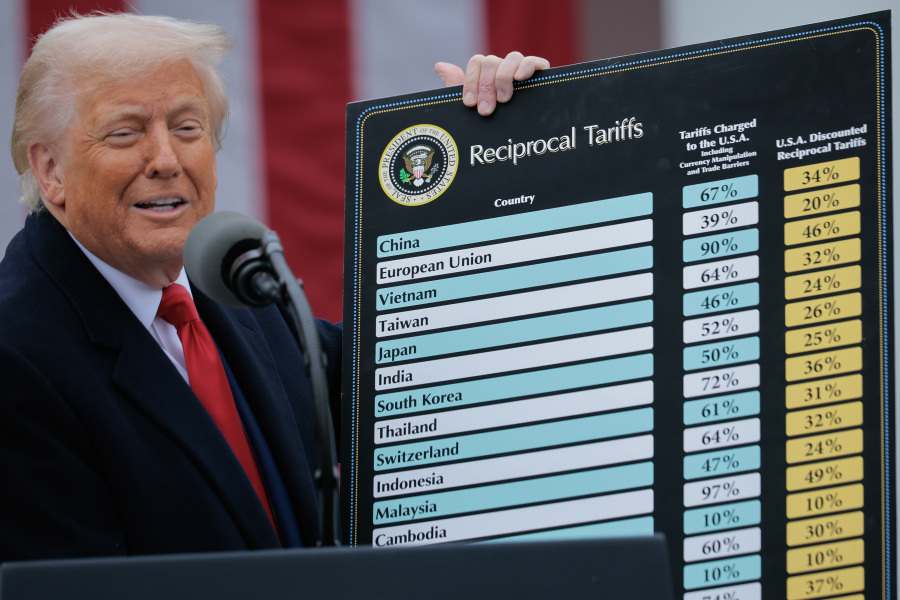
 On April 2, 2025, US President Trump announced additional tariffs on US imports. (Image: Chip Somodevilla/Getty Images)
White House officials emphasized they would seek alternative legal paths authorized by Congress to replace the struck-down tariff mechanism, but acknowledged that re-imposing import taxes would face more constraints in scope and duration.
SuccessYou are now signed up for our newsletter
SuccessCheck your email to complete sign up
On the markets, after Trump announced the 10 percent baseline tariff plan, U.S. Treasury yields continued their previous rise, and stocks extended gains. Analysts noted the ruling could significantly reduce the U.S. average effective tariff rate. Bloomberg Economics previously estimated that if the ruling went against the government, the tariff rate could fall from about 13.6 percent to 6.5 percent, marking a recent low.
Trump defended his tariff policy, stating that tariffs not only help attract manufacturing back to the U.S. but also serve as an important diplomatic tool. He said tariff threats exerted pressure on certain countries in negotiations and led to multi-billion-dollar commitments of investment in the U.S. The White House plans to assess whether to push Congress for legislation to further clarify the executive branch’s authority in trade matters.
By Tian Jingxin
Comments (0)