By Gao Yun
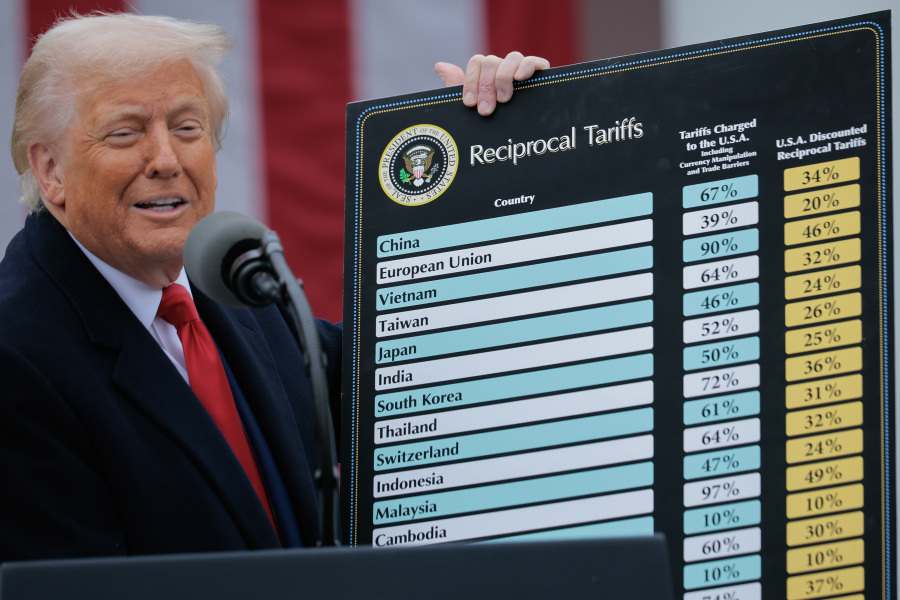
On Friday, Feb. 20 the U.S. Supreme Court ruled that most of the tariffs imposed by President Donald Trump over the past 13 months were unconstitutional. In a 6-3 decision, the Court held that the president exceeded the authority granted by the 1977 International Emergency Economic Powers Act (IEEPA) when imposing multiple tariffs on U.S. trading partners.
According to Deutsche Welle, before the ruling was announced, the U.S. government indicated it had been preparing for months and could quickly implement new tariffs under other laws.
In response to Friday’s ruling, Trump said a 10 percent global tariff would be imposed for 150 days to replace some of the tariffs that were struck down.
The new tariffs will be implemented under Section 122 of the Trade Act of 1974, which allows the president to impose tariffs of up to 15 percent for up to 150 days on countries facing “a serious and significant” balance of payments problem. Unlike other options available to the president, this provision does not require an investigation or additional procedural steps.
Success
You are now signed up for our newsletter
Success
Check your email to complete sign up
However, if tariffs are to continue beyond 150 days, congressional approval will be needed.
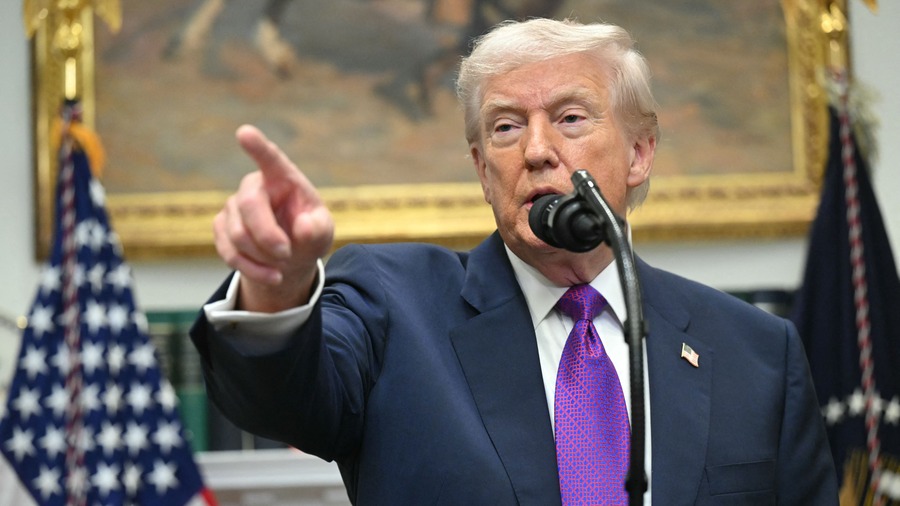
At a press conference, Trump said: “We have alternatives—great alternatives.” He added: “This could bring in more revenue. We’ll collect more money and also become stronger because of it.”
Other options for the government
Legal experts say the president can still impose tariffs on specific products or trading partners under several other statutes without congressional support, though these approaches require investigations or justifications, making implementation slower.
Section 301 of the Trade Act of 1974 allows the president to impose tariffs on countries that violate international trade agreements or harm U.S. businesses. There is no limit on tariff amounts or duration, but a justification must be provided and investigations can take several months. Trump’s administration is reportedly launching several investigations under Section 301 to address unfair trade practices.
Section 232 of the Trade Expansion Act of 1962 allows the president to impose tariffs on specific industries (such as steel, aluminum, or timber) for national security reasons, supported by investigations from the U.S. Department of Commerce. Trump has previously used this provision.
On Friday, U.S. Treasury Secretary Scott Bessent said: “Estimates show that using Section 122, along with potentially strengthened Section 232 and Section 301 tariffs, will roughly maintain tariff revenue for 2026.”
What happens to tariffs already collected?
The Supreme Court ruling may involve refund arrangements for U.S. importers. During oral arguments in early November 2025, justices questioned whether tariffs ultimately become a cost borne by consumers.
In 2025, U.S. Customs and Border Protection collected $287 billion in tariffs, taxes, and fees—a 192 percent increase from the previous year, according to the Federal Reserve Bank of Richmond. This revenue includes tariffs in place before Trump took office as well as the “reciprocal” tariffs added afterward.
Importers who paid tariffs will watch for refund arrangements. For individuals, the situation is more complicated because refunds go to the original payers—usually companies—not consumers.
Trump said on Friday that whether billions in revenue from his tariffs must be refunded could take years to resolve legally and noted that the issue was “not discussed” in the Supreme Court ruling.
Since the Trump administration implemented the tariffs, hundreds of lawsuits have challenged them. The case heard by the Supreme Court was filed by a group of companies. Over the past 13 months, Trump issued executive orders imposing tariffs on multiple countries, then paused or negotiated to lower rates, citing trade imbalances and drug trafficking as policy justifications.
EU, UK, and Canada respond
After the ruling, the European Union, United Kingdom, and Canada said they would carefully assess the ruling and monitor its effects.
AFP reported that the EU said on Friday it is reviewing the decision. EU trade spokesperson Olof Gill said: “We have noted this ruling… and are analyzing it carefully.”
He added: “We remain in close contact with the U.S. government to clarify how they plan to respond… Businesses on both sides of the Atlantic rely on stable and predictable trade relations.”
The European Parliament’s trade committee had planned to approve a U.S.-EU agreement on Feb. 24, but the Supreme Court ruling affects its implementation.
Bernd Lange, chair of the European Parliament trade committee, said the ruling underscores the importance of the legal framework and that an emergency meeting will be held to assess its impact.
A UK government spokesperson said the UK will work with the U.S. to understand the ruling’s impact on trade relations and expects preferential trade status to continue.
Canadian Minister for Trade with the U.S. Dominic LeBlanc said the ruling confirmed that some tariff measures face legal disputes. He noted that tariffs on steel, aluminum, and automobiles remain in effect and promised that Ottawa will work with Washington to “create growth and opportunities for both sides.”




Comments (0)