The renewed crisis between the United States and Iran in early 2026, alongside the wave of Iranian protests that began on December 28, 2025, provides a revealing case study for understanding the framing patterns of Chinese state media.
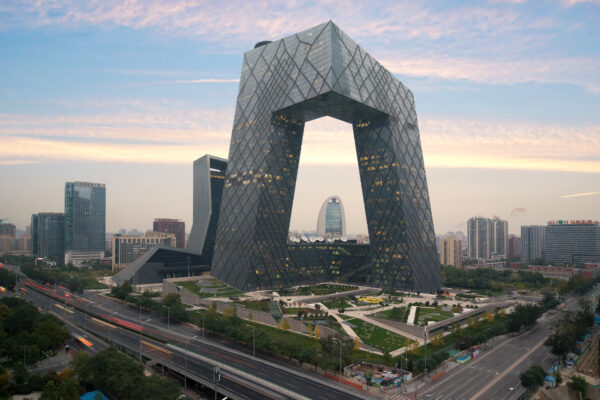
The 7:00 p.m. flagship broadcast of China Central Television (CCTV) is widely regarded as the country’s most authoritative and politically significant news program, consistently reflecting the ideological and diplomatic priorities of the Chinese Communist Party (CCP). CCTV’s coverage is not neutral or merely informational, but reflects a clear normative framing consistent with the CCP’s foreign policy perspective.
I examined all 7:00 p.m. flagship CCTV news broadcasts from December 28, 2025, to February 23, 2026 for references to Iran. CCTV’s coverage reveals the CCP’s priorities – as evident in the degree of overlap between the Chinese and Iranian official narratives.
Although protests in Iran began on December 28, 2025, the program first addressed them only on January 12 – more than two weeks later. This delay stands in contrast to the broadcast’s rapid and extensive reporting on protests in the United States, Israel, and other Western countries.
From the first report onward, CCTV’s framing was consistent: the protests were not depicted as opposition to the Iranian regime or the result of domestic socio-economic grievances, but as the result of foreign interference. Recurrent mention was made of “interference in internal affairs” and “external forces.” The reports also employed terms such as “riots” and “clashes,” effectively obscuring the massacres carried out against the protesters.
On January 12, Iran’s foreign minister was quoted as describing statements by U.S. President Donald Trump as interference in domestic affairs and asserting evidence of U.S. and Israeli involvement in “terrorist activities.” The following day, CCTV reported on mass rallies in major Iranian cities condemning “riots supported by foreign forces.” The rallies were attended by the president and parliamentary speaker.
Subsequent reports echoed similar themes: warnings of conspiracies, arrests of alleged espionage networks, and repeated emphasis on national unity. Opposition voices were absent, as were detailed casualty figures or sustained analysis of Iran’s economic difficulties.
In sharp contrast to the complete lack of opposition figures, between January 12 and February 6, senior Iranian officials – including the president, foreign minister, supreme leader, military commanders, and Revolutionary Guard representatives – were cited by CCTV almost daily. Each time, they hit on one or more recurring themes: that the protests are a foreign conspiracy; that Iran has an inalienable right to uranium enrichment (and, related, no intent to develop nuclear weapons); that Iran is fully ready to defend itself and will conduct “diplomacy with dignity”; that Iran has control over the Strait of Hormuz; and that Iran has upgraded its missile technology and deterrence.
Notably, however, the Chinese coverage avoided repeating any of Iran’s religious-ideological rhetoric. Instead, CCTV translated the Iranian regime’s message into a secular, diplomatic register aligned with Beijing’s international discourse.
The reports were structured around a consistent contrast between Iran and the United States. Iran was described as committed to diplomacy, exercising its legitimate rights, acting with dignity, and seeking fairness and justice. The United States, however, was associated with military strikes, threats, and adventurism.
CCTV’s coverage frequently invoked the United Nations Charter, the principle of non-interference, and the right to self-defense. Meetings of the U.N. Security Council were covered, with an emphasis on how China, Russia, and Pakistan called for restraint and opposed unilateral action.
In this framing, Iran was not portrayed as an ideological ally of Beijing but as a sovereign actor, embedded within a lawful international order, being threatened by unilateral pressure.
CCTV reports incorporated statements from Russia, Pakistan, and various Arab states, highlighting declarations that their territories would not be used for attacks against Iran. This created the impression of broad regional consensus opposing unilateral U.S. military action. Simultaneously, extensive coverage was given to diplomatic contacts with Oman, Turkiye, Qatar, Egypt, and Saudi Arabia. Iran was described as open to a “fair and just” agreement.
The United States was portrayed as escalating military presence and issuing ultimatums; the Islamic Republic as enjoying regional and international legitimacy while acting responsibly.
It is important to also note what was missing from the coverage. CCTV has never given detailed figures on casualties or detainees. Its reports never include voices from Iranian opposition groups or accounts of violent protest suppression. CCTV even avoided any systematic discussion of Iran’s economic crisis, a key factor in sparking the protests.
The strategic silence on these points, together with CCTV’s delayed reporting and the consistent emphasis on pro-government rallies, underscores the carefully managed narrative that the Chinese state media seeks to present.
CCTV’s coverage does not constitute a direct retransmission of Iranian propaganda; however, it reproduces the core elements of Tehran’s official narrative with minimal balancing perspectives. At the same time, it serves a distinct Chinese strategic interest: reinforcing the principle of non-interference, delegitimizing unilateral sanctions, and presenting multipolarity as a morally preferable alternative to hegemonic dominance. In this sense, CCTV functions as a mediating amplifier – transmitting the Iranian message to domestic and international audiences while adapting it to Beijing’s diplomatic language.



Comments (0)