
Remember me





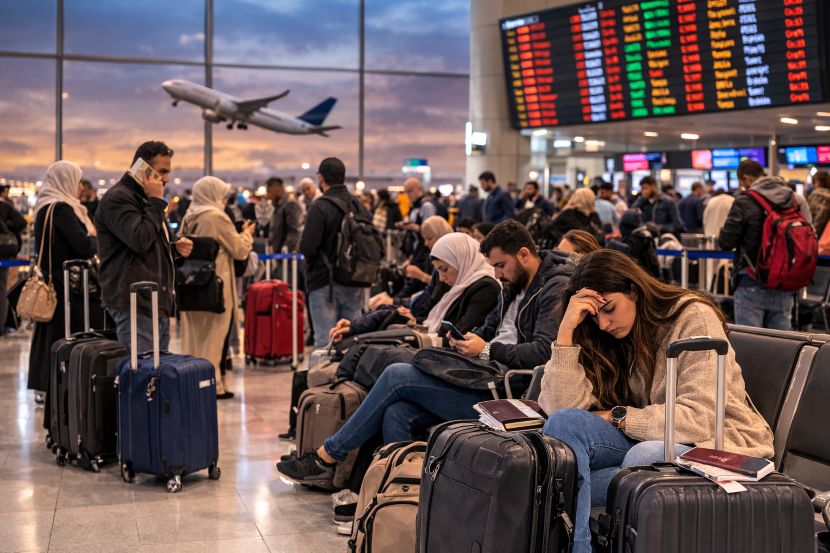


On March 14, 2026, Queen Alia International Airport in Amman, Jordan, saw 22 flights delayed and 38 flights canceled. This caused issues for many international airlines and passengers, both landing and departing. The situation has triggered delays and cancellations for a large number of airlines, including Royal Jordanian, Ryanair, and Qatar Airways, which demonstrates the ongoing issues within air travel in the region of growing geopolitical tensions. With the issues caused for travelers, the tourism industry in Jordan could suffer. Jordan relies heavily on international tourism.
 Affected Airlines and Impacted Passengers
The flight delays and cancellations at QAIA have created widespread uncertainty for travelers, with key airlines experiencing significant operational challenges. Among the most affected were:
Royal Jordanian: 16 cancellations (12% of their flights) and 18 delays (14% of their flights).Ryanair: 9 cancellations, with 100% of their flights delayed.Egypt Air: 5 cancellations, with 62% of their flights delayed.Buzz: 3 cancellations, 100% of their flights affected.Qatar Airways: 3 cancellations, 75% of their flights delayed.Gulf Air: 2 cancellations, 100% of their flights delayed.Other airlines impacted included FlyDubai, Flynas, and MEA, with significant delays also reported on various routes. The number of affected passengers is substantial, with hundreds of travelers facing uncertainty as their flights were delayed or canceled without prior notice. These disruptions are primarily due to regional instability, including conflicts affecting airspace security and logistical challenges at airports.
Impact on Tourism and Regional TravelThe ongoing flight disruptions at Queen Alia International Airport have far-reaching consequences for Jordan’s tourism industry. As one of the main entry points for international travelers, QAIA plays a crucial role in welcoming visitors to Jordan, which is known for its rich cultural heritage, including Petra, the Dead Sea, and the ancient city of Jerash.
The delayed and canceled flights are causing ripple effects throughout the tourism sector. Many international tourists, whose plans were disrupted, are unable to visit the country’s major tourist destinations, which rely heavily on tourism revenues. Hotel reservations, guided tours, and other services in Jordan are being impacted, with cancellations leading to a slowdown in bookings.
Further, Jordan has long been a hub for regional tourism, connecting visitors to neighboring countries. The flight delays and cancellations not only disrupt the travel plans of international tourists but also complicate travel across the Middle East and Europe. As airlines struggle to resume operations amidst airspace closures and geopolitical instability, the future of travel in the region remains uncertain, and these disruptions could potentially deter future travelers looking for a smooth travel experience.
Advertisement
Advertisement
Affected Cities and PassengersThe disruptions at QAIA have primarily affected flights to and from cities in the Middle East, Europe, and North Africa. Passengers traveling to popular destinations such as Cairo, Dubai, Riyadh, London, and other European cities have been the most impacted, as airlines either delayed or canceled flights to these locations. Additionally, passengers from cities across Europe, including those on connecting flights via Amman, found themselves stranded or rerouted to alternative airports.
ConclusionQueen Alia International Airport is experiencing flight cancellations and delays. The conflicts in the world right now directly affect this airport the same way it affects every airport in the world. The cancellations affect travelers who are in the middle of an international flight. The conflicts also negatively impact Jordan’s already suffering tourism industry. With things the way they currently are, there is no improvement coming soon. Travelers should keep this in mind and check with their airlines about their flight status, the possibility of re-booking, and whether they would be eligible for a refund. The longer the conflicts last, the worse it will be for the tourism and travel industry unless something changes with the airspace.
Advertisement
Advertisement
Source: Flightaware
Original article: https://www.travelandtourworld.com/

Comments (0)